Jueves, 22 de octubre de 2026


FATIMA EL MANSOURI
Morocco's new government: the key facts
Morocco has a woman at the head of government for the first time, although the change has its limits. "Real progress will be measured by concrete legislative and executive achievements," writes Inmaculada Szmolka, Professor of Political Science at the University of Granada. As she explains, the new four-party coalition faces major social reforms under the oversight of King Mohammed VI.
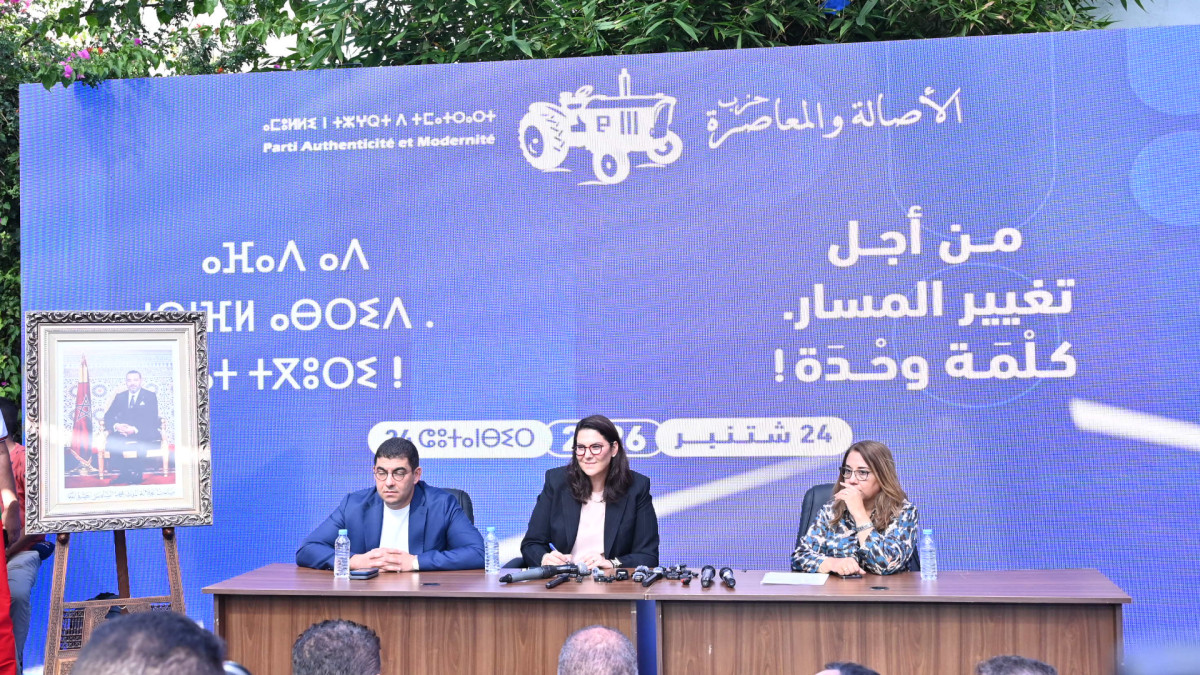
Fatima Ezzahra El Mansouri (centre) at a rally for her party, PAM, with a portrait of King Mohammed VI.Aissa / Xinhua News / Europa Press
On 16 October 2026, King Mohammed VI appointed a new government following the elections to the House of Representatives on 23 September and the subsequent appointment, on 29 September, of Fatima Ezzahra El Mansouri as head of government. In accordance with constitutional requirements, El Mansouri presented her government programme to both houses of parliament at a joint sitting on 19 October and must secure the confidence of the House of Representatives.
The 2011 Constitution stipulates that the monarch appoints the head of government from among the members of the party that finished first in elections to the House of Representatives, taking account of the results (Article 47). This leeway fuelled speculation that Fouzi Lekjaa —minister delegate responsible for the budget in the outgoing cabinet and president of the Royal Moroccan Football Federation— might be appointed. He had joined PAM two months before the election, played a prominent role in the campaign and enjoyed widespread popularity. In the event, Mohammed VI —as ever, advised by his inner circle— opted for the modernising image that El Mansouri's appointment could project. For his part, Fouzi Lekjaa would take charge of the important Economy, Finance and Public Sector Efficiency portfolio in the new government.
As the winner of the parliamentary election, PAM has acted as the formateur party, leading negotiations to establish the new governing coalition. This is the first time PAM has headed the government, having previously served as a coalition partner in the outgoing administration of Aziz Akhannouch (2021-2026), of the National Rally of Independents (RNI). Founded in 2008 by figures close to the royal palace to counter the rise of the Islamist Justice and Development Party (PJD), PAM saw its ambitions to lead the government frustrated by the 20 February Movement protests during the Arab Spring. The climate of discontent helped the Islamists win the 2011 election.
From the perspective of coalition theory, the new arrangement is a minimal winning coalition: every member is needed to secure an absolute majority, and no additional party is required. To ensure parliamentary stability, PAM (97 seats) has formed a government with three other political parties: the nationalist Istiqlal Party (PI, 65 seats), the Socialist Union of Popular Forces (USFP, 26 seats) and the Party of Progress and Socialism (PPS, 19 seats). Together, they hold 207 of the 395 seats in the House of Representatives.
These three parties were members of the historic democratic opposition alliance, Kutla al-Dimocratiyya, which brought them into the so-called "alternance government" led by the socialist Abderrahmane Youssoufi (1998-2002). That government was intended to ease the transition from the reign of Hassan II, who died on 23 July 1999, to that of his son Mohammed VI. The participation of these three parties in the new government does not amount to a revival of the Kutla, as they have pursued their own political agendas for more than two decades. Nevertheless, their inclusion in the current government carries considerable symbolic weight, tempering the "establishment" character of the PAM-led administration under El Mansouri.
The distribution of portfolios reflects each coalition partner's parliamentary strength: in addition to the post of head of government, PAM holds seven ministries and three minister-delegate posts; PI has three ministries and three minister-delegate posts; USFP has two ministries and three minister-delegate posts; and PPS has two ministries and one minister-delegate post. There are also seven independent members. Four of them hold the strategic "sovereign ministries" (Interior, Foreign Affairs, Defence and Religious Affairs), where appointments are the monarch's prerogative because these areas fall directly within his authority. The other three posts are the Secretary-General of the Government and the portfolios for Artificial Intelligence and Digital Transformation, and Tourism, Handicrafts and the Social and Solidarity Economy.
Under the new parliamentary balance, the PJD and the Left Alliance (eight seats) are likely to mount the most forceful opposition to the government.
Nevertheless, the new government wants to go further, aware of the deep social discontent caused by the limited returns from the World Cup, widening social inequalities associated with economic growth, and the critical state of public healthcare and education. Accordingly, the 2026-2031 government programme, presented to parliament by Fatima El Mansouri, sets out three main priorities. The first is strengthening social protection, through direct assistance for vulnerable families, measures to improve access to housing and better basic public services. The second is institutional renewal, through efforts to combat corruption and illicit enrichment and increase transparency in public procurement. The third is economic revitalisation, with targets of 5% growth, 2% inflation and a fiscal deficit of around 3%. Particular emphasis is placed on training and employment programmes for young people —who were at the forefront of the GenZ212 protest movement in 2025— in a country where 2.9 million people aged 15 to 29 are neither in education nor employment.
A woman at the head of government
For the first time in Morocco's history, a woman is leading the government: Fatima Ezzahra El Mansouri, coordinator of the collective leadership of the Authenticity and Modernity Party (PAM), which won the September elections.The 2011 Constitution stipulates that the monarch appoints the head of government from among the members of the party that finished first in elections to the House of Representatives, taking account of the results (Article 47). This leeway fuelled speculation that Fouzi Lekjaa —minister delegate responsible for the budget in the outgoing cabinet and president of the Royal Moroccan Football Federation— might be appointed. He had joined PAM two months before the election, played a prominent role in the campaign and enjoyed widespread popularity. In the event, Mohammed VI —as ever, advised by his inner circle— opted for the modernising image that El Mansouri's appointment could project. For his part, Fouzi Lekjaa would take charge of the important Economy, Finance and Public Sector Efficiency portfolio in the new government.
"Mohammed VI —as ever, advised by his inner circle— opted for the modernising image that El Mansouri's appointment could project"El Mansouri's appointment is highly symbolic in terms of women's access to the highest levels of decision-making. Nevertheless, real progress will be measured by concrete legislative and executive achievements. A crucial test for this parliamentary term will be the pending reform of the Mudawana (Family Code), which should bring substantial advances in women's rights.
A four-party governing coalition
Fatima El Mansouri has formed a four-party coalition government. Coalition governments are a necessity in Morocco because of the high level of parliamentary fragmentation produced by an electoral system designed to prevent any single party from becoming dominant and to distribute power among several political forces.As the winner of the parliamentary election, PAM has acted as the formateur party, leading negotiations to establish the new governing coalition. This is the first time PAM has headed the government, having previously served as a coalition partner in the outgoing administration of Aziz Akhannouch (2021-2026), of the National Rally of Independents (RNI). Founded in 2008 by figures close to the royal palace to counter the rise of the Islamist Justice and Development Party (PJD), PAM saw its ambitions to lead the government frustrated by the 20 February Movement protests during the Arab Spring. The climate of discontent helped the Islamists win the 2011 election.
From the perspective of coalition theory, the new arrangement is a minimal winning coalition: every member is needed to secure an absolute majority, and no additional party is required. To ensure parliamentary stability, PAM (97 seats) has formed a government with three other political parties: the nationalist Istiqlal Party (PI, 65 seats), the Socialist Union of Popular Forces (USFP, 26 seats) and the Party of Progress and Socialism (PPS, 19 seats). Together, they hold 207 of the 395 seats in the House of Representatives.
These three parties were members of the historic democratic opposition alliance, Kutla al-Dimocratiyya, which brought them into the so-called "alternance government" led by the socialist Abderrahmane Youssoufi (1998-2002). That government was intended to ease the transition from the reign of Hassan II, who died on 23 July 1999, to that of his son Mohammed VI. The participation of these three parties in the new government does not amount to a revival of the Kutla, as they have pursued their own political agendas for more than two decades. Nevertheless, their inclusion in the current government carries considerable symbolic weight, tempering the "establishment" character of the PAM-led administration under El Mansouri.
"The participation of these three parties in the new government does not amount to a revival of the Kutla, as they have pursued their own political agendas for more than two decades"Ideologically, the new coalition consists of one centre-left party (PAM), two socialist parties (USFP and PPS) and one conservative party (PI). Fatima El Mansouri decided against bringing in other parties that had sought to join the government, such as the pro-establishment Popular Movement. Doing so would have produced an oversized coalition, with greater ideological distance between its members. Even so, in Moroccan political practice, ideological proximity has not been a decisive factor in forming governments or ensuring their stability.
Composition of the government
Morocco has a large government. The Council of Government has 32 members: the head of government, the secretary-general of the government, 19 ministers and 11 ministers delegate.The distribution of portfolios reflects each coalition partner's parliamentary strength: in addition to the post of head of government, PAM holds seven ministries and three minister-delegate posts; PI has three ministries and three minister-delegate posts; USFP has two ministries and three minister-delegate posts; and PPS has two ministries and one minister-delegate post. There are also seven independent members. Four of them hold the strategic "sovereign ministries" (Interior, Foreign Affairs, Defence and Religious Affairs), where appointments are the monarch's prerogative because these areas fall directly within his authority. The other three posts are the Secretary-General of the Government and the portfolios for Artificial Intelligence and Digital Transformation, and Tourism, Handicrafts and the Social and Solidarity Economy.
"The distribution of portfolios reflects each coalition partner's parliamentary strength: in addition to the post of head of government, PAM holds seven ministries"Despite the milestone represented by Fatima El Mansouri's appointment, women remain under-represented in the government. Apart from the head of government, only six of the other 31 posts are held by women: two ministers and four ministers delegate. Altogether, women hold seven of the 32 positions (21.9%). Within PAM, these are the minister delegate for Vocational Training and Qualifications, the minister delegate for Relations with Parliament and Civil Society, and the minister delegate for Housing and Urban Policy; within PI, the minister for Family, Social Development and Equality; within USFP, the minister delegate for Administrative Reform, who comes from civil society; and within PPS, the minister for Energy, Mines and Sustainable Development.
A reshaped opposition
After five years in government, the National Rally of Independents (RNI) now leads the opposition with 66 seats. It is expected to pursue a "moderate opposition" approach, in keeping with its pro-establishment profile. Its change of role can be interpreted as a strategy by the royal palace to prevent the Islamist PJD (54 seats) from leading the opposition bloc. During the 2021-2026 parliamentary term, the governing alliance of the three largest parliamentary parties (RNI, PAM and PI) left the opposition with only a small parliamentary presence. This allowed the PJD, despite having just 13 representatives, to become the leading critical voice in the House of Representatives. Moreover, RNI's move into opposition lays the groundwork for future controlled changes of government between RNI, PAM or even PI.Under the new parliamentary balance, the PJD and the Left Alliance (eight seats) are likely to mount the most forceful opposition to the government.
Challenges facing the new government
In Morocco, executive power is shared between the Crown and the government. The king chairs the Council of Ministers, which deliberates on draft legislation and matters of particular importance. The monarchy also sets the broad direction of government and parliamentary action, as Mohammed VI demonstrated in his speech opening the parliamentary year on 9 October. Less visibly, ongoing coordination with the government takes place through members of the Royal Cabinet."The monarchy also sets the broad direction of government and parliamentary action"Media coverage often identifies co-hosting the 2030 FIFA World Cup as the new cabinet's main immediate challenge. An infrastructure investment programme worth €20 billion is planned for the tournament, in addition to projects already completed or under way. The government also expects to create around 360,000 jobs, although neither their nature nor their duration has been specified.
Nevertheless, the new government wants to go further, aware of the deep social discontent caused by the limited returns from the World Cup, widening social inequalities associated with economic growth, and the critical state of public healthcare and education. Accordingly, the 2026-2031 government programme, presented to parliament by Fatima El Mansouri, sets out three main priorities. The first is strengthening social protection, through direct assistance for vulnerable families, measures to improve access to housing and better basic public services. The second is institutional renewal, through efforts to combat corruption and illicit enrichment and increase transparency in public procurement. The third is economic revitalisation, with targets of 5% growth, 2% inflation and a fiscal deficit of around 3%. Particular emphasis is placed on training and employment programmes for young people —who were at the forefront of the GenZ212 protest movement in 2025— in a country where 2.9 million people aged 15 to 29 are neither in education nor employment.
Inmaculada Szmolka
Profesora Titular en el Departamento de Ciencia Política y de la Administración de la Universidad de Granada (España)
Co-editora de la Revista Española de Ciencia Política, editada por la Asociación Española de Ciencia Política.
Sus líneas de investigación se centran principalmente en el análisis de los regímenes políticos árabes, los procesos de cambio político, elecciones, partidos políticos, opinión pública y Unión Europea.
Etiquetas
Agenda Pública in English, Marruecos, Elecciones, Partidos políticos, jóvenes, desigualdad, áfrica, desempleo Ahora en portada
22 de octubre de 2026
22 de octubre de 2026
21 de octubre de 2026
Noticias relacionadas
Hace 3 días
Why did Sánchez stay silent on Morocco?
Hace una semana
Why Ceuta should matter to NATO
Hace una semana