Lunes, 19 de octubre de 2026


LÓPEZ PLANA'S EUROPEAN COMPASS
Why did Sánchez stay silent on Morocco?
Moroccan naval vessels entered Spanish waters during the Ceuta crisis, raising questions that go beyond government transparency. Pedro Sánchez opted for discretion to avoid an escalation with Morocco, but took a considerable political risk. Marc López Plana, editor and director of 'Agenda Pública', draws on the Perejil Island crisis and the Cuban Missile Crisis to explore the limits of shows of force.
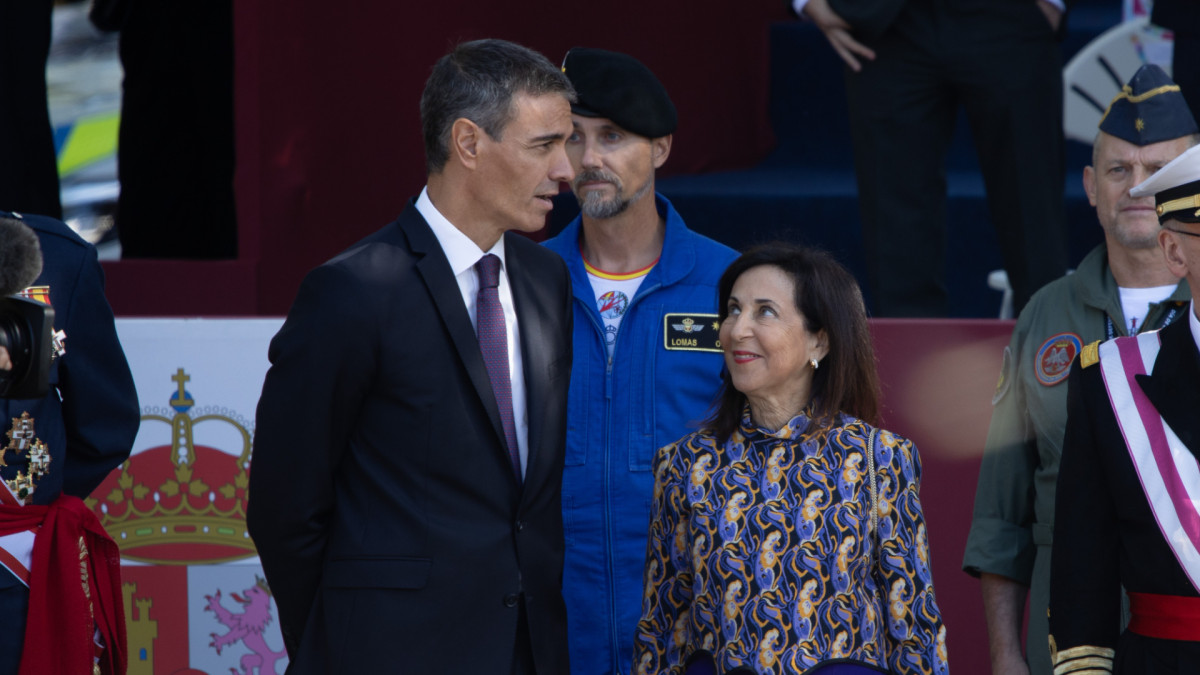
Pedro Sánchez and defence minister Margarita RoblesDavid Canales / Zuma Press / Europa Press
On 30 and 31 July, as tens of thousands of migrants crossed the border into Ceuta, Moroccan warships entered Spanish territorial waters. The Spanish Navy reinforced its presence in the area, and the incident was eventually resolved through contacts between the two countries, as prime minister Pedro Sánchez later explained. The government, however, said nothing publicly. For more than two months, the public was unaware that the border crisis had also had a military dimension. Nor had it been established who was behind the mass arrival of migrants. Had the naval incursions been disclosed at the time, many people would probably have immediately blamed Morocco for what happened at the border, even without sufficient evidence to do so.
Sánchez had reasons to prevent the naval incident from further damaging relations with Rabat. But his decision carried a considerable political risk: the information might eventually become public before the government had offered any explanation. That is exactly what happened. The prime minister managed to keep the crisis within diplomatic channels, but left himself open to accusations of a cover-up. Had the incursions become known just days after they occurred, while the images from Ceuta were still dominating public debate, the political fallout would probably have been greater. The revelations came later, but forced the government to explain, after the fact, a decision it had chosen not to disclose.
In an international crisis, making threats public can constrain governments just as much as the threats themselves. A forceful statement may satisfy domestic opinion, but it also commits the person making it to a particular course of action. If an adversary is publicly humiliated, backing down may become more difficult. Diplomacy needs to preserve that possibility: allowing the other side to retreat without openly admitting defeat. That is why a state's strength matters, but so does its ability to decide when to use it and how far to take a confrontation.
Of course, Cuba and Ceuta are very different cases. Spain was not facing nuclear war, and Morocco poses nothing like the threat represented by the Soviet Union in 1962. What matters about the American precedent is the timing of political decisions. Kennedy delayed making the discovery public so that he could prepare his response. In Ceuta, the Spanish government appears to have chosen discretion to prevent the naval incursion from worsening a crisis that was already exceptionally serious.
Spain has a precedent much closer to home: Perejil Island. In July 2002, José María Aznar ordered a military operation to remove the Moroccan personnel who had occupied it. Spain regained control through military intervention, but the confrontation subsequently required US mediation to restore the status quo. Military action ended the occupation; without that diplomatic way out, relations between Madrid and Rabat could have continued to deteriorate.
The Perejil episode does not mean that Spain should have refrained from intervening. A military response could have been justified without being sufficient, on its own, to secure a political solution. That distinction is particularly important between neighbouring countries. Spain and Morocco share borders, economic interests, police cooperation and responsibilities for migration management. They may go through serious crises, but they will still have to deal with each other afterwards. Even when a confrontation is resolved, its effects on mutual trust can last for years.
This caution should be borne in mind when assessing demands for Spain to publicly blame Morocco for what happened. The government can and should face criticism for its actions, its slow response and its prolonged silence about the incursions. Accountability is an essential part of democratic oversight. But formally declaring that Morocco had deliberately committed an act of aggression against Spain would have consequences extending far beyond a political denunciation.
Such an accusation would create expectations of a response. Spain could come under pressure to suspend aspects of bilateral cooperation, push for European sanctions or stage further shows of military force. Rabat, in turn, could respond to any of those measures. The risk of escalation is clear, even if neither government wanted matters to go that far. In foreign policy, words can create commitments that are difficult to walk back. Once an accusation has been made in public, withdrawing it or playing down its seriousness also carries a political cost.
In Ceuta, moreover, it is important to distinguish between very different kinds of threats. Spain's duty to protect its sovereignty and control its borders does not make the arrival of civilians comparable to a military incursion. Nor does it authorise the indiscriminate use of lethal force against migrants. The state's response must be lawful and proportionate to the circumstances. Demanding the toughest possible response to every border incident, regardless of its nature, risks leading to dangerous decisions.
Morocco's domestic circumstances also warrant attention. When the Ceuta crisis erupted, there were fewer than two months to go before the parliamentary elections on 23 September, which ultimately took place against a backdrop of deep social discontent, particularly among young people. Alongside that disaffection is uncertainty about the future of Morocco's Alaouite monarchy. Mohammed VI continues to fulfil his duties, and no formal succession process has begun. Yet speculation about an eventual transition to the reign of his son, Crown Prince Moulay Hassan, has been accompanied by reports of rivalries and struggles for influence within the royal court.
These circumstances matter because Morocco's major strategic decisions still rest with the monarch. A diplomatic escalation with Spain could therefore unfold amid social tensions, shifts in the balance of power and expectations surrounding the succession, the full extent of which is difficult to assess from outside. It would be speculative to claim that any of these factors motivated July's naval incursions or to attribute them to a particular faction within the regime. There is not enough information to establish that.
That uncertainty is itself a reason for caution. When the distribution of power in a neighbouring country is not fully understood, the domestic consequences of an external confrontation are difficult to predict. A Spanish response intended to demonstrate resolve could end up helping those within Morocco's political system who see an advantage in prolonging the dispute. Spain has a clear interest in the stability of the country on its southern border. Preventing a bilateral crisis from fuelling possible internal power struggles is therefore another consideration worth taking seriously.
Sánchez has paid a considerable political price for his handling of Ceuta. His delayed response, together with the opposition's use of the crisis, has also had a particularly damaging consequence for Spanish society: the spread of racist rhetoric in public debate. Some have interpreted the government's refusal to formally attribute responsibility to Morocco as a betrayal. Yet that decision may also reflect a desire to preserve bilateral relations that Spain needs to maintain, without necessarily yielding to Moroccan interests.
How Sánchez's actions are judged will depend on their results. It will be necessary to determine whether the Spanish Navy's response effectively protected Spanish sovereignty and prevented further incursions, and whether discretion helped restore stable relations with Morocco. The government will also have to explain why it kept the episode from public knowledge for more than two months.
Sánchez had reasons to prevent the naval incident from further damaging relations with Rabat. But his decision carried a considerable political risk: the information might eventually become public before the government had offered any explanation. That is exactly what happened. The prime minister managed to keep the crisis within diplomatic channels, but left himself open to accusations of a cover-up. Had the incursions become known just days after they occurred, while the images from Ceuta were still dominating public debate, the political fallout would probably have been greater. The revelations came later, but forced the government to explain, after the fact, a decision it had chosen not to disclose.
From Kennedy to Perejil: lessons in diplomatic restraint
In October 1962, John F. Kennedy faced a problem that, despite the obvious differences, bears some resemblance to Sánchez's predicament. The United States had discovered that the Soviet Union was installing nuclear missiles in Cuba. Kennedy kept the discovery secret for six days while weighing his military and diplomatic options. By the time he announced it publicly, he had already decided to impose a naval quarantine around the island. This allowed him to demonstrate resolve without automatically triggering a war. During those days, keeping the discovery quiet gave Washington time to prepare its response and prevented a premature public threat from narrowing its negotiating options.In an international crisis, making threats public can constrain governments just as much as the threats themselves. A forceful statement may satisfy domestic opinion, but it also commits the person making it to a particular course of action. If an adversary is publicly humiliated, backing down may become more difficult. Diplomacy needs to preserve that possibility: allowing the other side to retreat without openly admitting defeat. That is why a state's strength matters, but so does its ability to decide when to use it and how far to take a confrontation.
"In an international crisis, making threats public can constrain governments just as much as the threats themselves"Thomas Schelling examined precisely this relationship between deterrence and negotiation. The threat of force may be necessary to defend certain interests, but it loses some of its value when the alternatives to confrontation disappear. Spain could respond militarily to the Moroccan incursions while also trying to avoid a cycle in which every move demanded an even stronger response. Publicly turning the episode into a test of authority would have left the government less room to seek a discreet solution.
Of course, Cuba and Ceuta are very different cases. Spain was not facing nuclear war, and Morocco poses nothing like the threat represented by the Soviet Union in 1962. What matters about the American precedent is the timing of political decisions. Kennedy delayed making the discovery public so that he could prepare his response. In Ceuta, the Spanish government appears to have chosen discretion to prevent the naval incursion from worsening a crisis that was already exceptionally serious.
Spain has a precedent much closer to home: Perejil Island. In July 2002, José María Aznar ordered a military operation to remove the Moroccan personnel who had occupied it. Spain regained control through military intervention, but the confrontation subsequently required US mediation to restore the status quo. Military action ended the occupation; without that diplomatic way out, relations between Madrid and Rabat could have continued to deteriorate.
The Perejil episode does not mean that Spain should have refrained from intervening. A military response could have been justified without being sufficient, on its own, to secure a political solution. That distinction is particularly important between neighbouring countries. Spain and Morocco share borders, economic interests, police cooperation and responsibilities for migration management. They may go through serious crises, but they will still have to deal with each other afterwards. Even when a confrontation is resolved, its effects on mutual trust can last for years.
"Even when a confrontation is resolved, its effects on mutual trust can last for years"It is also important to consider how each government interprets the other's actions. A measure intended to strengthen one country's security may be seen as a threat across the border, prompting a response that makes matters worse. Diplomatic restraint can break that cycle. Spain's actions in Ceuta can therefore be understood as an attempt to defend its sovereignty through a proportionate military response, without taking the confrontation further than necessary.
This caution should be borne in mind when assessing demands for Spain to publicly blame Morocco for what happened. The government can and should face criticism for its actions, its slow response and its prolonged silence about the incursions. Accountability is an essential part of democratic oversight. But formally declaring that Morocco had deliberately committed an act of aggression against Spain would have consequences extending far beyond a political denunciation.
Such an accusation would create expectations of a response. Spain could come under pressure to suspend aspects of bilateral cooperation, push for European sanctions or stage further shows of military force. Rabat, in turn, could respond to any of those measures. The risk of escalation is clear, even if neither government wanted matters to go that far. In foreign policy, words can create commitments that are difficult to walk back. Once an accusation has been made in public, withdrawing it or playing down its seriousness also carries a political cost.
"In foreign policy, words can create commitments that are difficult to walk back. Once an accusation has been made in public, withdrawing it or playing down its seriousness also carries a political cost"Of course, the need to maintain good relations with Morocco does not mean granting it diplomatic immunity. Spain must be able to denounce Rabat's actions when there are grounds to do so. Demanding explanations from the Spanish government, however, need not entail calling for a public confrontation with its neighbour. Before demanding tougher measures, it is worth being clear about what they are intended to achieve, how Morocco might respond and what options would remain for resolving the dispute.
In Ceuta, moreover, it is important to distinguish between very different kinds of threats. Spain's duty to protect its sovereignty and control its borders does not make the arrival of civilians comparable to a military incursion. Nor does it authorise the indiscriminate use of lethal force against migrants. The state's response must be lawful and proportionate to the circumstances. Demanding the toughest possible response to every border incident, regardless of its nature, risks leading to dangerous decisions.
Felipe VI's visit to Ceuta and tensions within Morocco
The visit by Felipe VI and Queen Letizia to Ceuta on 13 October allowed Spain to make its position clear without resorting to further displays of military force. The king defended Spanish sovereignty over the autonomous city, stressed that its border is also a European border and called for relations with Morocco to be based on mutual respect. The institutional message combined a firm stance on territorial sovereignty with a willingness to maintain stable relations with Rabat."Spain's duty to protect its sovereignty and control its borders does not make the arrival of civilians comparable to a military incursion"A few days earlier, Ignacio Cembrero had predicted in an interview with Agenda Pública that Morocco's anger over the visit would be less intense than its reaction to Juan Carlos I's trip in 2007. In his view, Rabat had reasons to avoid further damage to its international reputation from the Ceuta crisis. The relatively restrained response from the Moroccan authorities so far appears to support that assessment. It is also a reminder that the political significance of a royal visit depends on conditions in the neighbouring country and the interests of those governing it.
Morocco's domestic circumstances also warrant attention. When the Ceuta crisis erupted, there were fewer than two months to go before the parliamentary elections on 23 September, which ultimately took place against a backdrop of deep social discontent, particularly among young people. Alongside that disaffection is uncertainty about the future of Morocco's Alaouite monarchy. Mohammed VI continues to fulfil his duties, and no formal succession process has begun. Yet speculation about an eventual transition to the reign of his son, Crown Prince Moulay Hassan, has been accompanied by reports of rivalries and struggles for influence within the royal court.
These circumstances matter because Morocco's major strategic decisions still rest with the monarch. A diplomatic escalation with Spain could therefore unfold amid social tensions, shifts in the balance of power and expectations surrounding the succession, the full extent of which is difficult to assess from outside. It would be speculative to claim that any of these factors motivated July's naval incursions or to attribute them to a particular faction within the regime. There is not enough information to establish that.
That uncertainty is itself a reason for caution. When the distribution of power in a neighbouring country is not fully understood, the domestic consequences of an external confrontation are difficult to predict. A Spanish response intended to demonstrate resolve could end up helping those within Morocco's political system who see an advantage in prolonging the dispute. Spain has a clear interest in the stability of the country on its southern border. Preventing a bilateral crisis from fuelling possible internal power struggles is therefore another consideration worth taking seriously.
Sánchez's silence and the limits of diplomatic discretion
Such caution abroad, however, has consequences at home. Making the incursions public could have provoked a response from Rabat, but remaining silent exposed Sánchez to accusations of concealing important information. The prime minister confirmed the incident on 12 October, after it had been reported in the press. He had made no mention of it during his parliamentary appearance in September, an omission that calls for an explanation."A Spanish response intended to demonstrate resolve could end up helping those within Morocco's political system who see an advantage in prolonging the dispute"A government may have legitimate reasons to delay releasing certain military information while managing a security crisis. But it can also invoke those reasons to avoid political accountability. Distinguishing between the two requires establishing what happened, why the decision to remain silent was made and how long that silence was justified. No government can disclose every military move while operations are under way, but national security cannot become a permanent excuse for evading democratic scrutiny. Discretion during a crisis must be followed by accountability afterwards.
Sánchez has paid a considerable political price for his handling of Ceuta. His delayed response, together with the opposition's use of the crisis, has also had a particularly damaging consequence for Spanish society: the spread of racist rhetoric in public debate. Some have interpreted the government's refusal to formally attribute responsibility to Morocco as a betrayal. Yet that decision may also reflect a desire to preserve bilateral relations that Spain needs to maintain, without necessarily yielding to Moroccan interests.
How Sánchez's actions are judged will depend on their results. It will be necessary to determine whether the Spanish Navy's response effectively protected Spanish sovereignty and prevented further incursions, and whether discretion helped restore stable relations with Morocco. The government will also have to explain why it kept the episode from public knowledge for more than two months.
"National security cannot become a permanent excuse for evading democratic scrutiny"Kennedy had six days to prepare his response to the Soviet Union. In the Perejil crisis, Spain needed mediation after its military intervention. Ceuta has its own circumstances, but it offers the same reminder: a show of force may resolve an incident without bringing a crisis to an end. Sánchez chose to avoid a public confrontation with Morocco. He must now explain why he made that choice and demonstrate that his restraint served Spain's interests.
Ahora en portada
19 de octubre de 2026
19 de octubre de 2026
Noticias relacionadas
Hace una semana
Why Ceuta should matter to NATO
Hace 4 semanas
Florence Gaub (NATO): "If you remain too focused on the present, you will pay a price in the future"
Hace una semana