Viernes, 16 de octubre de 2026




LÓPEZ PLANA'S EUROPEAN COMPASS
Repsol in the White House: why the CEO attended and made the best possible decision
"To understand Repsol’s presence in the White House," writes Marc López Plana, editor and director of 'Agenda Pública', "it must be recognized that Josu Jon Imaz is not seeking to validate an autocratic system for pleasure, but to operate within it, to prevent his shareholders and the company’s workers and investments from losing out in the transition to a new order." He argues that, "If we are unable to build a kind of governance that can compete with the extractive efficiency of neoroyalism, we will be reduced to moralistic spectators in a world that no longer listens to us.

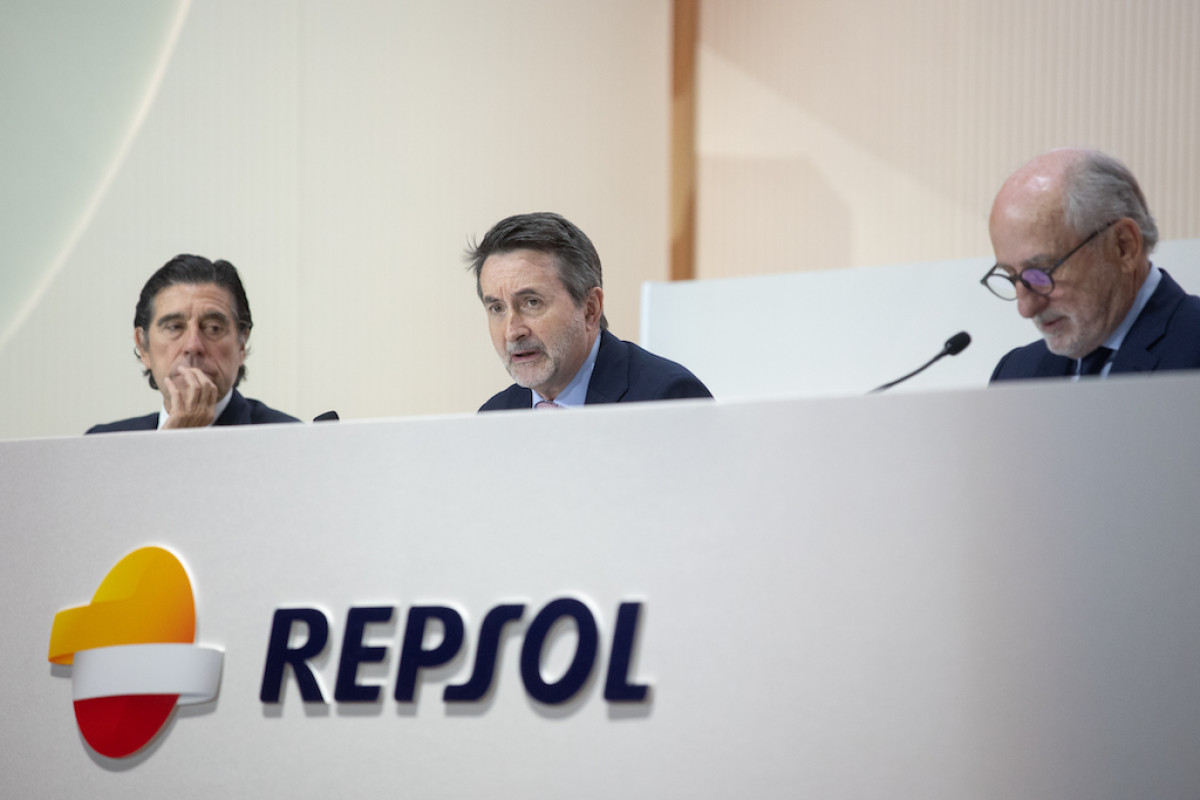
Repsol holds its Annual General Meeting of Shareholders.Alejandro Martínez Vélez / Europa Press / ContactoPhoto
In the mythology of late-20th-century corporate diplomacy, the CEOs of multinationals were protected by free trade agreements and by the legal certainty of the liberal international order. But on January 9, 2026, in a meeting at the White House, Repsol CEO Josu Jon Imaz signaled a change of era that would have stunned the architects of Westphalia. Sitting down with Donald Trump to discuss the energy landscape of a post-Maduro Venezuela, Imaz, as a business executive representing a Spanish oil company, indicated that in the emerging global system, the defense of Capital no longer operates through rules but through the personal favor of the Sovereign.
To understand Repsol’s presence in this scenario, one must abandon the "intellectual blinders" of State sovereignty and adopt the framework of ‘neoroyalism’ proposed by political scientists Stacie Goddard and Abraham Newman. According to their model, the world is ceasing to function as a Board of States in favor of a system structured by networks of hyper-elites linked vertically to individuals with absolute power. Far from an ideological convert, Imaz is nonetheless aware of this new reality: in the court of Trump, fiduciary pragmatism demands that the language of the King be spoken.
For the main shareholders, who expect to collect stable dividends, the risk that Trump might enforce his threat to exclude any who fail to show obedience is unbearable. The CEO of Repsol understands that, under neoroyalism, companies must "kiss the president’s ring" by offering something he wants in exchange for exemption from harmful policies.
In the new international ‘neopatrimonialism’, large corporations no longer require mediation by their governments if they can obtain direct protection from the global Sovereign. Imaz’s success lies in having accepted "what’s right in front of us," even if that means validating an authority that has placed itself above the law.
To understand Repsol’s presence in this scenario, one must abandon the "intellectual blinders" of State sovereignty and adopt the framework of ‘neoroyalism’ proposed by political scientists Stacie Goddard and Abraham Newman. According to their model, the world is ceasing to function as a Board of States in favor of a system structured by networks of hyper-elites linked vertically to individuals with absolute power. Far from an ideological convert, Imaz is nonetheless aware of this new reality: in the court of Trump, fiduciary pragmatism demands that the language of the King be spoken.
The end of sovereignty
The most revealing detail of the meeting was not the amount to be invested but a terminological concession, when Imaz referred to the Gulf of Mexico as the ‘Gulf of America’. For a geographer, that term is an aberration; for a practitioner of neoroyalism, it is a necessary password to unlock hierarchies of status. Goddard and Newman’s text explains that these orders are legitimized by appeals to ‘exceptionalism’. By adopting the lexicon of the Sovereign, Imaz has shown his grasp of the thesis that sovereignty today is ‘fragmented’. In that framework, a "physically distant sovereign" (Trump) exercises more real authority over the fate of Repsol’s assets than does the Spanish State itself."Imaz is maneuvering through a system where the Sovereign questions the authority of even his closest allies to govern their own territories"In the neoroyalist conception, this move allows Repsol entry into an elite clique: exclusive networks of capital and politics devoted to sovereign individuals. Imaz is maneuvering through a system where the Sovereign questions the authority of even his closest allies to govern their own territories – as demonstrated through ongoing pressures on Greenland and Canada. Imaz has made the calculation that vertical loyalty to the White House is the only way to prevent Repsol’s exclusion from profit-sharing in a world where sovereigns are no longer equal.
Fiduciary duty: the owners of Capital
It would be a mistake to interpret Imaz’s attitude as a personal capitulation. His presence in Washington comes as the result of a strict fiduciary mandate. Repsol is not a national company in the traditional sense but rather an entity whose ownership is dominated by Anglo-Saxon institutional capital, which calculates in terms of returns, not sovereignties. At the outset of 2026, the company’s real owners are demanding this level of pragmatism to protect their own personal interests against national goals.For the main shareholders, who expect to collect stable dividends, the risk that Trump might enforce his threat to exclude any who fail to show obedience is unbearable. The CEO of Repsol understands that, under neoroyalism, companies must "kiss the president’s ring" by offering something he wants in exchange for exemption from harmful policies.
Tribute as a guarantee of profitability
Neoroyalism is based not on liberal cooperation but on the extraction of rents and tributes. Repsol’s tribute was explicit: the promise to triple its production in Venezuela, plus a reminder about an ‘offering’ of $21 billion dollars already invested in U.S. soil. Goddard and Newman point out that such exchanges benefit one’s position within what they call ‘the cabal‘"In a system where the Sovereign uses 'regulated injections of distrust' to force obedience, Repsol has secured a place inside the protected clique"In exchange for this tribute, Imaz buys into ‘exceptionalism’. In a system where the Sovereign uses "regulated injections of distrust" to force obedience, Repsol has secured a spot inside the protected clique. Trump’s warning at the meeting was clear: "I have 25 people waiting outside to take their place." Under that logic, the alternative to submission is not independence but replacement by another, more cooperative cabalist.
The disintegration of the Nation-State
Imaz now operates within an elite transnational network that has more in common with other oil giants than with the citizens of Madrid. While Spain’s government clings to a ‘Westphalian lens’ of national sovereignty and legality, Repsol has been compelled to migrate to a model of personal and hierarchical relationships.In the new international ‘neopatrimonialism’, large corporations no longer require mediation by their governments if they can obtain direct protection from the global Sovereign. Imaz’s success lies in having accepted "what’s right in front of us," even if that means validating an authority that has placed itself above the law.
Necessary self-critique: the Boric factor
While Imaz navigates the straits of neoroyalism as best he can, the political response in Spain and Europe has been indignation. At the same time, in an interview in El País, Chilean President Gabriel Boric issued a warning that seemed designed for liberal European leaders: "The left that only blames its adversary is doomed to be diluted.""Blaming Imaz for protecting his assets under the new rules of the game – even if he doesn’t personally condone them – is an exercise in willful ignorance of how the new world is being configured"Boric’s words touch a sore spot. While liberals spend our energies denouncing Trump’s ‘acts of vassalage’ and ‘aggression’, we lack a genuine alternative proposal to the cabalist system. Blaming Imaz for protecting his assets under the new rules of the game – even if he doesn’t personally condone them – is an exercise in willful ignorance of how the new world is being configured. If we are unable to build a kind of governance that can compete with the extractive efficiency of neoroyalism, we will be reduced to moralistic spectators in a world that no longer listens to us.
The triumph of courtly realism
Ultimately, to understand Repsol’s presence in the White House, it must be recognized that Josu Jon Imaz is not seeking to validate an autocratic system for pleasure, but to operate within it, to prevent his shareholders and the company’s workers and investments from losing out in the transition to a new order. He sees that, in the neoroyalist world, legitimacy lies not in technocratic rules but in personal loyalties and the ability to offer material tributes to the center of power."Not without his doubts, Imaz selected the reality that seems to guarantee the best position for Repsol – and for Spain – on the new world chessboard"The lesson for other European CEOs is a bitter one: In the court of Trump, diplomatic purism is a luxury that leads to irrelevance. Imaz had to choose between prosperous and protected vassalage or ruined sovereignty. Not without his doubts, he selected the reality that seems to guarantee the best position for Repsol – and for Spain – on the new world chessboard.
Ahora en portada
16 de octubre de 2026
16 de octubre de 2026
16 de octubre de 2026
Noticias relacionadas
Hace 39 semanas
Cómo entender la presencia de Repsol en la Casa Blanca y por qué tomó la mejor decisión posible
Lo más leído