Miércoles, 14 de octubre de 2026




Focus Ukraine: The Russian regime is ready to do everything to destroy the unity of the coalition in support of Ukraine

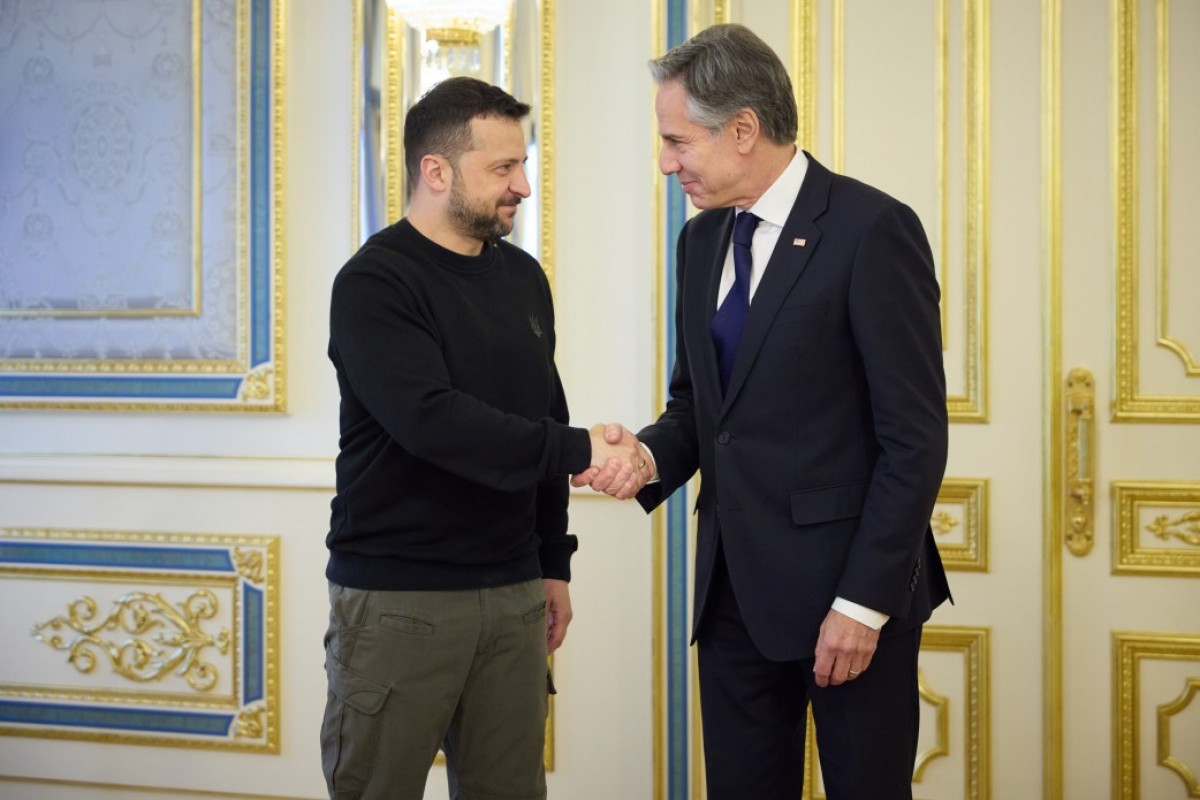
Agenda Pública and United Ukraine Think Tank present Focus Ukraine, a weekly article series analysing how the military conflict in Ukraine and the political and economic situation in the country will evolve. The articles are written by Ihor Petrenko, Dmytro Levus, Petro Oleshchuk and Oleksiy Kushch, experts of the United Ukraine Think Tank.
Personnel changes in Russia are caused by the realization of its leadership that a quick military victory over Ukraine is impossible
The war against Ukraine, which has clearly not turned out as planned in the Kremlin, is forcing Putin to make personnel changes and reshuffles in the area of direct organization and support of military operations. It is significant that these changes began after the inauguration ceremony, which was intended to demonstrate to Russians the sacredness of the illegitimate dictator Putin. In particular, Putin appointed Andrei Belousov as the new Minister of Defense. His predecessor, Sergei Shoigu, was sent to the post of Secretary of the Russian Security Council, dismissing Nikolai Patrushev. Patrushev held his post for 16 years, Shoigu for almost 12. These are the pillars of the regime. They will not disappear from the environment, but their influence is changing. Their reshuffling causes other changes in the Kremlin mafia. They lead to tectonic shifts and new configurations and conflicts in its structure. Putin has been working hard to take this step. After all, it was obvious at least a year ago that his plans for aggression had failed. Obviously, he did not want to rebuild the constructions of the mafia structures of which he is the creator and arbiter. And it is obvious that the reshuffle shows that the Kremlin has realized that it failed in its attempt to win the war quickly and is preparing for a long, drawn-out war. The new defense minister, known as an economist and production coordinator, is charged with raising money for the war and organizing the military-industrial complex. In other words, the personnel changes in the Russian leadership are at odds with Moscow's rhetoric of readiness for negotiations and signal Putin's intention to intensify confrontation with Ukraine and the West.
In his recent essay on Russia's "Victory Day" celebrations, American historian Timothy Snyder wrote that Russia seeks to intimidate the world, which should, quite wrongly, believe "that Russia cannot lose." As Snyder notes, Moscow's success is not on the battlefield, but in the minds of Westerners. Russia can lose. The idea of the Russian army as an invincible Red Army is just propaganda. And today's Russian army is not the Red Army of World War II. Russia lacks the American economic support - the Lend-Lease - that the Red Army needed to defeat Nazi Germany. Therefore, there is little reason to expect Russia to win. Russia's only chance is to prevent the West from helping Ukraine by convincing it that its victory is inevitable, so that the West does not use its decisive economic power. The past six months have proven this point: Russia's minor victories on the battlefield have come at a time when the United States has delayed aid to Ukraine.
Russia's current offensive in the Kharkiv region has just begun at a time when U.S. aid, delayed for six months, has not yet gained scale and rhythm. The Russian occupiers launched an offensive from the territory of the Belgorod region to the territory of the Kharkiv region. According to the Commander-in-Chief of the Armed Forces of Ukraine, General Oleksandr Syrskyi, the Russian invaders have expanded the area of active combat operations by almost 70 kilometers. The enemy is making the main efforts in the areas of Strilecha - Liptsi, Hlyboke - Slobozhanske, Borysivka - Vesele, Neskuchne and to capture Vovchansk. The enemy launched an offensive much earlier than planned when it noticed the redeployment of Ukrainian troops, but failed to break through the defense. The fighting is taking place directly in Vovchansk, which is located only four kilometers from the border with Russia. In Vovchansk itself, there have been cases of Russians shooting civilians who were trying to evacuate to the territory free of invaders, deliberate targeting of evacuation vehicles, and holding civilians hostage in basements and houses near the line of fire instead of evacuating them. The task of the Ukrainian Defense Forces is to disrupt Russia's attempt to infiltrate and gain a foothold in the depths of the territory in order to create a foothold for further offensive. As of today, thanks in particular to the decisive actions of the Ukrainian Defense Forces in the Kharkiv region, the Russians have not been able to realize this plan. The operational situation is complex and changing dynamically. Ukrainian troops are led by Brigadier General Mykhailo Drapaty, who successfully defeated the Russian invaders back in 2014. The video of a Ukrainian armored personnel carrier jumping over the enemy barricade in Mariupol is well known - Drapaty was in that vehicle. At the same time, the occupiers continue to put pressure on the front in several areas in Donetsk and Luhansk regions. In particular, in the Pokrovsk sector. They do not give up their intention to capture the town of Chasiv Yar. Obviously, the Russians are trying to disorient the Ukrainian command and force it to disperse its forces. In addition to Kharkiv region, Russian invaders are threatening Sumy region from their territory. Their group is also concentrated on the territory of the Russian Federation adjacent to Sumy region. In the Sumy region, there are constant clashes with Russian subversive reconnaissance groups, and they are being destroyed. In general, the losses of the Russian invaders along the entire contact line consistently exceed a thousand manpower units (on some days they are close to two thousand) and several dozen pieces of military vehicles every day. Against the backdrop of these attacks, it is clear that Putin wants to continue the war. Especially now, on the eve of the first Global Peace Summit, Moscow is trying to disrupt Kyiv's diplomatic efforts, including through pressure on the battlefield. The Russian Federation also continues to actively use missile weapons and Shahed kamikaze UAVs against infrastructure, to terrorize and influence the mood of Ukrainian civilians. Ballistic missiles hit Odesa. At night, the Russians use several dozen Shaheds, which are mostly destroyed by Ukrainian air defense units and mobile fire groups. Due to Russian attacks on the energy system, Ukraine is forced to import electricity.
In response to the Russian aggression, Ukraine has successfully attacked strategic targets deep inside the temporarily occupied territories and deep inside Russia. One of these attacks on the night of May 17 was notable for its massive scale: swarms of drones attacked targets in Sevastopol and on the Black Sea coast of the Caucasus. The attack lasted for several hours, and important targets were hit. In particular, the oil refinery in Tuapse. It is noteworthy that it had already been hit on the night of January 24-25, was under repair for three months, did not start operating at full capacity in early May, and now there is video of explosions and fire at its main facilities. The Transneft terminal and the fuel oil terminal were struck. The port of Novorossiysk was hit. There were explosions in Sevastopol and Balaklava in the temporarily occupied Crimea, and there are power outages there. The substation near the Balaklava thermal power plant, which was built by the occupiers after 2014 to supply electricity to the occupation forces, was probably hit. A Ukrainian drone struck the Basalt plant in Tula, Russia, which produces ammunition. In Tatarstan, the airport in Kazan was shut down due to the threat of a drone attack. It is funny that this delayed the arrival of a delegation from the Taliban movement that controls Afghanistan. The Taliban is a banned organization in Russia, as the Kremlin recognizes it as a terrorist organization. But in reality, it is a stable partner of the Kremlin, and Taliban representatives regularly officially participate in various forums in Russia. Delegations from Russian regions travel to Kabul to negotiate cooperation. Thus, the Russian leadership invited the Taliban, as its old partners, to participate in the economic forum "Russia - Islamic World" that Moscow organized in the capital of Tatarstan, Kazan.
During the week, a strike was launched against Russian warehouses in Luhansk region, in the town of Sorokino, which the occupiers continue to call Krasnodon. Since 2014, Russian troops and weapons have been entering through this city, and it is their transshipment base. As a result of a successful missile strike on radar systems in the temporarily occupied Crimea, on Mount Ai-Petri, the commander of this military unit was killed, several radars were damaged and destroyed. A missile strike on the occupied Skadovsk, Kherson region, killed a large number of Russian occupiers. For two nights in a row, the Belbek airfield near Sevastopol in the temporarily occupied Crimea was under attack. Satellite imagery allowed us to summarize the results of the strikes on the Belbek airfield during these two nights. The images show a damaged MiG-29 fighter jet, destroyed Su-27 and 2 MiG-31, and a fuel and lubricant depot. A S-350 air defense system was destroyed, along with its radar, which opened up the possibility of a second attack.
Russian aviation continues to regularly lose aircraft bombs intended to strike Ukraine over its own territory. These cases are massive, and it is expected that the Belgorod region of Russia, which is the rear base of the aggression, suffers from them. On May 12, an explosion occurred in the regional center of Belgorod, destroying the entrance of a multi-story residential building. Russia claims 17 dead and traditionally blames Ukraine. But it is obvious that this building in Belgorod was not destroyed by a Ukrainian Tochka-U missile shot down by Russian air defense. Such an explosion and destruction are absolutely not typical of a downed ballistic missile. Obviously, it could have been a Russian bomb dropped by the plane or an explosion from the inside. In this case, we may be talking about an organized Russian provocation aimed at creating a negative image of Ukraine in order to disrupt military assistance to our country and divert attention from Russia's crime of genocide against Ukrainians. Putin has the relevant experience. He organized Russian bombings that destroyed houses and caused massive loss of life to start the war in Chechnya.
By dragging out the war, Moscow hopes to split the unity of the coalition that supports Ukraine and create a huge advantage at the front. We need to realize this. And we must be resolute in the war against it and in supporting Ukraine.
Fico's assassination attempt: why Russians are trying to promote the "Ukrainian trail"
Russian propagandists are spreading the myth that a Ukrainian refugee was involved in the assassination attempt on Slovak Prime Minister Robert Fico. Russian Telegram channels are spreading false claims that a refugee from Ukraine encouraged her husband, 71-year-old Juraj Cintula, to attempt to assassinate the Slovak prime minister. According to the propagandists, the woman methodically set her husband up for revenge because of Fico's anti-Ukrainian rhetoric. The head of the National Police of Slovakia, Lubomir Solak, denied rumors that the attacker's partner was a woman from Ukraine and that he "became radicalized as a result of communication with her."
The very idea of a "Ukrainian trace" is absurd. The last thing Ukraine needs is to create tension with European states from which it receives everything it needs to continue the war.
It should be noted that the Russians are methodically working to spread fakes about the involvement of Ukrainians in various offenses within the European Union.
The goals of such campaigns are obvious.
First, they want to create tension between citizens of European countries in order to use it for political purposes.
Secondly, the Russians use the influence on public opinion regarding attitudes toward Ukraine and Ukrainians to promote the idea of "stopping support for Ukraine" in politics.
Thirdly, Russians are constantly stirring up various panic moods in European countries in order to play on the hopes that "a quick end to the war in Ukraine" will help improve security in Europe itself, and, on this basis, to promote the idea of immediate peace talks between Ukraine and Russia.
At the same time, there has been a growing amount of information about possible terrorist attacks and sabotage in Europe that Russia plans to carry out. Thus, they plan to both intimidate Europeans and attack critical defense industry enterprises or logistical routes through which weapons can move to Ukraine.
In doing so, the Russians will obviously use a false flag, as they are fond of doing, to accuse others of committing criminal acts. Not being able to defeat Ukraine on the battlefield, the Russians have long since turned to openly terrorist tactics, as exemplified by the destruction of Ukraine's civilian energy sector.
So it will not be surprising if they implement similar tactics against European states. At the same time, they have a ready-made information infrastructure to spread panic and disinformation. The spread of anti-Ukrainian fake news in Europe clearly shows how such information can be disseminated using bots and fake resources.
The ratio of "investments in the war" is not 25 to 1 in favor of the West, but 6 to 1 in favor of Russia
With each passing month of the war, the topic of financial support for Ukraine from the coalition of Western allies becomes not just more relevant, but without exaggeration, critical.
In this context, the words of Mikhail Khodarkovsky, a former Russian businessman and political prisoner, who stated that support for Ukraine at the level of 0.25% of Western GDP is insufficient.
Khodarkovsky also drew attention to the price disparity in the production of weapons, when a shell of the most popular 155 mm artillery caliber according to NATO standards costs $5,000 per piece, while the Russian equivalent, a 152 mm shell, costs $500.
To expand on Khodarkovsky's point, it is pointless to mechanically compare the GDPs of the two warring parties, Russia and the West. It is extremely important to take into account the so-called "correction factors," namely, the coefficient of involvement of a party in the war, as well as the price factor (because, as noted above, the prices of ammunition in different countries differ).
In this context, we can define a kind of formula for the resource advantage of a party, which can be determined by the following formula:
GDP × engagement ratio × price ratio = Resource of War.
This will help to get rid of certain illusions and determine the current balance of power more rationally.
On the one hand, the GDP of Western countries is much larger than Russia's: approximately $50 trillion versus $2 trillion, or 25:1. But on the other hand, prices for major types of ammunition and equipment in Russia are 5 to 10 times lower than in the West, especially for shells.
That is, according to the above formula, without taking into account the coefficient of involvement of the parties in the conflict, it is no longer $50 trillion of GDP versus $2 trillion, but somewhere around $10 trillion versus 2 or 5:1.
Going further with the above formula, we come to the so-called coefficient of involvement of the parties in the conflict.
Russia can currently spend 6% of its GDP on war, or $120 billion a year. If Western countries responded with the same level of involvement of their economies in the war, their military budget would amount to a fantastic three trillion dollars.
For this money, you could build the Death Star from the famous Star Wars movie, and not just one. Even if it was the total military budget of Western countries, and not just the cost of supporting Ukraine in this war.
But Western countries have not even come close to reaching the 6% of GDP mark for the defense sector. Not to mention the aid to Ukraine, which amounted to a maximum of 0.2% in the first year of the war, and has now dropped to 0.15% of the total GDP of Western countries in 2024. That is, to $70-80 billion a year.
Taking into account the price disparity, this amount corresponds to $20 billion in "reduced prices for weapons" of the Russian budget for the war, which, as we know, is actually $120 billion.
That is, the ratio of "investment in the war" is now not 25 to 1 in favor of the West, but 6 to 1 in favor of the Russian Federation. What could have prevented this ratio from being achieved?
Written commitments from Western countries regarding the level of support for Ukraine and spending on the defense sector. A joint decision of Ukraine and its allies in the format of a kind of "Tehran-43".
Recall that Tehran-43 was a joint conference of the USSR and its allies during World War II, which decided to wage war until complete military victory over Germany, and also decided to open a second front by the Allies.
It is clear that in the case of Russia's war against Ukraine, the so-called "second front" is not yet in question. In particular, this was recently stated by the British Secretary of Defense.
However, it is extremely important to fix financial commitments.
For example, the "0.25%" formula: every year, 0.25% of the GDP of allied countries should be allocated to the defense sector and financial assistance to Ukraine. This would amount to about $120 billion a year, which would to some extent create financial parity with Russia's spending on the war.
This is exactly the package that could ensure the supply of extremely important Petriot systems, hundreds of missiles, millions of shells and drones to Ukraine, as well as a high level of financial motivation and salaries for the soldiers of the Armed Forces (salary, life and health insurance, raises when signing a contract, etc.)
Even if the West is not ready for a direct military confrontation with Russia, Western democracies can commit to sending 0.2% or 0.25% of their GDP per year in military and financial aid to support Ukraine.
To some extent, this work is already underway. The security agreements that President Zelenskyy signed with countries such as France, Germany, and the United Kingdom set out specific quantitative parameters for security support packages for Ukraine.
In the final recommendations of the Rasmussen-Yermak analytical group, for the first time, the text of recommendations for Western countries includes a figure of 0.25% of GDP of Western countries that are allies of Ukraine.
For the first time, the figure of 0.25% of GDP in support of Ukraine was approved at the legislative level in Estonia.
This experience should be actively expanded. This will help Ukraine formulate a realistic war strategy.
Personnel changes in Russia are caused by the realization of its leadership that a quick military victory over Ukraine is impossible
The war against Ukraine, which has clearly not turned out as planned in the Kremlin, is forcing Putin to make personnel changes and reshuffles in the area of direct organization and support of military operations. It is significant that these changes began after the inauguration ceremony, which was intended to demonstrate to Russians the sacredness of the illegitimate dictator Putin. In particular, Putin appointed Andrei Belousov as the new Minister of Defense. His predecessor, Sergei Shoigu, was sent to the post of Secretary of the Russian Security Council, dismissing Nikolai Patrushev. Patrushev held his post for 16 years, Shoigu for almost 12. These are the pillars of the regime. They will not disappear from the environment, but their influence is changing. Their reshuffling causes other changes in the Kremlin mafia. They lead to tectonic shifts and new configurations and conflicts in its structure. Putin has been working hard to take this step. After all, it was obvious at least a year ago that his plans for aggression had failed. Obviously, he did not want to rebuild the constructions of the mafia structures of which he is the creator and arbiter. And it is obvious that the reshuffle shows that the Kremlin has realized that it failed in its attempt to win the war quickly and is preparing for a long, drawn-out war. The new defense minister, known as an economist and production coordinator, is charged with raising money for the war and organizing the military-industrial complex. In other words, the personnel changes in the Russian leadership are at odds with Moscow's rhetoric of readiness for negotiations and signal Putin's intention to intensify confrontation with Ukraine and the West.
In his recent essay on Russia's "Victory Day" celebrations, American historian Timothy Snyder wrote that Russia seeks to intimidate the world, which should, quite wrongly, believe "that Russia cannot lose." As Snyder notes, Moscow's success is not on the battlefield, but in the minds of Westerners. Russia can lose. The idea of the Russian army as an invincible Red Army is just propaganda. And today's Russian army is not the Red Army of World War II. Russia lacks the American economic support - the Lend-Lease - that the Red Army needed to defeat Nazi Germany. Therefore, there is little reason to expect Russia to win. Russia's only chance is to prevent the West from helping Ukraine by convincing it that its victory is inevitable, so that the West does not use its decisive economic power. The past six months have proven this point: Russia's minor victories on the battlefield have come at a time when the United States has delayed aid to Ukraine.
Russia's current offensive in the Kharkiv region has just begun at a time when U.S. aid, delayed for six months, has not yet gained scale and rhythm. The Russian occupiers launched an offensive from the territory of the Belgorod region to the territory of the Kharkiv region. According to the Commander-in-Chief of the Armed Forces of Ukraine, General Oleksandr Syrskyi, the Russian invaders have expanded the area of active combat operations by almost 70 kilometers. The enemy is making the main efforts in the areas of Strilecha - Liptsi, Hlyboke - Slobozhanske, Borysivka - Vesele, Neskuchne and to capture Vovchansk. The enemy launched an offensive much earlier than planned when it noticed the redeployment of Ukrainian troops, but failed to break through the defense. The fighting is taking place directly in Vovchansk, which is located only four kilometers from the border with Russia. In Vovchansk itself, there have been cases of Russians shooting civilians who were trying to evacuate to the territory free of invaders, deliberate targeting of evacuation vehicles, and holding civilians hostage in basements and houses near the line of fire instead of evacuating them. The task of the Ukrainian Defense Forces is to disrupt Russia's attempt to infiltrate and gain a foothold in the depths of the territory in order to create a foothold for further offensive. As of today, thanks in particular to the decisive actions of the Ukrainian Defense Forces in the Kharkiv region, the Russians have not been able to realize this plan. The operational situation is complex and changing dynamically. Ukrainian troops are led by Brigadier General Mykhailo Drapaty, who successfully defeated the Russian invaders back in 2014. The video of a Ukrainian armored personnel carrier jumping over the enemy barricade in Mariupol is well known - Drapaty was in that vehicle. At the same time, the occupiers continue to put pressure on the front in several areas in Donetsk and Luhansk regions. In particular, in the Pokrovsk sector. They do not give up their intention to capture the town of Chasiv Yar. Obviously, the Russians are trying to disorient the Ukrainian command and force it to disperse its forces. In addition to Kharkiv region, Russian invaders are threatening Sumy region from their territory. Their group is also concentrated on the territory of the Russian Federation adjacent to Sumy region. In the Sumy region, there are constant clashes with Russian subversive reconnaissance groups, and they are being destroyed. In general, the losses of the Russian invaders along the entire contact line consistently exceed a thousand manpower units (on some days they are close to two thousand) and several dozen pieces of military vehicles every day. Against the backdrop of these attacks, it is clear that Putin wants to continue the war. Especially now, on the eve of the first Global Peace Summit, Moscow is trying to disrupt Kyiv's diplomatic efforts, including through pressure on the battlefield. The Russian Federation also continues to actively use missile weapons and Shahed kamikaze UAVs against infrastructure, to terrorize and influence the mood of Ukrainian civilians. Ballistic missiles hit Odesa. At night, the Russians use several dozen Shaheds, which are mostly destroyed by Ukrainian air defense units and mobile fire groups. Due to Russian attacks on the energy system, Ukraine is forced to import electricity.
In response to the Russian aggression, Ukraine has successfully attacked strategic targets deep inside the temporarily occupied territories and deep inside Russia. One of these attacks on the night of May 17 was notable for its massive scale: swarms of drones attacked targets in Sevastopol and on the Black Sea coast of the Caucasus. The attack lasted for several hours, and important targets were hit. In particular, the oil refinery in Tuapse. It is noteworthy that it had already been hit on the night of January 24-25, was under repair for three months, did not start operating at full capacity in early May, and now there is video of explosions and fire at its main facilities. The Transneft terminal and the fuel oil terminal were struck. The port of Novorossiysk was hit. There were explosions in Sevastopol and Balaklava in the temporarily occupied Crimea, and there are power outages there. The substation near the Balaklava thermal power plant, which was built by the occupiers after 2014 to supply electricity to the occupation forces, was probably hit. A Ukrainian drone struck the Basalt plant in Tula, Russia, which produces ammunition. In Tatarstan, the airport in Kazan was shut down due to the threat of a drone attack. It is funny that this delayed the arrival of a delegation from the Taliban movement that controls Afghanistan. The Taliban is a banned organization in Russia, as the Kremlin recognizes it as a terrorist organization. But in reality, it is a stable partner of the Kremlin, and Taliban representatives regularly officially participate in various forums in Russia. Delegations from Russian regions travel to Kabul to negotiate cooperation. Thus, the Russian leadership invited the Taliban, as its old partners, to participate in the economic forum "Russia - Islamic World" that Moscow organized in the capital of Tatarstan, Kazan.
During the week, a strike was launched against Russian warehouses in Luhansk region, in the town of Sorokino, which the occupiers continue to call Krasnodon. Since 2014, Russian troops and weapons have been entering through this city, and it is their transshipment base. As a result of a successful missile strike on radar systems in the temporarily occupied Crimea, on Mount Ai-Petri, the commander of this military unit was killed, several radars were damaged and destroyed. A missile strike on the occupied Skadovsk, Kherson region, killed a large number of Russian occupiers. For two nights in a row, the Belbek airfield near Sevastopol in the temporarily occupied Crimea was under attack. Satellite imagery allowed us to summarize the results of the strikes on the Belbek airfield during these two nights. The images show a damaged MiG-29 fighter jet, destroyed Su-27 and 2 MiG-31, and a fuel and lubricant depot. A S-350 air defense system was destroyed, along with its radar, which opened up the possibility of a second attack.
Russian aviation continues to regularly lose aircraft bombs intended to strike Ukraine over its own territory. These cases are massive, and it is expected that the Belgorod region of Russia, which is the rear base of the aggression, suffers from them. On May 12, an explosion occurred in the regional center of Belgorod, destroying the entrance of a multi-story residential building. Russia claims 17 dead and traditionally blames Ukraine. But it is obvious that this building in Belgorod was not destroyed by a Ukrainian Tochka-U missile shot down by Russian air defense. Such an explosion and destruction are absolutely not typical of a downed ballistic missile. Obviously, it could have been a Russian bomb dropped by the plane or an explosion from the inside. In this case, we may be talking about an organized Russian provocation aimed at creating a negative image of Ukraine in order to disrupt military assistance to our country and divert attention from Russia's crime of genocide against Ukrainians. Putin has the relevant experience. He organized Russian bombings that destroyed houses and caused massive loss of life to start the war in Chechnya.
By dragging out the war, Moscow hopes to split the unity of the coalition that supports Ukraine and create a huge advantage at the front. We need to realize this. And we must be resolute in the war against it and in supporting Ukraine.
Fico's assassination attempt: why Russians are trying to promote the "Ukrainian trail"
Russian propagandists are spreading the myth that a Ukrainian refugee was involved in the assassination attempt on Slovak Prime Minister Robert Fico. Russian Telegram channels are spreading false claims that a refugee from Ukraine encouraged her husband, 71-year-old Juraj Cintula, to attempt to assassinate the Slovak prime minister. According to the propagandists, the woman methodically set her husband up for revenge because of Fico's anti-Ukrainian rhetoric. The head of the National Police of Slovakia, Lubomir Solak, denied rumors that the attacker's partner was a woman from Ukraine and that he "became radicalized as a result of communication with her."
The very idea of a "Ukrainian trace" is absurd. The last thing Ukraine needs is to create tension with European states from which it receives everything it needs to continue the war.
It should be noted that the Russians are methodically working to spread fakes about the involvement of Ukrainians in various offenses within the European Union.
The goals of such campaigns are obvious.
First, they want to create tension between citizens of European countries in order to use it for political purposes.
Secondly, the Russians use the influence on public opinion regarding attitudes toward Ukraine and Ukrainians to promote the idea of "stopping support for Ukraine" in politics.
Thirdly, Russians are constantly stirring up various panic moods in European countries in order to play on the hopes that "a quick end to the war in Ukraine" will help improve security in Europe itself, and, on this basis, to promote the idea of immediate peace talks between Ukraine and Russia.
At the same time, there has been a growing amount of information about possible terrorist attacks and sabotage in Europe that Russia plans to carry out. Thus, they plan to both intimidate Europeans and attack critical defense industry enterprises or logistical routes through which weapons can move to Ukraine.
In doing so, the Russians will obviously use a false flag, as they are fond of doing, to accuse others of committing criminal acts. Not being able to defeat Ukraine on the battlefield, the Russians have long since turned to openly terrorist tactics, as exemplified by the destruction of Ukraine's civilian energy sector.
So it will not be surprising if they implement similar tactics against European states. At the same time, they have a ready-made information infrastructure to spread panic and disinformation. The spread of anti-Ukrainian fake news in Europe clearly shows how such information can be disseminated using bots and fake resources.
The ratio of "investments in the war" is not 25 to 1 in favor of the West, but 6 to 1 in favor of Russia
With each passing month of the war, the topic of financial support for Ukraine from the coalition of Western allies becomes not just more relevant, but without exaggeration, critical.
In this context, the words of Mikhail Khodarkovsky, a former Russian businessman and political prisoner, who stated that support for Ukraine at the level of 0.25% of Western GDP is insufficient.
Khodarkovsky also drew attention to the price disparity in the production of weapons, when a shell of the most popular 155 mm artillery caliber according to NATO standards costs $5,000 per piece, while the Russian equivalent, a 152 mm shell, costs $500.
To expand on Khodarkovsky's point, it is pointless to mechanically compare the GDPs of the two warring parties, Russia and the West. It is extremely important to take into account the so-called "correction factors," namely, the coefficient of involvement of a party in the war, as well as the price factor (because, as noted above, the prices of ammunition in different countries differ).
In this context, we can define a kind of formula for the resource advantage of a party, which can be determined by the following formula:
GDP × engagement ratio × price ratio = Resource of War.
This will help to get rid of certain illusions and determine the current balance of power more rationally.
On the one hand, the GDP of Western countries is much larger than Russia's: approximately $50 trillion versus $2 trillion, or 25:1. But on the other hand, prices for major types of ammunition and equipment in Russia are 5 to 10 times lower than in the West, especially for shells.
That is, according to the above formula, without taking into account the coefficient of involvement of the parties in the conflict, it is no longer $50 trillion of GDP versus $2 trillion, but somewhere around $10 trillion versus 2 or 5:1.
Going further with the above formula, we come to the so-called coefficient of involvement of the parties in the conflict.
Russia can currently spend 6% of its GDP on war, or $120 billion a year. If Western countries responded with the same level of involvement of their economies in the war, their military budget would amount to a fantastic three trillion dollars.
For this money, you could build the Death Star from the famous Star Wars movie, and not just one. Even if it was the total military budget of Western countries, and not just the cost of supporting Ukraine in this war.
But Western countries have not even come close to reaching the 6% of GDP mark for the defense sector. Not to mention the aid to Ukraine, which amounted to a maximum of 0.2% in the first year of the war, and has now dropped to 0.15% of the total GDP of Western countries in 2024. That is, to $70-80 billion a year.
Taking into account the price disparity, this amount corresponds to $20 billion in "reduced prices for weapons" of the Russian budget for the war, which, as we know, is actually $120 billion.
That is, the ratio of "investment in the war" is now not 25 to 1 in favor of the West, but 6 to 1 in favor of the Russian Federation. What could have prevented this ratio from being achieved?
Written commitments from Western countries regarding the level of support for Ukraine and spending on the defense sector. A joint decision of Ukraine and its allies in the format of a kind of "Tehran-43".
Recall that Tehran-43 was a joint conference of the USSR and its allies during World War II, which decided to wage war until complete military victory over Germany, and also decided to open a second front by the Allies.
It is clear that in the case of Russia's war against Ukraine, the so-called "second front" is not yet in question. In particular, this was recently stated by the British Secretary of Defense.
However, it is extremely important to fix financial commitments.
For example, the "0.25%" formula: every year, 0.25% of the GDP of allied countries should be allocated to the defense sector and financial assistance to Ukraine. This would amount to about $120 billion a year, which would to some extent create financial parity with Russia's spending on the war.
This is exactly the package that could ensure the supply of extremely important Petriot systems, hundreds of missiles, millions of shells and drones to Ukraine, as well as a high level of financial motivation and salaries for the soldiers of the Armed Forces (salary, life and health insurance, raises when signing a contract, etc.)
Even if the West is not ready for a direct military confrontation with Russia, Western democracies can commit to sending 0.2% or 0.25% of their GDP per year in military and financial aid to support Ukraine.
To some extent, this work is already underway. The security agreements that President Zelenskyy signed with countries such as France, Germany, and the United Kingdom set out specific quantitative parameters for security support packages for Ukraine.
In the final recommendations of the Rasmussen-Yermak analytical group, for the first time, the text of recommendations for Western countries includes a figure of 0.25% of GDP of Western countries that are allies of Ukraine.
For the first time, the figure of 0.25% of GDP in support of Ukraine was approved at the legislative level in Estonia.
This experience should be actively expanded. This will help Ukraine formulate a realistic war strategy.

Ihor Petrenko
Director del think tank United Ukraine
Doctor of Political Sciences, Associate Professor, Taras Shevchenko National University of Kyiv, Associate Professor of Political Science Department of the Faculty of Philosophy, city of Kyiv, Ukraine.
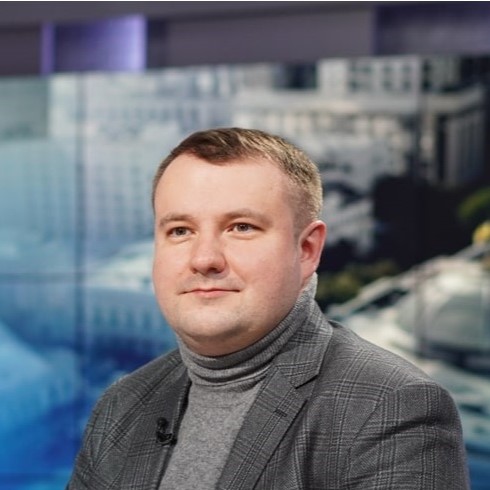
Petro Oleshchuk
Doctor en Ciencia Política y Profesor. Experto en el think tank United Ukraine

Oleksiy Kushch
Investigador en el think- tank United Ukraine
Es economista. Anteriormente dirigió el Departamento de Valores y el Centro Hipotecario en bancos comerciales y trabajó como director de gestión de valores en la Asociación de Bancos Ucranianos, así como director de una empresa de inversión.
Ahora en portada
13 de octubre de 2026
14 de octubre de 2026
Lo más leído