Viernes, 16 de octubre de 2026




The Differentiated Regionalism of the Italian Right
GREGORIO BORGIA (AP)
The Italian Senate has approved (110 in favour, 64 against and 3 abstentions) the bill to initiate the procedures for implementing a differentiated autonomy for the country’s fifteen ordinary Regions, and the text will soon pass to the Chamber of Deputies for a second reading. As is well known, Italy has two types of Regions, five special and the rest ordinary (a historical distinction that is still not without its detractors today), whose differences have been attenuated since the constitutional reform of Title V in 2001. With this project, under Article 116.3 of the Constitution, which had never been used until now and which was introduced in 2001, the door has been opened to the widening of regional asymmetries, as the possibility of formalising greater differentialism and variable geometry in the latter has been added to the classic (five/fifteen). The idea is to completely transfer to the ordinary Regions twenty competences hitherto shared with the central power in such fundamental areas as health, education, environment, transport, and energy, and three others that are exclusive to the State. All of this without first having defined with the utmost clarity what the essential basic levels should be, which must be provided equally throughout Italy. Differentiated autonomy is intended to correct the fiscal deficit in the North, but the project as presented runs the risk of widening territorial imbalances.
Italy has a level of regional decentralisation of 30%, much higher than that of France, although lower than that of Germany, Belgium, or Spain (Gianfranco Viesti: Contro la secessione dei ricchi. Autonomie regionali e unità nazionale, Laterza. Bari-Roma, 2023) and it was the Lega Nord (today simply Lega) that raised, sometimes even with secessionist overtones, the “northern question”. Since 2017, Lombardy, Veneto and Emilia-Romagna have been demanding the extension of their competences, and although the governments of Paolo Gentiloni and Giuseppe Conte initiated petitions in this regard, no progress was made, and the Covid-19 pandemic put the brakes on everything. Despite Meloni’s caution, the issue of differentiated regionalism is not at all technical, but profoundly political, and she does not seem to be able to gauge the serious problem of applying this new model in a country with such great economic differences between regions.
Naturally, this reform is strongly supported by the presidents of Lombardy (Attilio Fontana) and Veneto (Luca Zaia), both from Lega, but strongly opposed by the presidents of Campania (Vincenzo de Luca) and Puglia (Michele Emiliano), both from centre-left coalitions led by the Partito Democratico (PD). The majority supporting the Meloni government, not without some exceptions, supports this project, which the opposition as a bloc (including the centrist Matteo Renzi) does not. The advocates of differentiated regionalism believe that the reform will make the regions more responsible and that, by retaining the lion’s share of tax revenue, it will automatically (sic) improve efficiency by bringing spending closer to the needs of the territory. What they have not yet clarified is what the essential levels of basic services should be beforehand, which must be guaranteed equally for all Italian Regions. This is the main criticism of the opposition, who object that this reform will take away national resources for inter-territorial solidarity, fragment them according to the à la carte competences of each Region and make many services much more inefficient (Kevin Carboni: “I punti a favore e contrari all’autonomia differenziata”, Wired. Domande e risposte, 3 February 2023).
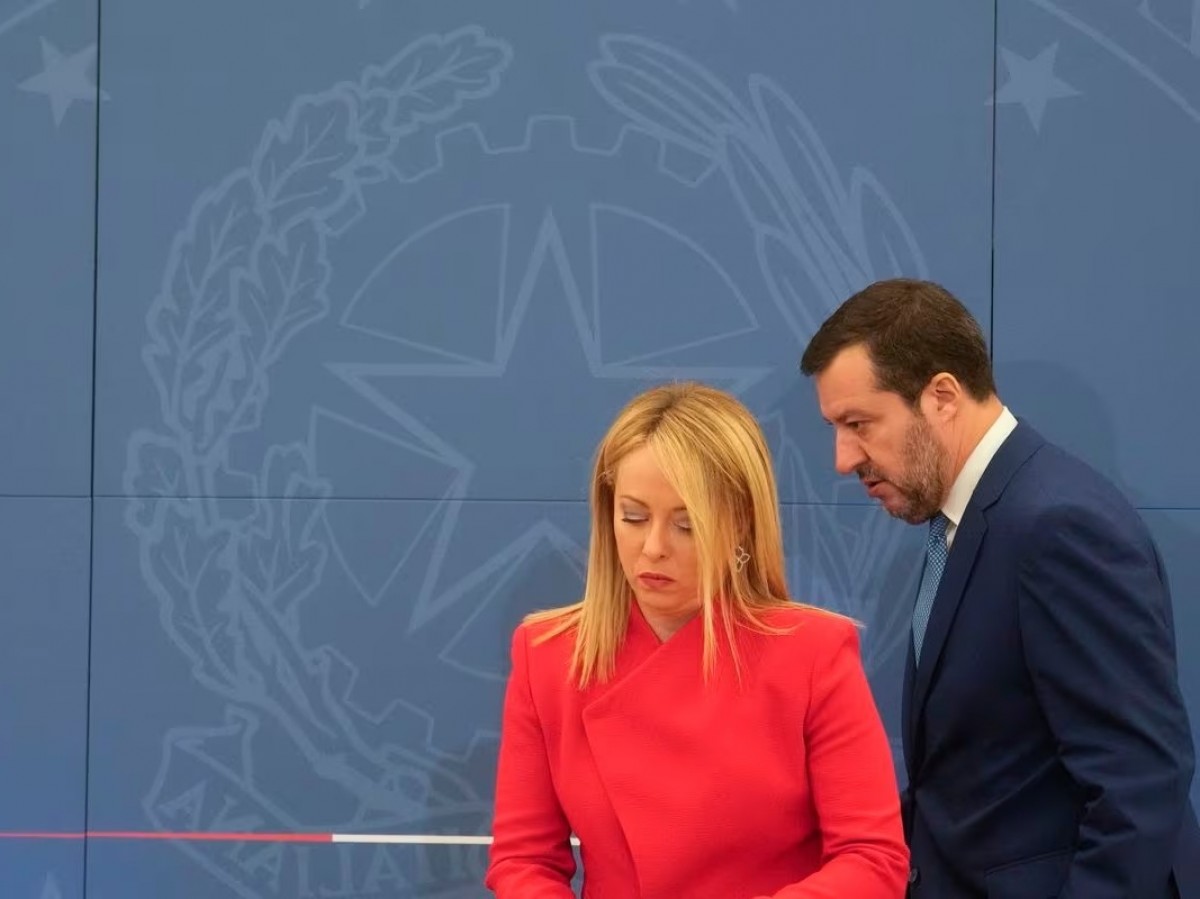
Meloni, an Italian identity sovereigntist (Andrea Palladino: Meloni segreta, Adriano Solani ed., Milan, 2023), has never welcomed regional political autonomy, and one of the Vice-Presidents of the Lower House, Fabio Rampelli, from her own party, Fratelli d’Italia (FdI), did not share Calderoli’s thesis of differentiated regionalism from the outset. However, she has agreed to start the process because he needs Lega to push through his project to reform the Premier’s office (popular election of the President of the Consiglio dei Ministri), despite the high risk of attrition that this entails. In fact, the FdI’s Minister for Relations with Parliament, Luca Ciriani, has linked the two proposals, which would reflect a clear exchange of favours since Lega is not enthusiastic about the Meloni formula for the election of the Prime Minister either. For its part, while it is true that Lega’s historical goal has always been to achieve maximum fiscal autonomy for the Northern Regions, the Italian nationalisation of the party under Matteo Salvini froze such a claim. This means that his position is no longer as solid as before because, despite a very promising start by extending Lega throughout Italy, he has since been clearly overtaken by FdI. As a result, the more “northern” and traditionalist sector of his party - without (yet) openly questioning his leadership - has dusted off that classic claim, among other factors because Lega’s fundamental electoral base is in the North. It is worth recalling that in 2018 Lega obtained 17.3% of the national vote and FdI a modest 4.3%, but in 2022 the tables turned drastically with the former at 8.9% and the latter at 26.0%. Therefore, although it is the populist radical right of Lega that is once again pushing for regional differentialism, something that doctrinally FdI does not share, everything points to a circumstantial compromise between the two government partners, each interested in a different project. To the differences between FdI and Lega and the latter’s hidden tensions must be added the fact that the third partner, Forza Italia, now in its death throes Silvio Berlusconi, must always be reckoned with, although Antonio Tajani - who claimed to have some initial ‘reservations’ - has now accepted the Calderoli proposal, subject to correcting some ‘technical’ details.
The PD was not opposed to increasing the autonomy of all the Regions, but it did not agree with either the form or the substance of the Calderoli project: Elly Schlein had stated that differentiated regionalism would widen the gap between the North and the South of the country and create two types of citizens according to the levels of competence of each Region. For the PD, this reform demonstrates the incapacity of the Meloni government and breaks national solidarity, hence if the LEPs (Livelli Essenziali di Prestazioni, art. 117.m of the Constitution) are not made as clear as possible, this reform cannot be accepted. For example, instead of asymmetrically decentralising health coverage, the PD considers that the opposite is lacking, i.e. much greater national coordination on a key issue for citizens, making it dysfunctional to give way to 20 different health systems. The Movimento 5 Stelle, which did not oppose differentiated autonomy under the first Conte government (with Lega), now rejects the Calderoli proposal because it would deteriorate basic services, aggravate inequalities and not offer sufficient guarantees. Alleanza Verdi-Sinistra is also against differentiated regionalism for breaking the principles of progressivity and solidarity. There is therefore a sense of circumstantial and tactical unity in the majority of the government and a high degree of cohesion of the entire opposition, which is highly critical of the Calderoli project.
In any case, the procedure for approving this new formula will be very laborious and time-consuming, which is why it is far from certain that it will be completed in the current legislature. If it is approved, the procedures are cumbersome: 1) initial agreement between the State and the region concerned, 2) sectoral amendments in a unified Conference, and 3) drafting of a bill to be submitted to the national Parliament (Various: “L’autonomia regionale ‘differenziata’ e la sua attuazione: questioni di procedura e di metodo, Astrid Paper, 93, April 2023). This project also has many shortcomings: it does not establish the prerequisites regarding the state of the accounts of each Region requesting the transfer of these powers, it does not specify the procedures for activating them, and it does not clarify the objective criteria for determining which Region is in a better position than another to take over these powers. There are citizens who live in one Region but earn their income in another, and there are national competences whose integral transfer is highly dysfunctional (environmental problems know no borders), and it is also controversial to cede economic resources depending on whether one has more or less autonomy.
The Gordian knot is the LEPs and without a precise definition, without strong national parliamentary control mechanisms and without a special reinforcement of judicial guarantees, it is impossible for the opposition to negotiate this reform. In addition to the problems of the health system mentioned above, in the education system there would be serious difficulties in programming and recruitment of teaching staff, and in the transport network it cannot be ignored that there are urban centres that are more closely linked to cities in other Regions: Verona (Veneto) has more links with Milan (Lombardy) or Terni (Umbria) with Rome (Lazio), for example. This is an ill-conceived and risky reform that could increase bureaucratic compartmentalisation and accentuate political fragmentation, with the practical risk of “deconstitutionalising” fundamental principles of national cohesion and inter-regional solidarity. Indeed, the Regions with more autonomy would be shielded and would find it very difficult to correct imbalances, while those lagging behind would see their services worsen. In sum, the Calderoli reform would only favour the Northern Regions because of their superior performance and greater resources and would intensify unequal inter-regional competition for funds. Considering regional tax revenue as a key parameter for determining eligibility for more autonomy could jeopardise minimum standards. Moreover, it is not even entirely clear that the Calderoli reform will benefit the Northern Regions very much since the South is the essential market for the former and if the South deteriorates further, the gains of the former will be reduced.
In conclusion, it is perfectly possible to increase regional decentralisation and self-government, as long as constitutional principles are respected and transfers are specified and delimited, something that the Calderoli project does not do. Italy is still far from a federal system: its Senate is useless in this respect, its fiscal model needs a strong modernisation and the distribution of competences cannot be left to the narrow negotiations of the parties of the current government majority.
[Receive the most up-to-date analysis to your email or mobile through our Telegram channel]
This project is being promoted by Lega and by the Minister for Regional Affairs Roberto Calderoli in particular (known at the time for having very undiplomatically defined the electoral law that bore his name by saying it was a porcata), and the underlying idea is to grant the Regions that request it not only the maintenance of the resources they received before (to preserve “historical spending”) but permission to retain the difference if they make savings and use the funds more efficiently. In other words, the virtuous Regions will be able to keep the surplus tax revenue (gettito) that will no longer be distributed on a national basis, and this points to a growing bilateral relationship between the State and certain Regions, since such a request could be made even if the levels of national provision of essential services had not been established. Although for the President of the Council of Ministers, Giorgia Meloni, this is a somewhat uncomfortable issue, she has accepted it for the time being, arguing that differentiated autonomy will strengthen national cohesion because it will be applied in accordance with the principle of subsidiarity, it being logical – in her opinion – that the Regions that are more careful in the management and administration of public funds and goods will enjoy more powers (Meloni’s speech at the Conference of Regions and Autonomous Provinces, Turin, October 2023). Meloni, an Italian nationalist with conviction, claims that this regional reform is “technical” and will not affect solidarity between North and South. From her point of view, it would be a matter of avoiding duplication and streamlining the provision of services, which would require a reorganisation of the distribution of competences. However, she admitted that it would be necessary to specify as precisely as possible which were central and which were regional, on the understanding that this would always be done within a common, indivisible framework.Italy has a level of regional decentralisation of 30%, much higher than that of France, although lower than that of Germany, Belgium, or Spain (Gianfranco Viesti: Contro la secessione dei ricchi. Autonomie regionali e unità nazionale, Laterza. Bari-Roma, 2023) and it was the Lega Nord (today simply Lega) that raised, sometimes even with secessionist overtones, the “northern question”. Since 2017, Lombardy, Veneto and Emilia-Romagna have been demanding the extension of their competences, and although the governments of Paolo Gentiloni and Giuseppe Conte initiated petitions in this regard, no progress was made, and the Covid-19 pandemic put the brakes on everything. Despite Meloni’s caution, the issue of differentiated regionalism is not at all technical, but profoundly political, and she does not seem to be able to gauge the serious problem of applying this new model in a country with such great economic differences between regions.
Naturally, this reform is strongly supported by the presidents of Lombardy (Attilio Fontana) and Veneto (Luca Zaia), both from Lega, but strongly opposed by the presidents of Campania (Vincenzo de Luca) and Puglia (Michele Emiliano), both from centre-left coalitions led by the Partito Democratico (PD). The majority supporting the Meloni government, not without some exceptions, supports this project, which the opposition as a bloc (including the centrist Matteo Renzi) does not. The advocates of differentiated regionalism believe that the reform will make the regions more responsible and that, by retaining the lion’s share of tax revenue, it will automatically (sic) improve efficiency by bringing spending closer to the needs of the territory. What they have not yet clarified is what the essential levels of basic services should be beforehand, which must be guaranteed equally for all Italian Regions. This is the main criticism of the opposition, who object that this reform will take away national resources for inter-territorial solidarity, fragment them according to the à la carte competences of each Region and make many services much more inefficient (Kevin Carboni: “I punti a favore e contrari all’autonomia differenziata”, Wired. Domande e risposte, 3 February 2023).
Meloni, an Italian identity sovereigntist (Andrea Palladino: Meloni segreta, Adriano Solani ed., Milan, 2023), has never welcomed regional political autonomy, and one of the Vice-Presidents of the Lower House, Fabio Rampelli, from her own party, Fratelli d’Italia (FdI), did not share Calderoli’s thesis of differentiated regionalism from the outset. However, she has agreed to start the process because he needs Lega to push through his project to reform the Premier’s office (popular election of the President of the Consiglio dei Ministri), despite the high risk of attrition that this entails. In fact, the FdI’s Minister for Relations with Parliament, Luca Ciriani, has linked the two proposals, which would reflect a clear exchange of favours since Lega is not enthusiastic about the Meloni formula for the election of the Prime Minister either. For its part, while it is true that Lega’s historical goal has always been to achieve maximum fiscal autonomy for the Northern Regions, the Italian nationalisation of the party under Matteo Salvini froze such a claim. This means that his position is no longer as solid as before because, despite a very promising start by extending Lega throughout Italy, he has since been clearly overtaken by FdI. As a result, the more “northern” and traditionalist sector of his party - without (yet) openly questioning his leadership - has dusted off that classic claim, among other factors because Lega’s fundamental electoral base is in the North. It is worth recalling that in 2018 Lega obtained 17.3% of the national vote and FdI a modest 4.3%, but in 2022 the tables turned drastically with the former at 8.9% and the latter at 26.0%. Therefore, although it is the populist radical right of Lega that is once again pushing for regional differentialism, something that doctrinally FdI does not share, everything points to a circumstantial compromise between the two government partners, each interested in a different project. To the differences between FdI and Lega and the latter’s hidden tensions must be added the fact that the third partner, Forza Italia, now in its death throes Silvio Berlusconi, must always be reckoned with, although Antonio Tajani - who claimed to have some initial ‘reservations’ - has now accepted the Calderoli proposal, subject to correcting some ‘technical’ details.
The PD was not opposed to increasing the autonomy of all the Regions, but it did not agree with either the form or the substance of the Calderoli project: Elly Schlein had stated that differentiated regionalism would widen the gap between the North and the South of the country and create two types of citizens according to the levels of competence of each Region. For the PD, this reform demonstrates the incapacity of the Meloni government and breaks national solidarity, hence if the LEPs (Livelli Essenziali di Prestazioni, art. 117.m of the Constitution) are not made as clear as possible, this reform cannot be accepted. For example, instead of asymmetrically decentralising health coverage, the PD considers that the opposite is lacking, i.e. much greater national coordination on a key issue for citizens, making it dysfunctional to give way to 20 different health systems. The Movimento 5 Stelle, which did not oppose differentiated autonomy under the first Conte government (with Lega), now rejects the Calderoli proposal because it would deteriorate basic services, aggravate inequalities and not offer sufficient guarantees. Alleanza Verdi-Sinistra is also against differentiated regionalism for breaking the principles of progressivity and solidarity. There is therefore a sense of circumstantial and tactical unity in the majority of the government and a high degree of cohesion of the entire opposition, which is highly critical of the Calderoli project.
In any case, the procedure for approving this new formula will be very laborious and time-consuming, which is why it is far from certain that it will be completed in the current legislature. If it is approved, the procedures are cumbersome: 1) initial agreement between the State and the region concerned, 2) sectoral amendments in a unified Conference, and 3) drafting of a bill to be submitted to the national Parliament (Various: “L’autonomia regionale ‘differenziata’ e la sua attuazione: questioni di procedura e di metodo, Astrid Paper, 93, April 2023). This project also has many shortcomings: it does not establish the prerequisites regarding the state of the accounts of each Region requesting the transfer of these powers, it does not specify the procedures for activating them, and it does not clarify the objective criteria for determining which Region is in a better position than another to take over these powers. There are citizens who live in one Region but earn their income in another, and there are national competences whose integral transfer is highly dysfunctional (environmental problems know no borders), and it is also controversial to cede economic resources depending on whether one has more or less autonomy.
The Gordian knot is the LEPs and without a precise definition, without strong national parliamentary control mechanisms and without a special reinforcement of judicial guarantees, it is impossible for the opposition to negotiate this reform. In addition to the problems of the health system mentioned above, in the education system there would be serious difficulties in programming and recruitment of teaching staff, and in the transport network it cannot be ignored that there are urban centres that are more closely linked to cities in other Regions: Verona (Veneto) has more links with Milan (Lombardy) or Terni (Umbria) with Rome (Lazio), for example. This is an ill-conceived and risky reform that could increase bureaucratic compartmentalisation and accentuate political fragmentation, with the practical risk of “deconstitutionalising” fundamental principles of national cohesion and inter-regional solidarity. Indeed, the Regions with more autonomy would be shielded and would find it very difficult to correct imbalances, while those lagging behind would see their services worsen. In sum, the Calderoli reform would only favour the Northern Regions because of their superior performance and greater resources and would intensify unequal inter-regional competition for funds. Considering regional tax revenue as a key parameter for determining eligibility for more autonomy could jeopardise minimum standards. Moreover, it is not even entirely clear that the Calderoli reform will benefit the Northern Regions very much since the South is the essential market for the former and if the South deteriorates further, the gains of the former will be reduced.
In conclusion, it is perfectly possible to increase regional decentralisation and self-government, as long as constitutional principles are respected and transfers are specified and delimited, something that the Calderoli project does not do. Italy is still far from a federal system: its Senate is useless in this respect, its fiscal model needs a strong modernisation and the distribution of competences cannot be left to the narrow negotiations of the parties of the current government majority.
Se puede leer el artículo original en español
ARTÍCULOS RELACIONADOS

Cesáreo Rodríguez-Aguilera de Prat
Catedrático de Ciencia Política de la Universidad de Barcelona
Ahora en portada
16 de octubre de 2026
16 de octubre de 2026
16 de octubre de 2026
Noticias relacionadas
Hace 139 semanas
Playing Both Sides at Once: Giorgia Meloni in Government
Hace 151 semanas
What Does Giorgia Meloni’s Constitutional Reform Aim to Achieve?
Lo más leído