
Climate Change and Agriculture: Between Conflict and Cooperation
We are living through a period of climate change that has tangible effects on our daily lives by jeopardising access to basic resources (water) and altering the way we produce goods and services (especially food). However, identifying the causes of these climate change phenomena and finding solutions to them is no easy task, which explains why they are topics of debate, forming part of today’s social and political agenda.
Nevertheless, there is already a broad consensus in the scientific community on the causal factors, attributing them to excess emissions of carbon oxide and methane, which produce the so-called “greenhouse effect”. It is also known that these emissions are largely associated with the current economic development model, based on the unlimited consumption of goods and services and high doses of energy from cheap and easily accessible fossil resources, but which, in their combustion, emit these greenhouse gases (GHG).
[Receive the most up-to-date analysis to your email or mobile through our Telegram channel]
The recognition of this problem is not a recent development. As early as July 1994, the UN promoted the “United Nations Framework Convention on Climate Change” (UNFCCC). Its objective was, and still is thirty years later, to take action to curb the causes of global warming. Since then, so-called “conferences of the parties” (COPs) on climate change have been held in various cities, the latest being COP-28 in Dubai last December.Progress in the “mitigation” of GHG emissions is complex, given the difficulties of implementing the major COP agreements. For this reason, and in parallel, public authorities and civil society (companies, citizens, private entities, etc.) are taking initiatives to “adapt” to changes in the climate. Both principles (mitigation and adaptation) complement each other, each at its own pace and with its own logic, interacting to face the climate challenge of our time.
Agriculture: Victim, solution, and problemAgriculture is one of the sectors most affected by this problem, due to its natural dependence on weather conditions. The erratic alternation of long periods of drought, high temperatures and torrential rains that cause severe flooding, in addition to altering the flowering and fruit ripening seasons, have a clear impact on the results of agricultural and livestock activity. Farmers are therefore the first to have an interest in solving these problems and are the most aware of their seriousness, and there is not the slightest hint of climate denialism among them.
However, agriculture is also a direct cause of GHG emissions (especially methane emissions from livestock), although to a much lesser extent than the industrial sector. Indirectly, the high consumption of synthetic fertilisers, the production of which requires high doses of fossil fuels (natural gas and oil), also contributes to the problem of global warming.
At the same time, however, agriculture is a key sector in its solution thanks to the CO2 capture function performed by plants in the process of photosynthesis. Therefore, agriculture is both a problem and a solution, converging both the principle of mitigation and the principle of adaptation.
The European Green Pact and Climate Change MitigationThe European Green Pact, with its two strategies “From Farm to Fork” and “Biodiversity”, is the document where the EU sets its objectives to contribute not only to climate change mitigation, but also to the restoration of biodiversity and the recovery of ecosystems. This document permeates European policies, including the CAP, and therefore has direct implications for the agricultural sector.
The Pact’s objective of reducing fertiliser and pesticide consumption affects the way we produce, as do the eco-regimes included in the current CAP, which promote a shift in agricultural and livestock farming practices towards more environmentally sustainable and less carbon-intensive models. This is accompanied by an increase in administrative controls, which inevitably generates reactions of rejection from the sector.
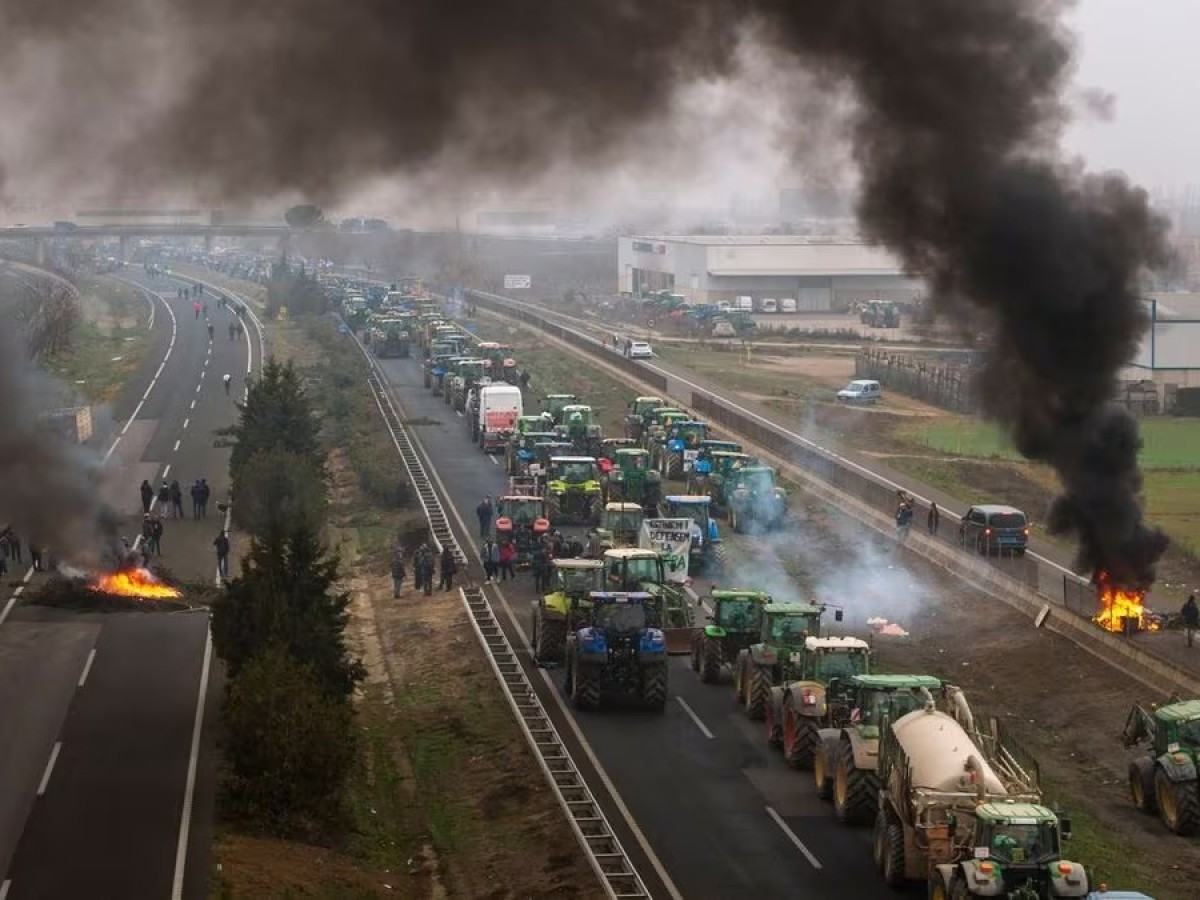
Farmers do not reject environmental measures, as they consider them necessary, but they demand that they be applied gradually, offering alternatives and providing adequate economic compensation, as well as also applying to products from third countries. These are some of the demands included in the latest agricultural protest.
Farmers’ Adaptation to Climate ChangeBeyond the mitigation policies included in the CAP, farmers are adapting on their own initiative to the current climate change situation by installing solar panels on wells (for water extraction) or on livestock farms (for lighting stables and mechanical milking).
They also innovate in production processes, using high-precision machinery powered by non-fossil fuels to save water resources and reduce fertiliser consumption. They also use new seed varieties, which are better adapted to climatic conditions with less rain and higher temperatures.
Finally, they apply digitalisation in the management of their farms, improving economic performance while ensuring the sustainability of the natural resources that are their main livelihood.
Necessary CooperationSince farmers work in contact with nature and have a direct impact on the environment, it is not possible to make progress in the necessary ecological transition without the cooperation of the agricultural sector.
For this reason, both the ministries in charge of this area and the environmental movements are beginning to see the agricultural and livestock production sector not as an enemy, but as a necessary collaborator. They are opening channels of dialogue with agricultural organisations so that farmers also feel that they are part of a process of change that affects the whole of society, but especially the sector itself.
Se puede leer el artículo original en español