Sábado, 24 de octubre de 2026


CONVERSATIONS
Carlos Díaz-Rosillo, former White House adviser: "Trump wants an even closer alliance with Europe"
Carlos Díaz-Rosillo, former White House Director of Policy and Interagency Coordination, speaks with 'Agenda Pública' staff-writer Jorge de Diego at Foro La Toja about the future of tariffs, relations with Europe and competition with China. The former Donald Trump adviser explains why he believes the president has strengthened NATO and how personal relationships shape Trump's negotiating strategy. He also discusses Cuba, where he predicts political change: "I'm convinced there will be a change."
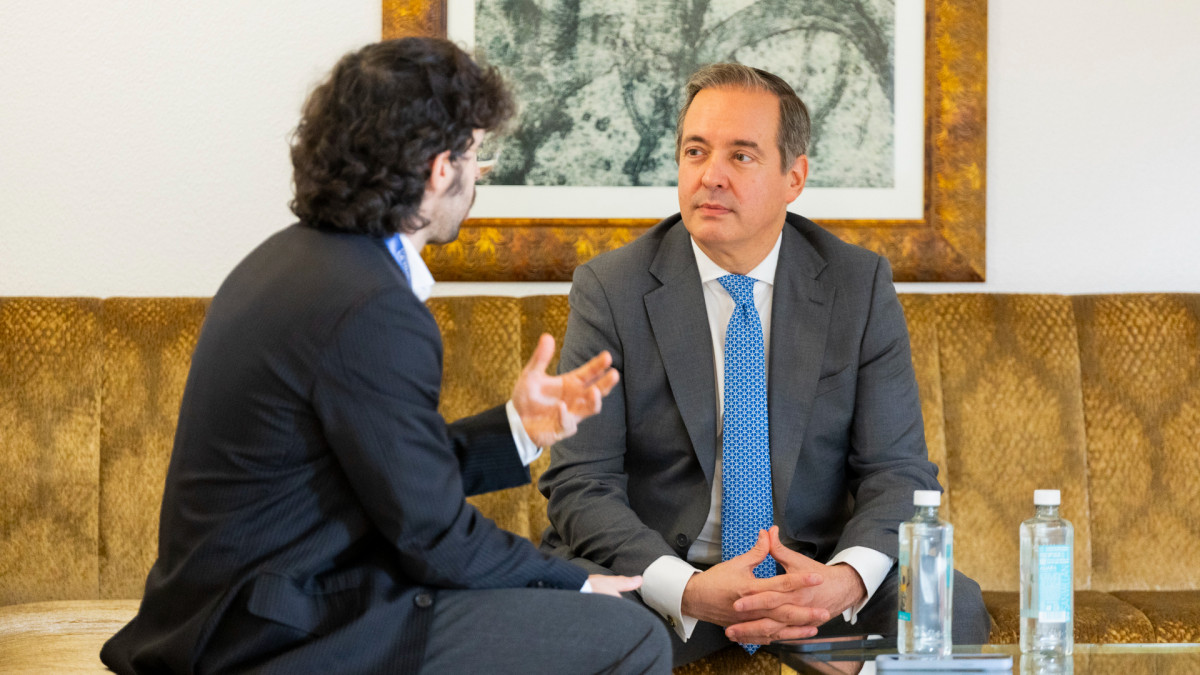
Carlos Díaz-Rosillo (right) speaks with 'Agenda Pública' following his talk at Foro La Toja.Agenda Pública / Yanka Soto
It's easier to understand someone else's point of view when there's no ocean between you. The La Toja Forum brings the two sides of the Atlantic together, but listening to Carlos Díaz-Rosillo made it clear that a gulf still separates the United States and Europe. Perhaps that gulf isn't as wide as we think.
Europe has spent years debating how to become less dependent on the United States. But it is hard to have that conversation without first talking about Donald Trump, whom Díaz-Rosillo came to know well as the White House's public policy director. During Trump's first administration, the political scientist became immersed in the negotiating approach described in The Art of the Deal. I asked him to look at it from Europe's side of the table and explain how Europeans should approach Trump: "It's easy to figure out what [Trump] wants, and when you know what the other side is trying to achieve, negotiating becomes much easier," he told me.
We also covered other aspects of U.S. foreign policy. Díaz-Rosillo, now the founding director of the Adam Smith Center for Economic Freedom, believes that the upcoming congressional elections could push Trump to focus his efforts outside the United States. He is also convinced that some of Trump's policies, including tariffs, will outlast his presidency, even if a Democrat succeeds him.
We discussed NATO, China and why, in his view, Europe has more opportunities than threats in its relationship with Washington. And because we both have Cuban roots, I asked him about the island's geopolitical situation and Trump's possible next moves. The former Trump adviser expects political change, but not through direct military intervention like the one in Venezuela. He believes it will come "from within."
After hearing him out, one might conclude that the divide between Europe and the United States has less to do with their interests than with what each expects from the other.
I'd like to start with something you said during the forum that I found particularly interesting: the idea of Trump 3.0. What consequences do you think this new phase could have, first for U.S. domestic politics and then for relations with Europe?
On the domestic front, I think we'll see very little legislative activity. Making major changes to public policy requires Congress. If Democrats win control of Congress, Trump won't have the votes he needs to pass legislation. He'll focus instead on what he can do through executive action, although there's not much he can do on domestic policy that way. He can enforce existing laws more or less aggressively and prioritize certain issues, but he can't change public policy by executive order.
Do you see that as a problem or an opportunity for Europe?
A great opportunity. His remarks often spark controversy, but I think he's right about a lot of what he says. We can debate how he delivers his message, but when it comes to NATO, for example, an issue of fundamental importance to Europe, I think the alliance is stronger today because Trump has demanded that its members spend on defense what they pledged to spend. We can debate his approach, but there's a lot of truth to his message.
You said here at La Toja that some of Trump's ideas are here to stay, even after his presidency ends. Which ones will endure, even if a Democrat takes office?
I'd highlight two things. The first is tariffs, which I think are here to stay. Tariffs may come down, and the rates may change, but I don't see a Democratic administration giving up that revenue. That revenue gives the president a great deal of flexibility to fund projects that matter to him. That's why I don't think tariffs will go down to zero, even under a Democratic administration.
You worked in the White House, closely with Trump. If you were advising Europe, how would you recommend approaching him?
Negotiating with Trump is relatively easy. He's quite transparent: he tells you what he's going to do, and then he does it. As I mentioned, his first book [Trump: The Art of the Deal] lays out his strategy very clearly. It's easy to figure out what he wants, and when you know what the other side is trying to achieve, negotiating becomes much easier.
The first thing is to understand why he does what he does and says what he says, including his frustration with what he sees as a world that takes advantage of America's goodwill. He was elected president of the United States, not to be popular in Brussels or Paris, but to defend the interests of Americans. He doesn't care at all about being popular in foreign capitals. Understanding that can be very helpful to any leader.
It's clear that Europe isn't competing with the United States right now, and America's main rival is China. But given that rivalry, and Trump's particular approach to Europe, wouldn't it be easier for the United States to compete with China if Europe were closer to Washington?
Absolutely, and I think that's exactly what he wants. But as I mentioned during the panel, reciprocity is a sticking point. Trump would like an even closer alliance with Europe, but he doesn't believe the relationship is reciprocal at the moment.
You and I both have Cuban roots. What do you think will happen on the island? What does Trump have in mind?
I'm convinced there will be change. The war in Iran has delayed it beyond what many of us expected, because the United States is so focused on that conflict. Trump has said clearly, time and again, that Cuba will be the next country in the Western Hemisphere to see change. I have no doubt it will happen. I don't foresee a military invasion, and I don't think it will play out exactly as it did in Venezuela. It will be similar in the sense that there will be change, but I don't think it will involve an operation to physically remove the country's leader, because there are many differences.
So do you think democracy is the real motivation, or are there other interests at play?
Both Trump and Secretary of State Marco Rubio, for whom Cuba is personal, ultimately want a free and democratic Cuba. I have no doubt about that. But to get there, operational control of the country has to be secured first. Right now, the only ones who can guarantee that are the military, who are themselves part of the system.
Europe has spent years debating how to become less dependent on the United States. But it is hard to have that conversation without first talking about Donald Trump, whom Díaz-Rosillo came to know well as the White House's public policy director. During Trump's first administration, the political scientist became immersed in the negotiating approach described in The Art of the Deal. I asked him to look at it from Europe's side of the table and explain how Europeans should approach Trump: "It's easy to figure out what [Trump] wants, and when you know what the other side is trying to achieve, negotiating becomes much easier," he told me.
We also covered other aspects of U.S. foreign policy. Díaz-Rosillo, now the founding director of the Adam Smith Center for Economic Freedom, believes that the upcoming congressional elections could push Trump to focus his efforts outside the United States. He is also convinced that some of Trump's policies, including tariffs, will outlast his presidency, even if a Democrat succeeds him.
We discussed NATO, China and why, in his view, Europe has more opportunities than threats in its relationship with Washington. And because we both have Cuban roots, I asked him about the island's geopolitical situation and Trump's possible next moves. The former Trump adviser expects political change, but not through direct military intervention like the one in Venezuela. He believes it will come "from within."
After hearing him out, one might conclude that the divide between Europe and the United States has less to do with their interests than with what each expects from the other.
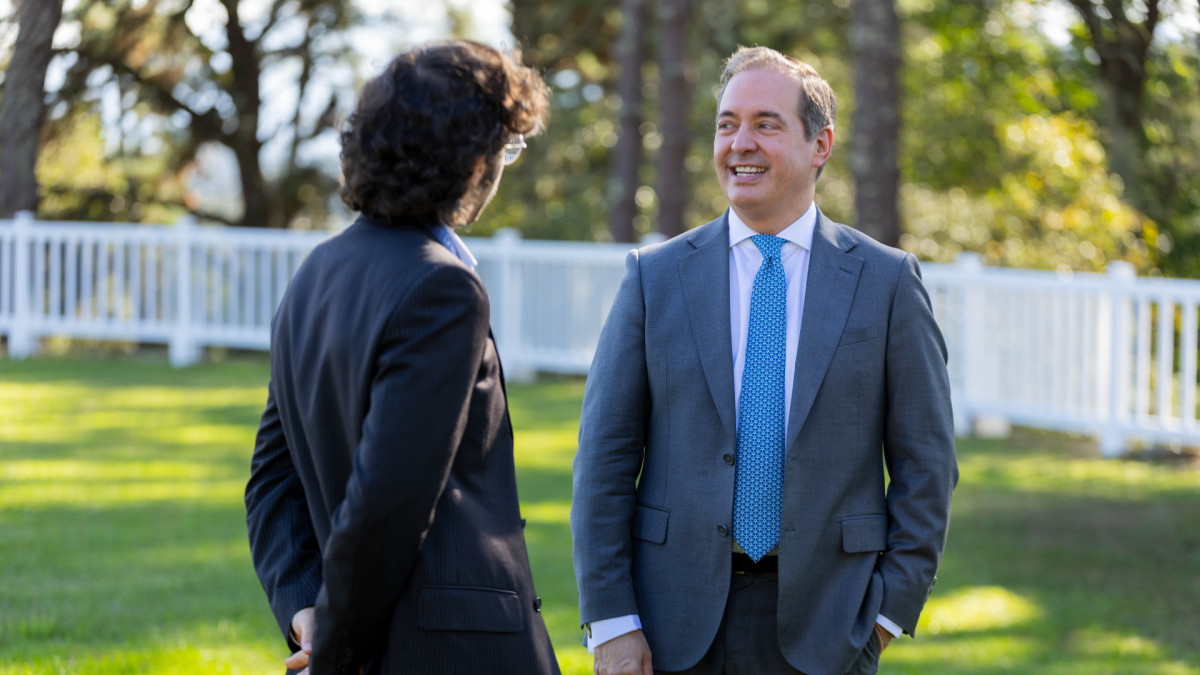
Díaz-Rosillo is the founding director of the Adam Smith Center for Economic Freedom, a think tank at Florida International University. Photo: Agenda Pública / Yanka Soto
I'd like to start with something you said during the forum that I found particularly interesting: the idea of Trump 3.0. What consequences do you think this new phase could have, first for U.S. domestic politics and then for relations with Europe?
On the domestic front, I think we'll see very little legislative activity. Making major changes to public policy requires Congress. If Democrats win control of Congress, Trump won't have the votes he needs to pass legislation. He'll focus instead on what he can do through executive action, although there's not much he can do on domestic policy that way. He can enforce existing laws more or less aggressively and prioritize certain issues, but he can't change public policy by executive order.
"If Democrats win control of Congress, Trump won't have the votes he needs to pass legislation. He'll focus instead on what he can do through executive action"That will probably frustrate him and lead him to concentrate on the area where he has much more room to act unilaterally: foreign policy. The president has considerable power over foreign policy, and I think he'll devote much of his time to it.
Do you see that as a problem or an opportunity for Europe?
A great opportunity. His remarks often spark controversy, but I think he's right about a lot of what he says. We can debate how he delivers his message, but when it comes to NATO, for example, an issue of fundamental importance to Europe, I think the alliance is stronger today because Trump has demanded that its members spend on defense what they pledged to spend. We can debate his approach, but there's a lot of truth to his message.
You said here at La Toja that some of Trump's ideas are here to stay, even after his presidency ends. Which ones will endure, even if a Democrat takes office?
I'd highlight two things. The first is tariffs, which I think are here to stay. Tariffs may come down, and the rates may change, but I don't see a Democratic administration giving up that revenue. That revenue gives the president a great deal of flexibility to fund projects that matter to him. That's why I don't think tariffs will go down to zero, even under a Democratic administration.
"Tariffs may come down, and the rates may change, but I don't see a Democratic administration giving up that revenue"The second is the "America First" approach. The average American voter feels that other countries have taken advantage of the United States' goodwill. And although the United States has benefited from free-trade agreements and globalization, those voters believe other countries have benefited more. That's why there will continue to be a strong emphasis on prioritizing the United States over the rest of the world and making sure that any foreign policy delivers a tangible benefit to American voters. That approach is going to last.
You worked in the White House, closely with Trump. If you were advising Europe, how would you recommend approaching him?
Negotiating with Trump is relatively easy. He's quite transparent: he tells you what he's going to do, and then he does it. As I mentioned, his first book [Trump: The Art of the Deal] lays out his strategy very clearly. It's easy to figure out what he wants, and when you know what the other side is trying to achieve, negotiating becomes much easier.
The first thing is to understand why he does what he does and says what he says, including his frustration with what he sees as a world that takes advantage of America's goodwill. He was elected president of the United States, not to be popular in Brussels or Paris, but to defend the interests of Americans. He doesn't care at all about being popular in foreign capitals. Understanding that can be very helpful to any leader.
"He was elected president of the United States, not to be popular in Brussels or Paris, but to defend the interests of Americans"It's also important to understand how much he values personal relationships. Getting along with the person across the table matters to him, but that doesn't mean telling him what he wants to hear. Trump has a lot of respect for strength, and he doesn't like leaders who show weakness or try to please him. He likes leaders who project strength and understand how important personal relationships are to him.
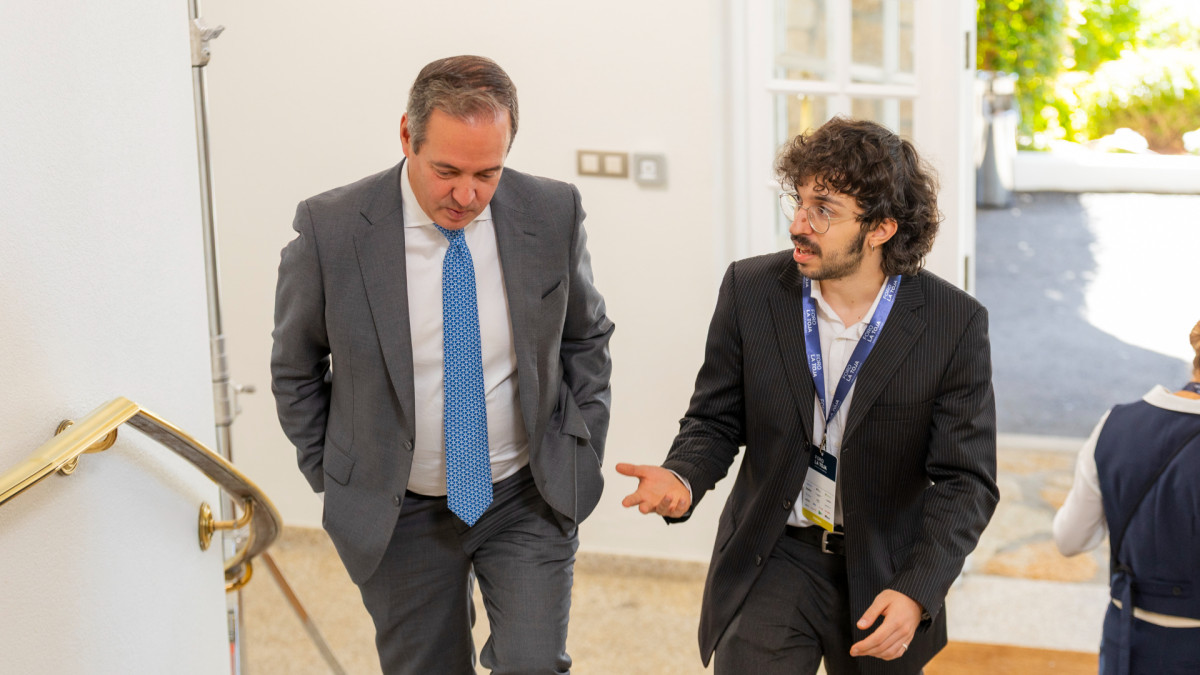
In addition to his political roles, Díaz-Rosillo has taught at Harvard University. Photo: Agenda Pública / Yanka Soto
It's clear that Europe isn't competing with the United States right now, and America's main rival is China. But given that rivalry, and Trump's particular approach to Europe, wouldn't it be easier for the United States to compete with China if Europe were closer to Washington?
Absolutely, and I think that's exactly what he wants. But as I mentioned during the panel, reciprocity is a sticking point. Trump would like an even closer alliance with Europe, but he doesn't believe the relationship is reciprocal at the moment.
"Trump would like an even closer alliance with Europe, but he doesn't believe the relationship is reciprocal at the moment"The big risk with his strategy is that Europe becomes disillusioned and ends up moving closer to China. But if Europe is sensible and understands that the United States is its natural ally in defense, trade, and culture, I don't think that will happen. The risk is there, and it would be particularly dangerous for Europe, but no strategy is risk-free.
You and I both have Cuban roots. What do you think will happen on the island? What does Trump have in mind?
I'm convinced there will be change. The war in Iran has delayed it beyond what many of us expected, because the United States is so focused on that conflict. Trump has said clearly, time and again, that Cuba will be the next country in the Western Hemisphere to see change. I have no doubt it will happen. I don't foresee a military invasion, and I don't think it will play out exactly as it did in Venezuela. It will be similar in the sense that there will be change, but I don't think it will involve an operation to physically remove the country's leader, because there are many differences.
"Trump has said clearly, time and again, that Cuba will be the next country in the Western Hemisphere to see change"Cuba's current leader isn't the one calling the shots, unlike Maduro, who really was in charge in Venezuela. And we're talking about a regime that has been in power for nearly seventy years. That's why I think change will come from within. Trump will bring about that change from within the system, allowing the U.S. government to work with someone who will probably come from that same system to ensure operational control of the country. A democratic process will eventually follow, but it won't happen overnight, or even in a week. It will take several months, if not years.
So do you think democracy is the real motivation, or are there other interests at play?
Both Trump and Secretary of State Marco Rubio, for whom Cuba is personal, ultimately want a free and democratic Cuba. I have no doubt about that. But to get there, operational control of the country has to be secured first. Right now, the only ones who can guarantee that are the military, who are themselves part of the system.
"Both Trump and Secretary of State Marco Rubio, for whom Cuba is personal, ultimately want a free and democratic Cuba"So although democracy is the long-term goal, the priorities in the short and medium term are to take operational control of the country and revive the economy. And that economic recovery should benefit not just Cubans, who of course must benefit, but the United States as well. After all, Trump is president of the United States, not Cuba.
En alianza con
.png)
Jorge de Diego Hurtado
Redactor en 'Agenda Pública'
Politólogo y analista electoral. Cuenta con experiencia en consultoría en Bruselas y actualmente es redactor en 'Agenda Pública'. También es cofundador de 'El Tablero Político'.
Agenda Pública Corp
Análisis de políticas públicas
'Agenda Publica' impulsa alianzas con organizaciones, empresas y sociedad civil para generar contenidos de interés para nuestros lectores. Las piezas se elaboran por nuestro equipo de forma autónoma.
Ahora en portada
23 de octubre de 2026