Lunes, 12 de octubre de 2026




BORDER EMERGENCY
Hybrid warfare: Ceuta in the crosshairs. 'Veritas vos liberabit'
The Ceuta crisis has turned disinformation, border control and the European response into a single political battle. Hana Jalloul, a PSOE MEP, Vice-Chair of the Committee on Foreign Affairs (AFET) and a member of the S&D Group, argues that the answer is not to pit security against human rights, but to strengthen cooperation, anticipate disinformation and build a genuinely common migration policy in the European Union.
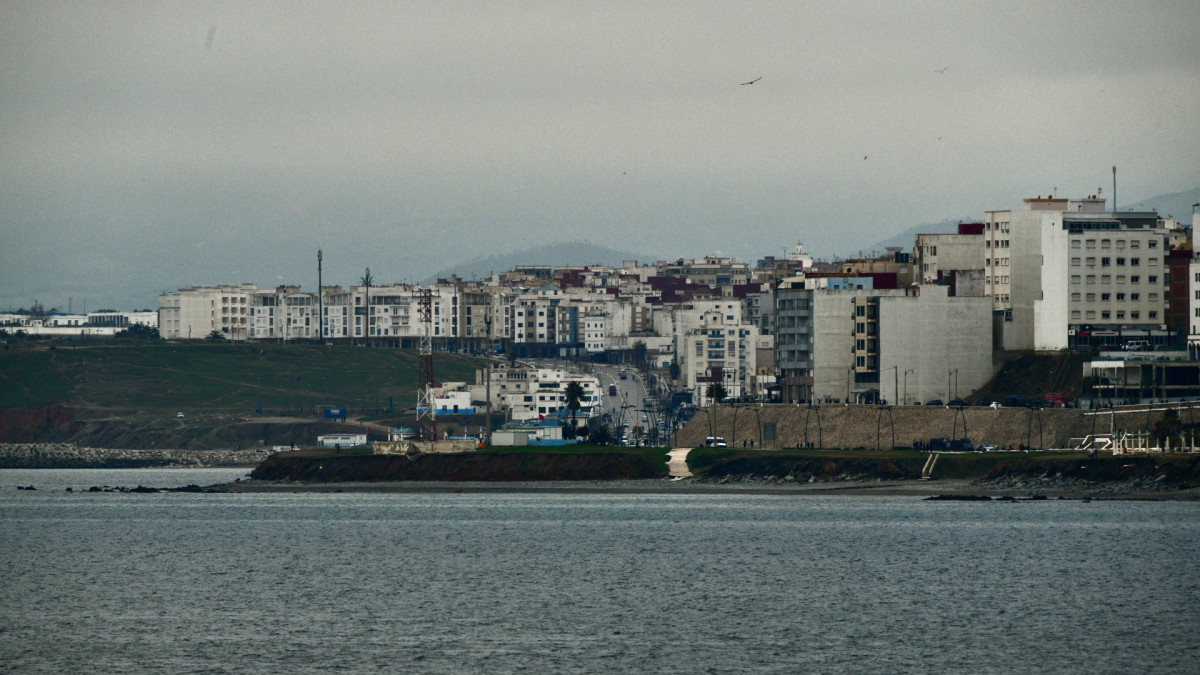
View of Castillejos, Morocco.Antonio Sempere / Europa Press
People come first. More than seventy people have lost their lives on the Spanish side of the border while trying to reach Ceuta, and available estimates put the total death toll on both sides of the border at more than one hundred. Each of them was the victim of a human tragedy, but also of deception: the spread of false information that portrayed an extremely dangerous route as an open door and a ruling intended to protect the rights and safeguards of people at the border as though it granted them a right to remain in Spain.
However, social media, messaging groups and migrant-smuggling networks spread a different message: simply crossing by sea was enough to be protected from any return. Videos posted by people who had managed to enter reinforced a false sense that the crossing was easy and safe. This was compounded by another false claim linking the arrivals to the extraordinary regularisation scheme approved by the Government, even though the measure applies exclusively to people who were already living in Spain before 1 January 2026 and can demonstrate a continuous period of prior residence.
That is how deception works: it takes a partial truth, strips away its limits and turns it into a promise. Fighting smuggling networks also means fighting disinformation, improving early-warning systems and coordinating rapid and credible public communication between Spain, the European Union and its partners.
And it is important to stress this point: entering Ceuta does not in any way guarantee access to mainland Spain or freedom of movement throughout the rest of the Schengen area. Ceuta has a special status, and Spain maintains identity and document checks on sea and air connections from the city to mainland Spain and other Schengen territories.
European interior ministers explicitly recognised the speed and effectiveness of Spain's response. They also backed international cooperation, action against smuggling networks, stronger return procedures and better mechanisms for early warning and monitoring disinformation. The response was neither improvised nor permissive: it restored border control without abandoning the rule of law.
Nor does this episode invalidate our migration policy. On the contrary, it confirms the need to maintain an orderly, safe and regular model based on cooperation with countries of origin and transit, legal pathways, circular migration, integration and respect for human dignity. Regularising people who have been living and working in Spain for months or years does not amount to rewarding a recent irregular entry. It means bringing those people out of the informal economy, guaranteeing rights and obligations, promoting social cohesion and recognising a social and economic reality that already exists.
A separate and particularly serious matter was the subsequent decision by Giorgia Meloni's Government to introduce checks on passengers arriving from Spain, citing the Ceuta crisis. First came the political offensive against Spain's regularisation programme; then, using Ceuta as its justification, extraordinary checks were imposed on travellers arriving from Spain.
The contradiction is obvious. According to Frontex, Italy is the Member State that has recorded the highest number of irregular border crossings in recent years, with figures that have at times been twice those recorded by Spain. Spain never responded by imposing checks on Italy. On the contrary, it showed solidarity when pressure was concentrated on Lampedusa, received some of those people and has repeatedly opened its ports to migrants rescued along the Central Mediterranean route. It is difficult to justify controls supposedly based on the risk of secondary movements from Ceuta when no such movements occurred.
The disinformation was not confined to Europe. Elon Musk described the arrivals as an "invasion", circulated images comparing them to a zombie horde and even claimed that illegal immigration would consume Spain's entire budget. From Israel, its ambassador to the United Nations, Danny Danon, used the crisis to question Spanish sovereignty over Ceuta and Melilla, describing them as "colonial enclaves". The Israeli Embassy in Spain subsequently distanced itself from those remarks and stated that they did not represent the position of the State of Israel.
That challenge to our sovereignty has also found an echo in the United States. Months before the crisis, a report by the House Appropriations Committee, promoted by Republican Mario Díaz-Balart, placed Ceuta and Melilla "in Moroccan territory", described them as cities "under Spanish administration" and urged Secretary of State Marco Rubio to promote talks between Spain and Morocco over their "future status". This is not an officially adopted position of the US Government, but it nonetheless represents a particularly serious precedent.
The Trump Administration later used the Ceuta crisis to attack the Spanish Government directly. Donald Trump attributed what happened to Spain's "weak laws" and "mismanagement", while the State Department claimed that the arrivals were a direct consequence of the Spanish Government's deliberate efforts to facilitate mass illegal immigration into Europe. It was an unfounded accusation that shifted responsibility away from those who spread disinformation and exploited migration routes and onto Spanish policy itself.
Reality ultimately prevailed. Ursula von der Leyen pointed out that none of the people who had arrived in Ceuta had reached mainland Spain or another Member State, and the subsequent meeting of interior ministers expressed unanimous solidarity with Spain and recognised the effectiveness of its response. Even those who had initially made accusations had to accept the facts.
Because this was not solely a Spanish crisis. Ceuta is an external border of the European Union, and any attempt to place it under pressure affects the Union's entire southern border. Spain was protecting its territory, but it was also protecting an EU external border.
The Pact on Migration and Asylum, applicable since June 2026, exists precisely to respond to situations such as this. Its logic is to combine secure external borders and effective procedures with safeguards for individuals and, above all, solidarity mechanisms designed to ensure that a Member State facing extraordinary migratory pressure does not have to deal with it alone. Ceuta demonstrates why migration cannot be managed through isolated national decisions, recriminations between partners or improvised internal border controls, but requires a genuine common European policy.
Here too, Spain has demonstrated leadership. Pedro Sánchez has spent years building a recognisable international position based on the defence of multilateralism, European autonomy and a distinctive progressive agenda in a Europe that has shifted towards more conservative positions. The international press has reflected this: The Guardian has described him, in the wake of Ceuta, as a progressive exception in Europe; Le Monde has highlighted his strength on the world stage; and, in the Arab press, Al Jazeera has referred to the "Spanish exception" when analysing his migration policy, while Asharq Al-Awsat has contrasted his "shine abroad" with his domestic difficulties. That international visibility also helps explain why his decisions attract support, but also particularly intense attacks from governments and political actors at the opposite end of the political spectrum.
There is also a second, deeper battle. We are living through a period of increasingly opposing political visions of how migration should be managed. Part of the right and the far right favours exceptional measures, externalisation, mass deportations and the constant construction of migration as a threat. In contrast, progressive governments such as Spain's argue that security, legality, integration and human rights are not mutually exclusive. That approach is also beginning to find new echoes on the other side of the Atlantic. In the United States, a new generation of leaders on the Democratic Party's left, including figures such as Zohran Mamdani, is placing the protection of migrants' rights and dignity and opposition to Donald Trump's mass-deportation policies at the heart of an alternative political project. These are not identical policies, but they share one essential principle: managing migration in an orderly way does not require dehumanising migrants.
Ceuta demands accountability, lessons and European solidarity. Above all, however, it requires us to look again at the victims. They did not die because of a policy based on human rights. They died because someone turned disinformation into a business, desperation into an opportunity and the sea into a false promise. Preventing it from happening again requires more truth, a greater capacity to anticipate events, more cooperation and a common migration policy capable of protecting borders and lives at the same time.
Disinformation and the migration crisis: what happened in Ceuta
The immediate trigger for the mass arrivals was the misrepresentation of a Supreme Court ruling. The judgment established that the special border rejection procedure could not automatically be applied to people arriving by swimming, because all administrative action must respect legal safeguards and fundamental rights. It did not say that anyone who reached Ceuta would be allowed to remain, nor did it prevent their return through ordinary procedures.However, social media, messaging groups and migrant-smuggling networks spread a different message: simply crossing by sea was enough to be protected from any return. Videos posted by people who had managed to enter reinforced a false sense that the crossing was easy and safe. This was compounded by another false claim linking the arrivals to the extraordinary regularisation scheme approved by the Government, even though the measure applies exclusively to people who were already living in Spain before 1 January 2026 and can demonstrate a continuous period of prior residence.
That is how deception works: it takes a partial truth, strips away its limits and turns it into a promise. Fighting smuggling networks also means fighting disinformation, improving early-warning systems and coordinating rapid and credible public communication between Spain, the European Union and its partners.
"That is how deception works: it takes a partial truth, strips away its limits and turns it into a promise"Spain's response has demonstrated that effectiveness and human rights are not incompatible. According to official figures, around 72,000 people entered Ceuta and approximately 70,000 had left the city within the first 48 hours; by now, virtually all have done so. There were no onward movements to mainland Spain or to other Member States.
And it is important to stress this point: entering Ceuta does not in any way guarantee access to mainland Spain or freedom of movement throughout the rest of the Schengen area. Ceuta has a special status, and Spain maintains identity and document checks on sea and air connections from the city to mainland Spain and other Schengen territories.
European interior ministers explicitly recognised the speed and effectiveness of Spain's response. They also backed international cooperation, action against smuggling networks, stronger return procedures and better mechanisms for early warning and monitoring disinformation. The response was neither improvised nor permissive: it restored border control without abandoning the rule of law.
Nor does this episode invalidate our migration policy. On the contrary, it confirms the need to maintain an orderly, safe and regular model based on cooperation with countries of origin and transit, legal pathways, circular migration, integration and respect for human dignity. Regularising people who have been living and working in Spain for months or years does not amount to rewarding a recent irregular entry. It means bringing those people out of the informal economy, guaranteeing rights and obligations, promoting social cohesion and recognising a social and economic reality that already exists.
From Meloni to Trump: the international battle over the Ceuta narrative
Part of the European right sought to impose a different narrative. Italy and Denmark promoted a letter signed by 22 governments that pointed to Spain's regularisation programme as a possible "pull factor". France, Portugal and Luxembourg did not sign the letter."Italy and Denmark promoted a letter signed by 22 governments that pointed to Spain's regularisation programme as a possible "pull factor""The accusation appears even more politically motivated given that some of those criticising Spain use similar mechanisms in their own countries. Italy is on course to regularise the status of around 1.1 million people by 2028 through a system of work permits that is also used to regularise workers already living in the country without legal status. Germany, another of the countries that has been critical, granted temporary residence to around 90,800 people through its scheme for people with tolerated status. Regularising a pre-existing migration reality is therefore hardly a uniquely Spanish phenomenon.
A separate and particularly serious matter was the subsequent decision by Giorgia Meloni's Government to introduce checks on passengers arriving from Spain, citing the Ceuta crisis. First came the political offensive against Spain's regularisation programme; then, using Ceuta as its justification, extraordinary checks were imposed on travellers arriving from Spain.
The contradiction is obvious. According to Frontex, Italy is the Member State that has recorded the highest number of irregular border crossings in recent years, with figures that have at times been twice those recorded by Spain. Spain never responded by imposing checks on Italy. On the contrary, it showed solidarity when pressure was concentrated on Lampedusa, received some of those people and has repeatedly opened its ports to migrants rescued along the Central Mediterranean route. It is difficult to justify controls supposedly based on the risk of secondary movements from Ceuta when no such movements occurred.
The disinformation was not confined to Europe. Elon Musk described the arrivals as an "invasion", circulated images comparing them to a zombie horde and even claimed that illegal immigration would consume Spain's entire budget. From Israel, its ambassador to the United Nations, Danny Danon, used the crisis to question Spanish sovereignty over Ceuta and Melilla, describing them as "colonial enclaves". The Israeli Embassy in Spain subsequently distanced itself from those remarks and stated that they did not represent the position of the State of Israel.
That challenge to our sovereignty has also found an echo in the United States. Months before the crisis, a report by the House Appropriations Committee, promoted by Republican Mario Díaz-Balart, placed Ceuta and Melilla "in Moroccan territory", described them as cities "under Spanish administration" and urged Secretary of State Marco Rubio to promote talks between Spain and Morocco over their "future status". This is not an officially adopted position of the US Government, but it nonetheless represents a particularly serious precedent.
The Trump Administration later used the Ceuta crisis to attack the Spanish Government directly. Donald Trump attributed what happened to Spain's "weak laws" and "mismanagement", while the State Department claimed that the arrivals were a direct consequence of the Spanish Government's deliberate efforts to facilitate mass illegal immigration into Europe. It was an unfounded accusation that shifted responsibility away from those who spread disinformation and exploited migration routes and onto Spanish policy itself.
"These are different messages, but they share the same toxic logic: using a human tragedy to fuel fear, spread falsehoods, question our sovereignty or portray Spain as a country out of control"These are different messages, but they share the same toxic logic: using a human tragedy to fuel fear, spread falsehoods, question our sovereignty or portray Spain as a country out of control. There is no evidence that the United States or Israel caused the Ceuta crisis. There are, however, clear examples of political actors attempting to exploit it to weaken Spain politically.
Reality ultimately prevailed. Ursula von der Leyen pointed out that none of the people who had arrived in Ceuta had reached mainland Spain or another Member State, and the subsequent meeting of interior ministers expressed unanimous solidarity with Spain and recognised the effectiveness of its response. Even those who had initially made accusations had to accept the facts.
Because this was not solely a Spanish crisis. Ceuta is an external border of the European Union, and any attempt to place it under pressure affects the Union's entire southern border. Spain was protecting its territory, but it was also protecting an EU external border.
The Pact on Migration and Asylum, applicable since June 2026, exists precisely to respond to situations such as this. Its logic is to combine secure external borders and effective procedures with safeguards for individuals and, above all, solidarity mechanisms designed to ensure that a Member State facing extraordinary migratory pressure does not have to deal with it alone. Ceuta demonstrates why migration cannot be managed through isolated national decisions, recriminations between partners or improvised internal border controls, but requires a genuine common European policy.
Here too, Spain has demonstrated leadership. Pedro Sánchez has spent years building a recognisable international position based on the defence of multilateralism, European autonomy and a distinctive progressive agenda in a Europe that has shifted towards more conservative positions. The international press has reflected this: The Guardian has described him, in the wake of Ceuta, as a progressive exception in Europe; Le Monde has highlighted his strength on the world stage; and, in the Arab press, Al Jazeera has referred to the "Spanish exception" when analysing his migration policy, while Asharq Al-Awsat has contrasted his "shine abroad" with his domestic difficulties. That international visibility also helps explain why his decisions attract support, but also particularly intense attacks from governments and political actors at the opposite end of the political spectrum.
"Spain did not pass the problem on to its neighbours or put European free movement at risk: it managed a crisis at one of the Union's most sensitive borders and helped prevent it from becoming a much larger crisis for Europe"Within a matter of days, his Government managed to bring an exceptional emergency under control, prevent onward movements to mainland Spain and the rest of Europe and move its partners from initial accusations towards a common position of solidarity. Contrary to predictions that the situation would spiral out of control, Spain did not pass the problem on to its neighbours or put European free movement at risk: it managed a crisis at one of the Union's most sensitive borders and helped prevent it from becoming a much larger crisis for Europe.
What Europe should learn from the Ceuta crisis
But the analysis cannot end with what happened. The main lesson from Ceuta must inform what comes next. The European Union needs to strengthen its ability to detect disinformation campaigns linked to migration routes before they translate into mass movements and loss of life. That requires monitoring trends across social media and public channels, early-warning systems, fact-checking teams capable of responding within hours rather than days, cooperation with digital platforms and verified messages delivered in the languages and through the channels used by people who may be vulnerable to deception. The fight against migrant-smuggling networks is also fought in the information space.There is also a second, deeper battle. We are living through a period of increasingly opposing political visions of how migration should be managed. Part of the right and the far right favours exceptional measures, externalisation, mass deportations and the constant construction of migration as a threat. In contrast, progressive governments such as Spain's argue that security, legality, integration and human rights are not mutually exclusive. That approach is also beginning to find new echoes on the other side of the Atlantic. In the United States, a new generation of leaders on the Democratic Party's left, including figures such as Zohran Mamdani, is placing the protection of migrants' rights and dignity and opposition to Donald Trump's mass-deportation policies at the heart of an alternative political project. These are not identical policies, but they share one essential principle: managing migration in an orderly way does not require dehumanising migrants.
"We must not accept the frame that pits security against human rights, as though protecting a border required abandoning the rule of law or defending human dignity meant accepting open borders"We must therefore not accept the frame that pits security against human rights, as though protecting a border required abandoning the rule of law or defending human dignity meant accepting open borders. That is the far right's frame. Ours is different: secure borders, international cooperation, action against smuggling networks, efficient procedures, legal pathways and integration.
Ceuta demands accountability, lessons and European solidarity. Above all, however, it requires us to look again at the victims. They did not die because of a policy based on human rights. They died because someone turned disinformation into a business, desperation into an opportunity and the sea into a false promise. Preventing it from happening again requires more truth, a greater capacity to anticipate events, more cooperation and a common migration policy capable of protecting borders and lives at the same time.

Hana Jalloul Muro
Eurodiputada del PSOE
Es eurodiputada del S&D, vicepresidenta de la Comisión de Asuntos Exteriores (AFET) y ponente para Arabia Saudí en el Parlamento Europeo.
Ahora en portada
11 de octubre de 2026
10 de octubre de 2026
Noticias relacionadas
Hace 8 semanas
Desgranando el episodio de migración masiva en Ceuta desde Washington D. C.: ¿qué ocurrió y por qué?
Hace 8 semanas
¿La pieza que falta? Las plataformas en el "ataque" a Ceuta
Hace 8 semanas