Miércoles, 28 de octubre de 2026




LÓPEZ PLANA'S EUROPEAN COMPASS
Spain’s 'no' to Trump protects Spanish sovereignty and NATO
What’s the difference between being a strategic ally and acting in the service of a foreign power? Although Donald Trump has accused Madrid of 'disloyalty', Spain’s refusal to permit the U.S. to attack Iran from the bases at Rota and Morón transcends the usual squabbles and threats of a trade embargo. In this edition of 'Brújula Europea' editor and director of 'Agenda Pública' Marc López Plana explains why putting the brakes on this unilateral offensive amounts to a defense of Spanish sovereignty.

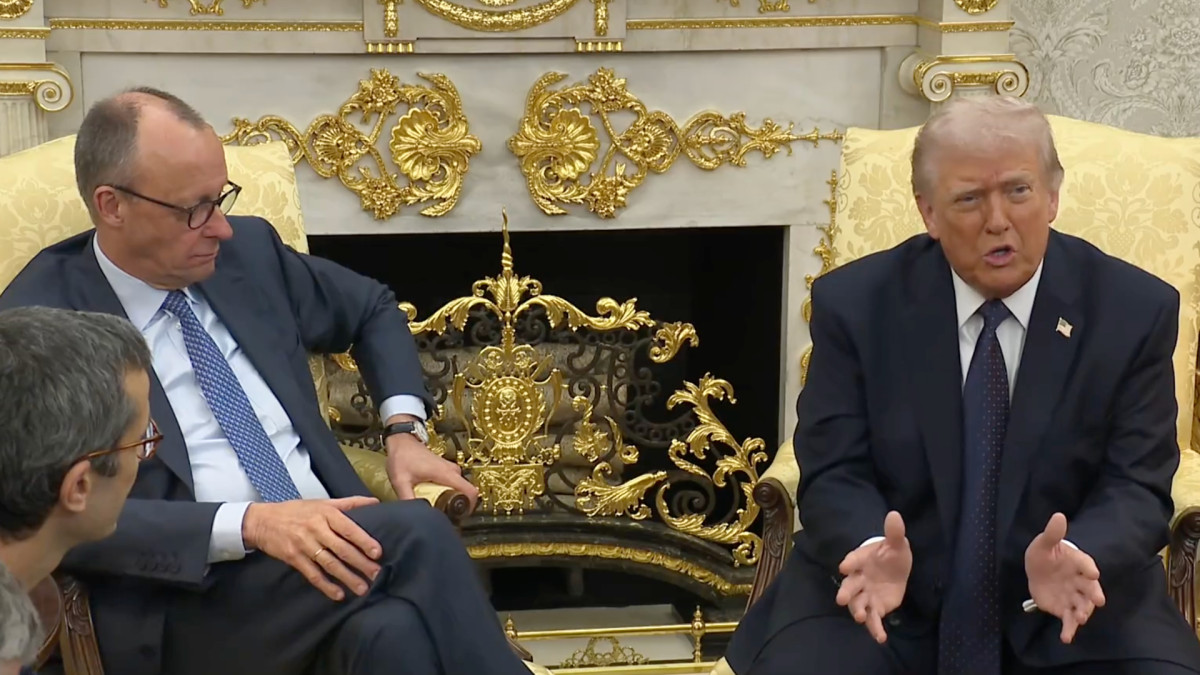
German Chancellor Friedrich Merz with Donald Trump at the White House, discussing Spain's position on Iran.White House social media
Amid the endless hyperbole that tends to dominate public debate, it’s rare that a government decision demands to be read beyond its partisan value, as more than a political exercise at State level. The refusal of the Government of Spain to allow the Pentagon to use the facilities at Rota and Morón to launch unilateral actions against Iran has provoked foreseeable backlash in Washington.
Recent statements by U.S. President Donald Trump – including bitter allegations of "disloyalty" from Madrid and insistence on full alignment with Washington’s interests – reveal a fissure in how transatlantic relations are understood. Demonstrating his usual transactional view of geopolitics, Trump appears to have forgotten a basic maxim: there’s a vast difference between alliances with foreign powers and unquestioning servitude. In the present instance, Spain isn’t just defending its own national sovereignty; it’s also granting a huge strategic favor to NATO’s integrity.
That remains at the core of the Defense Cooperation Agreement of 1988, wherein Rota and Morón were recognized as Spanish bases for shared use, while any offensive operation by the U.S. "outside the area" of NATO would require prior and express authorization from Madrid. By saying ‘no’ today, the government is demanding respect for a legal framework that was a direct result of Spain’s democratic consolidation. To automatically permit the use of national territory in the service of a unilateral military adventure would be to reduce Spain’s sovereignty to dead-letter status.
First, there’s the inescapable pressure of domestic politics. For decades, Spanish society has been deeply skeptical of military interventions in the Middle East, and the trauma of the 2003 Iraq invasion remains vivid in Spain’s collective memory. The decision by then-President José María Aznar to ally himself unconditionally with George W. Bush sparked the largest demonstrations in Spain’s democratic history, also tragically preceding the brutal terrorist attacks in Madrid in March of 2004. Today, the specter of ‘No to War’ remains a powerful electoral catalyst. No President of the Government – be they center-left or center-right – could survive televised images of U.S. B-52 bombers departing from Andalusian soil to feed a fire in the Gulf. That would be parliamentary suicide and a political blunder with scant support from Spanish citizens.
As defined by its Founding Treaty, NATO is a strictly defensive organization. Any military campaign against Tehran undertaken alone from the Oval Office lacks UN protection and fails to respond to the precept of mutual defense. Were Spain to allow its naval base at Rota – simultaneously a sovereign facility of Spain, a U.S. port, and the vital node for NATO’s missile shield on the southern flank – to serve as a launching-point for attacking Iran, it would set off a dangerous chain-reaction that could hijack all of Europe:
In practice, this would mean that the U.S. – by unilateral decision, and using Spanish geography as a decoy – would force the entirety of NATO into a non-consensual offensive. By drawing a clear red line between the NATO mission (which Spain unconditionally supports) and a unilateral U.S. war, the government of Spain is protecting the very legitimacy of the Alliance.
This clash between Madrid and Washington has sharpened the focus on the most urgent debate of our time. That was clearly on display at Tuesday’s White House meeting between Trump and German Chancellor Friedrich Merz, when Trump threatened Spain with a trade embargo while the CDU leader nodded – an increase in political and narrative pressure that’s perfectly in line with Washington’s dominance.
Returning to matters of defense: political allies share risks within the framework of joint treaties; they do not surrender their territory to serve the interests of a third party. By refusing to participate in the escalation of this war, Spain is showing that the true strength of the West lies not in blind obedience, but in the ability of mature democracies to assess their own interests.
The way things are developing, Washington will have to find longer and more complex supply routes, and noisy threats of commercial or diplomatic retaliation are already sounding. Nonetheless, behind closed doors, Europe’s strategists have seen the truth: by ruthlessly exercising the rights granted by sovereignty, Spain has shown that strategic autonomy for Europe starts with knowing how to say ‘no’ to a longtime friend and ally like the United States.
Recent statements by U.S. President Donald Trump – including bitter allegations of "disloyalty" from Madrid and insistence on full alignment with Washington’s interests – reveal a fissure in how transatlantic relations are understood. Demonstrating his usual transactional view of geopolitics, Trump appears to have forgotten a basic maxim: there’s a vast difference between alliances with foreign powers and unquestioning servitude. In the present instance, Spain isn’t just defending its own national sovereignty; it’s also granting a huge strategic favor to NATO’s integrity.
The legacy of the Transition: from submission to sovereignty
To better understand the astonishment of the White House and the firmness of Moncloa Palace, it’s essential to revisit the origins of this bilateral relationship. As historian Charles Powell points out in his recent book El rey Juan Carlos I y la proyección exterior de España (2026), during the turbulent 1970s, the United States had significant concerns that the end of the Franco dictatorship would jeopardize its unrestricted access to the Iberian Peninsula."Thanks to that master-stroke of balance, Spain would come to join NATO, while certain bases would cease to be enclaves under quasi-feudal U.S. control"It was then that diplomatic action by the king (now emeritus) proved crucial. The monarch convinced successive U.S. administrations that the best way to secure their interests was not to prop up an authoritarian regime, but to irreversibly anchor a newly democratic Spain in the Western bloc. Thanks to that master-stroke of balance, Spain would come to join NATO, while certain bases would cease to be enclaves under quasi-feudal U.S. control (as had been stipulated in the asymmetric Madrid Pacts of 1953) and instead fall under strict Spanish sovereignty.
That remains at the core of the Defense Cooperation Agreement of 1988, wherein Rota and Morón were recognized as Spanish bases for shared use, while any offensive operation by the U.S. "outside the area" of NATO would require prior and express authorization from Madrid. By saying ‘no’ today, the government is demanding respect for a legal framework that was a direct result of Spain’s democratic consolidation. To automatically permit the use of national territory in the service of a unilateral military adventure would be to reduce Spain’s sovereignty to dead-letter status.
Moncloa’s calculation: European survival and coherence
Beyond the legality of the relevant treaties, the Executive’s decision to deny this military favor to Washington spans two dimensions: the logic of political survival, and diplomatic coherence.First, there’s the inescapable pressure of domestic politics. For decades, Spanish society has been deeply skeptical of military interventions in the Middle East, and the trauma of the 2003 Iraq invasion remains vivid in Spain’s collective memory. The decision by then-President José María Aznar to ally himself unconditionally with George W. Bush sparked the largest demonstrations in Spain’s democratic history, also tragically preceding the brutal terrorist attacks in Madrid in March of 2004. Today, the specter of ‘No to War’ remains a powerful electoral catalyst. No President of the Government – be they center-left or center-right – could survive televised images of U.S. B-52 bombers departing from Andalusian soil to feed a fire in the Gulf. That would be parliamentary suicide and a political blunder with scant support from Spanish citizens.
"Southern Europe knows perfectly well that the repercussions from conflagrations in the Middle East aren’t felt on the streets of Kansas or Texas, but along the coasts of Andalusia, Italy, and Greece"Second is Spain’s geopolitical alignment with Europe. No longer that isolated country of the 1950s, begging for space beneath an American security umbrella, Spain is now the fourth-largest economy in the European Union and an important actor committed to the strategic autonomy promoted by Brussels. Like Berlin and Paris (so far), Madrid prefers to exhaust all peaceful avenues for containment and diplomacy with Tehran. Southern Europe knows perfectly well that the repercussions from conflagrations in the Middle East – from energy crises to new migratory waves, to destabilization of the Mediterranean region – aren’t felt on the streets of Kansas or Texas but along the coasts of Andalusia, Italy, and Greece. To drag Europe into this scenario by ceding use of its bases is a strategic risk that sovereign Spain deems unacceptable.
The firewall: protecting NATO from hijacking
Another argument on the radar is that, by putting the brakes on Trump in this crisis, Madrid is helping to safeguard the entire architecture of the Atlantic alliance.As defined by its Founding Treaty, NATO is a strictly defensive organization. Any military campaign against Tehran undertaken alone from the Oval Office lacks UN protection and fails to respond to the precept of mutual defense. Were Spain to allow its naval base at Rota – simultaneously a sovereign facility of Spain, a U.S. port, and the vital node for NATO’s missile shield on the southern flank – to serve as a launching-point for attacking Iran, it would set off a dangerous chain-reaction that could hijack all of Europe:
- The risk of direct reprisals: Under the logic of armed conflict, Iran could consider it legitimate to attack the infrastructures from which planes are taking off, or where destroyers bombing its territory are being coordinated. The target would no longer be a ship in the Persian Gulf, but European soil.
- The trap of Article 5: If Rota or Morón suffered a retaliatory missile-strike from Iran, that assault on the territory of a NATO member country would provide a legal basis and push Spain (and the U.S.) to invoke NATO Article 5.
- The hijacking of the Alliance: Countries typically reluctant to involve themselves in wars in the Middle East would be dragged into military conflict by treaty obligation.
In practice, this would mean that the U.S. – by unilateral decision, and using Spanish geography as a decoy – would force the entirety of NATO into a non-consensual offensive. By drawing a clear red line between the NATO mission (which Spain unconditionally supports) and a unilateral U.S. war, the government of Spain is protecting the very legitimacy of the Alliance.
The Moroccan mirage and the triumph of autonomy
Faced with this obstacle, the machinery around Trump and certain media outlets in Spain have begun to warn of the threat of dismantling the U.S. presence in Andalusia and moving the logistical umbrella to Morocco. Rabat would happily welcome such an injection of military muscle."From Maghreb soil, U.S. ships and aircraft would enjoy the political ability to attack whomever they wanted, but they would lose the legal cover of Article 5, as well as military inter-operability with Europe"But the Pentagon sees the paradox inherent in that threat. If Trump moved his bases to Morocco in retaliation, then he himself would be withdrawing his main military assets from under the protection of NATO, of which Morocco is not a member. From Maghreb soil, U.S. ships and aircraft would enjoy the political ability to attack whomever they wanted, but they would lose the legal cover of Article 5, as well as military inter-operability with Europe. They would exchange well-armored collective security for naked unilateral freedom – an immense strategic setback in the guise of punishment.
This clash between Madrid and Washington has sharpened the focus on the most urgent debate of our time. That was clearly on display at Tuesday’s White House meeting between Trump and German Chancellor Friedrich Merz, when Trump threatened Spain with a trade embargo while the CDU leader nodded – an increase in political and narrative pressure that’s perfectly in line with Washington’s dominance.
Returning to matters of defense: political allies share risks within the framework of joint treaties; they do not surrender their territory to serve the interests of a third party. By refusing to participate in the escalation of this war, Spain is showing that the true strength of the West lies not in blind obedience, but in the ability of mature democracies to assess their own interests.
The way things are developing, Washington will have to find longer and more complex supply routes, and noisy threats of commercial or diplomatic retaliation are already sounding. Nonetheless, behind closed doors, Europe’s strategists have seen the truth: by ruthlessly exercising the rights granted by sovereignty, Spain has shown that strategic autonomy for Europe starts with knowing how to say ‘no’ to a longtime friend and ally like the United States.
Ahora en portada
27 de octubre de 2026
27 de octubre de 2026
26 de octubre de 2026
Noticias relacionadas
Hace 34 semanas
El "no" de España a Trump protege la soberanía española y a la OTAN
Hace 34 semanas
Irán en la encrucijada: cuatro escenarios para el mayor riesgo geopolítico del momento
Hace 34 semanas
¿Se equivoca Pedro Sánchez invocando el derecho internacional?
Lo más leído