Viernes, 9 de octubre de 2026




IN-DEPTH
European strategic autonomy includes creating new social networks
The communication onslaught and the growing dependence on Chinese and American social networks are forcing Europe to rethink its digital strategy and the possibility of developing its own platform based on the EU's core values. Beatriz Gallardo, Professor of General Linguistics at the University of Valencia, analyses this issue in depth.
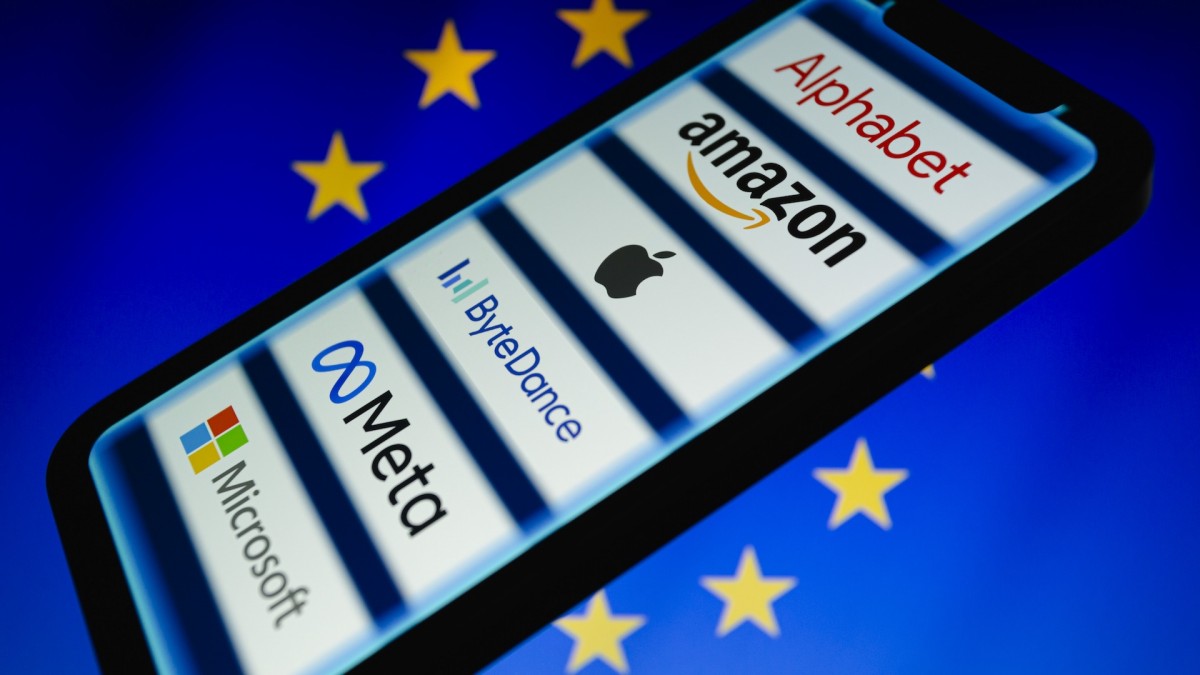
The digital services available in the European Union largely depend on Chinese and American companies.Andre M. Chang / Zuma Press / ContactoPhoto
In the context of a European public conversation that frequently mentions defence, it is essential to consider the role of communication. Its importance in conflicts refers to emblematic examples, such as the decryption of the Enigma machine by Alan Turing and his Bletchley Park team, or the recruitment of twenty-nine Navajo Code Talkers. This allowed Americans to use that Native American language to encrypt communications on the Pacific front during the Second World War. However, communicative defences not only affect codes but also channels, and among them, social networks are especially important. Hence, we explore an idea that emerges periodically: the creation of a distinctly European social network that can compete with American or Chinese ones. It is undoubtedly a complex issue with considerable economic, bureaucratic, technological, and regulatory dimensions, and it cannot be separated from other digital applications. Even so, in this text we will only review its socio-communicative possibilities.
In addition, in the collective sphere, it has been demonstrated that the misinformative use of networks such as X, TikTok, Instagram, or Facebook, generally resorting to bots, is posing a threat to the foundations of democracy. It also threatens respect for the fundamental rights that define European values. There is no doubt that they have been —are— important elements in the recent transformation of the European political landscape.
We need to propose viable alternatives so that citizens —who are already used to this way of communicating and its positive aspects— can have options that match European values. Furthermore, if we consider that young Europeans (42% between 16 and 30 years old) say they get information basically through these structures, we can contend that the future of information (and not just communication) depends on social networks. Six million European citizens abandoned X this January, and it seems appropriate that European citizens be provided with an alternative whose operation responds to approaches compatible with democracy and fundamental rights, at the service of the common good. This would be its first merit.
Secondly, a European social network would contribute to the digital sovereignty of the Union, that is, its ability to guarantee control over its digital infrastructures, data, and information flows. The fact that most networks used by European citizens belong to American companies limits the EU's autonomy in data management and limits its competitiveness in the global digital economy. In terms of content, it exposes it to misinformative processes of foreign interference. To protect this sovereignty, the Union activated the DECODE project (2017-2019), whose director, Francesca Bria, pointed out in 2024 the urgency to "take the initiative and be able to create independent digital infrastructures, democratically governed and that defend common values".
Concerning the privacy of user data, scandals such as the mass American surveillance revealed by Snowden (2013), or the espionage by the Cambridge Analytica consultancy through Facebook (2014), led the European Union to take various legislative measures such as the General Data Protection Regulation (GDPR, 2016), the European. Other initiatives have been the European Digital Identity Regulation (EUDI, 2024) or the European Centre for Algorithmic Transparency. It is reasonable to assume that a network based on its own infrastructure, with servers and data centres located in European territory, would be respectful of all these provisions. Many cybersecurity experts are reluctant and critical of the power they give governments and national agencies.
But there is a third, less tangible yet equally valuable benefit. This digital agora would play a crucial role in strengthening European identity and fostering a sense of belonging. To begin with, it could serve as the primary conduit for governmental and institutional communications, bringing institutions closer to European citizens. This would help prevent contradictions as stark as the recent involvement of Elon Musk, owner of X, in Donald Trump’s government team. It is deeply problematic that our democratic institutions and governments continue to rely on an external, highly ideologised company—not only one tied to a government that openly expresses hostility towards Europe, but also a company currently under investigation by the European Commission for repeated breaches of the Digital Services Act and for spreading disinformation, as seen in the most recent German elections.
The new network would be an ideal framework for the transfer of results on time-critical issues such as ecological transition and climate change —which the Trump Administration forbids even to mention— or the social impact of technologies, as well as research in any field. Science, creativity, and culture are strategic sectors for European identity, and a social network of our own would reinforce that strategic value.
All these broadcasters —institutional, media, cultural, scientific— would expand their audiences because the network should also be a tool for promoting multilingualism (an essential factor of European culture) through the integration of automatic translation and support for EU languages, at minimum the official ones. No European citizen would feel excluded if a network is designed with automated translation into all Union languages, regardless of the language in which each message is written.
Even assuming that this projection is —it is— too idealised, the benefits seem evident; the inevitable question that arises is why we don't already have that social network up and running.
On the contrary, the Union did launch two pilot programmes with that global intention in 2022, through the European Data Protection Supervisor, Wojciech Wiewiórowski. EU Voice was based on Mastodon and sought to offer an alternative to Twitter. For its part, EU Video, inspired by PeerTube, aimed to compete with YouTube. In its presentation, the supervisor stated: "With the pilot launch of EU Voice and EU Video, we aim to offer alternative social media platforms that prioritise people and their rights to privacy and data protection.(...) EU Voice and EU Video do not rely on transfers of personal data to countries outside the European Union and the European Economic Area; there are no advertisements on the platforms; and profiles are not created of individuals who may use the platforms". However, it was not strictly about "offering" social networks, but rather hosting institutional profiles in a Mastodon instance; citizens could not create accounts, only follow the eighteen institutional profiles that were opened.
In 2024, both platforms were closed, and neither is accessible at this time; Wiewiórowski himself justified it by claiming that they were pilot projects and could not maintain the servers and operations, nor had they managed to get another European body to take charge. It is, at the very least, shocking that all the technological, financial, and management effort that the two projects probably required is activated, but with such short-termism and without contemplating citizen interaction. The initiative hardly had any diffusion, although the European Commission did announce it with a message... on Twitter.
Even so, after the previous argument, a new question arises: would these ideas be recoverable at a time when the need to strengthen European identity against other instances seems generally accepted? We believe the answer must be affirmative. Undoubtedly —we have already said it— the challenges are multiple and of enormous importance: economic, bureaucratic, regulatory, technological, temporal... But perhaps they should be compared with the risk of continuing to maintain the current structures and observe the balance well. If the European Union is truly concerned about its autonomy and foresees making economic efforts, perhaps such efforts should include digital communication channels. The digital journalism expert Rasmus Kleis Nielsen has pointed out that "fewer words and more money are needed", as well as clear rules. We add that we also require a specific communication policy.
We conclude by noting that, although social networks are not media, the idea of a European social network evokes Wilhelm Hahn's words in the Report on radio broadcasting and television in the European Community which, in 1982, paved the way for the Euronews project: "a new dimension must be added to European unification to allow Europeans to identify with the European Union. Today, the tools that serve to shape public opinion are the media. Of these, television, as an audiovisual medium of communication, is the most important".
Currently, where it says television, one could add social networks.
"By leaving the design of digital communication networks in American (and Chinese) hands, we can say that we are entrusting them with a part of our mental disposition towards the world"In the platform society, social networks play a decisive role. And although their appearance coincides with the era of digital technolatry —which forecasted the Internet as the definitive deployment of the democratic agora and proposed concepts such as collective intelligence, virtual community, or Open movement— their evolution at the hands of big tech companies has belied the initial forecasts. In these two decades, social networks have redefined how citizens access public life and information, and how we relate to each other. These are profound modifications, as the format in which messages reach us in each interface (fragmentation, brevity, speed) has a direct impact on our cognitive configuration and on our way of internalising communicative processes; they shape them. And this "content of the form", as Hayden White called it, is added to the type of emotional, toxic, and irrational meanings that —algorithms through— prioritise the most widely disseminated messages. In such a way that, by leaving the design of digital communication networks in American (and Chinese) hands, we can say that we are entrusting them with a part of our mental disposition towards the world.
In addition, in the collective sphere, it has been demonstrated that the misinformative use of networks such as X, TikTok, Instagram, or Facebook, generally resorting to bots, is posing a threat to the foundations of democracy. It also threatens respect for the fundamental rights that define European values. There is no doubt that they have been —are— important elements in the recent transformation of the European political landscape.
We need to propose viable alternatives so that citizens —who are already used to this way of communicating and its positive aspects— can have options that match European values. Furthermore, if we consider that young Europeans (42% between 16 and 30 years old) say they get information basically through these structures, we can contend that the future of information (and not just communication) depends on social networks. Six million European citizens abandoned X this January, and it seems appropriate that European citizens be provided with an alternative whose operation responds to approaches compatible with democracy and fundamental rights, at the service of the common good. This would be its first merit.
Secondly, a European social network would contribute to the digital sovereignty of the Union, that is, its ability to guarantee control over its digital infrastructures, data, and information flows. The fact that most networks used by European citizens belong to American companies limits the EU's autonomy in data management and limits its competitiveness in the global digital economy. In terms of content, it exposes it to misinformative processes of foreign interference. To protect this sovereignty, the Union activated the DECODE project (2017-2019), whose director, Francesca Bria, pointed out in 2024 the urgency to "take the initiative and be able to create independent digital infrastructures, democratically governed and that defend common values".
Concerning the privacy of user data, scandals such as the mass American surveillance revealed by Snowden (2013), or the espionage by the Cambridge Analytica consultancy through Facebook (2014), led the European Union to take various legislative measures such as the General Data Protection Regulation (GDPR, 2016), the European. Other initiatives have been the European Digital Identity Regulation (EUDI, 2024) or the European Centre for Algorithmic Transparency. It is reasonable to assume that a network based on its own infrastructure, with servers and data centres located in European territory, would be respectful of all these provisions. Many cybersecurity experts are reluctant and critical of the power they give governments and national agencies.
But there is a third, less tangible yet equally valuable benefit. This digital agora would play a crucial role in strengthening European identity and fostering a sense of belonging. To begin with, it could serve as the primary conduit for governmental and institutional communications, bringing institutions closer to European citizens. This would help prevent contradictions as stark as the recent involvement of Elon Musk, owner of X, in Donald Trump’s government team. It is deeply problematic that our democratic institutions and governments continue to rely on an external, highly ideologised company—not only one tied to a government that openly expresses hostility towards Europe, but also a company currently under investigation by the European Commission for repeated breaches of the Digital Services Act and for spreading disinformation, as seen in the most recent German elections.
"The new platform would also serve as a natural channel for the multiple voices of the European space"The new platform would also serve as a natural channel for the multiple voices of the European space. The media would not need clickbait strategies to enhance their visibility because algorithms could be open and auditable, oriented towards debate and not confrontation. The network would also welcome European creators, providing a space for artists, authors, and content producers to disseminate their work without depending on external platforms, and giving visibility to quality content made in Europe, which often —for example in audiovisual production— is disadvantaged compared to American creations. Added to this amplification of voices would necessarily be the visibility of European science, something especially important in the current climate of reactionary anti-intellectualism.
The new network would be an ideal framework for the transfer of results on time-critical issues such as ecological transition and climate change —which the Trump Administration forbids even to mention— or the social impact of technologies, as well as research in any field. Science, creativity, and culture are strategic sectors for European identity, and a social network of our own would reinforce that strategic value.
All these broadcasters —institutional, media, cultural, scientific— would expand their audiences because the network should also be a tool for promoting multilingualism (an essential factor of European culture) through the integration of automatic translation and support for EU languages, at minimum the official ones. No European citizen would feel excluded if a network is designed with automated translation into all Union languages, regardless of the language in which each message is written.
Even assuming that this projection is —it is— too idealised, the benefits seem evident; the inevitable question that arises is why we don't already have that social network up and running.
"All these broadcasters —institutional, media, cultural, scientific— would expand their audiences because the network should also be a tool for promoting multilingualism (an essential factor of European culture)"The truth is that some attempts by private companies have not had the success that, for example, the Swedish Spotify or the French Deezer have had in the musical field, or the Swiss Proton for email. The French network Copains d'avant, for example, from 2001, had relative success in its early years. In 2006, Russian businessman Andrey Andreev created Badoo as a social network based in London, still active although specialised as a dating site. The German Xing, from 2003, was especially followed in German-speaking countries but later displaced by LinkedIn. Mastodon, created in 2016 by German programmer Eugen Rochko, gained new momentum since Musk's purchase of Twitter, but its operation, not very intuitive, does not attract certain types of users who are opting for Bluesky, whose model replicates the original Twitter. The French BeReal was launched in 2020 as an anti-Instagram network. In 2024, Alexandre Leforstier created Panodyssey, a social network dedicated to creative writing. The relative success of all these initiatives is sometimes multinational, but, as also happens in television fiction, it cannot be said that they have the integrating European reach we are referring to.
On the contrary, the Union did launch two pilot programmes with that global intention in 2022, through the European Data Protection Supervisor, Wojciech Wiewiórowski. EU Voice was based on Mastodon and sought to offer an alternative to Twitter. For its part, EU Video, inspired by PeerTube, aimed to compete with YouTube. In its presentation, the supervisor stated: "With the pilot launch of EU Voice and EU Video, we aim to offer alternative social media platforms that prioritise people and their rights to privacy and data protection.(...) EU Voice and EU Video do not rely on transfers of personal data to countries outside the European Union and the European Economic Area; there are no advertisements on the platforms; and profiles are not created of individuals who may use the platforms". However, it was not strictly about "offering" social networks, but rather hosting institutional profiles in a Mastodon instance; citizens could not create accounts, only follow the eighteen institutional profiles that were opened.
In 2024, both platforms were closed, and neither is accessible at this time; Wiewiórowski himself justified it by claiming that they were pilot projects and could not maintain the servers and operations, nor had they managed to get another European body to take charge. It is, at the very least, shocking that all the technological, financial, and management effort that the two projects probably required is activated, but with such short-termism and without contemplating citizen interaction. The initiative hardly had any diffusion, although the European Commission did announce it with a message... on Twitter.
Even so, after the previous argument, a new question arises: would these ideas be recoverable at a time when the need to strengthen European identity against other instances seems generally accepted? We believe the answer must be affirmative. Undoubtedly —we have already said it— the challenges are multiple and of enormous importance: economic, bureaucratic, regulatory, technological, temporal... But perhaps they should be compared with the risk of continuing to maintain the current structures and observe the balance well. If the European Union is truly concerned about its autonomy and foresees making economic efforts, perhaps such efforts should include digital communication channels. The digital journalism expert Rasmus Kleis Nielsen has pointed out that "fewer words and more money are needed", as well as clear rules. We add that we also require a specific communication policy.
"Would these ideas be recoverable at a time when the need to strengthen European identity against other instances seems mainly accepted? We believe the answer must be affirmativeNo network will prosper if its dissemination and implementation are not taken care of. We insist on this because, along with the aspects already mentioned, changing the habits of citizens will be one of the greatest challenges of a project like this. Therefore, it would be necessary for the Union bodies that are responsible for the creation (or relaunch) of these networks to be proactive in the formation of communities (for example, with explicit invitations to universities, media, museums, sports clubs…), and the implementation of mechanisms that, through incentives and gamification, facilitate massive adherence; nobody stays on a new social network if the friends and followers they interact with on another network are not there. The project, in short, could not be developed without the conviction and involvement of European officials themselves.
We conclude by noting that, although social networks are not media, the idea of a European social network evokes Wilhelm Hahn's words in the Report on radio broadcasting and television in the European Community which, in 1982, paved the way for the Euronews project: "a new dimension must be added to European unification to allow Europeans to identify with the European Union. Today, the tools that serve to shape public opinion are the media. Of these, television, as an audiovisual medium of communication, is the most important".
Currently, where it says television, one could add social networks.

Beatriz Gallardo Paúls
Catedrática de Lingüística en la Universitat de València
Experta en análisis del discurso desde enfoques cognitivistas. Autora de 'Tiempos de hipérbole. Inestabilidad e interferencias en el discurso político' (Ed. Tirant lo Blanch).
Ahora en portada
7 de octubre de 2026
8 de octubre de 2026
8 de octubre de 2026
Noticias relacionadas
Hace 96 semanas
¿Quién liderará la política digital en España? Las lecciones de Trump en EE. UU. y Georgescu en Rumanía
Lo más leído