Miércoles, 30 de septiembre de 2026




CONVERSATIONS
Iratxe García: "I wonder if it was worth it for Von der Leyen to try to normalize Meloni with the pro-European majority"
She is one of the most influential political operators in the Brussels “bubble”. She has participated in all the important negotiations of the European Union in recent years. In the last one, which we have analyzed extensively in Agenda Pública, avoiding what she considers “an institutional crisis” due to the attempt of the Spanish Popular Party to “overthrow the Spanish proposal of Teresa Ribera as executive vice-president of the Commission” and that “Europe did not have a government”.
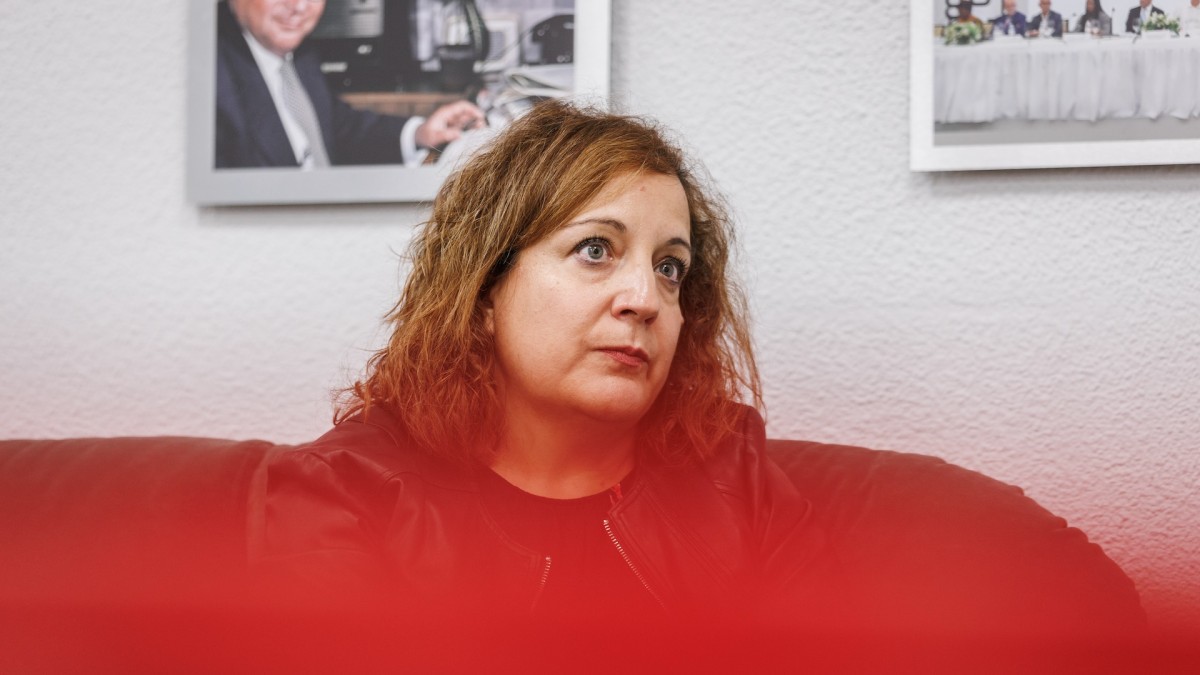
Iratxe García, President of the Progressive Alliance of Socialists and Democrats in the European Parliament.Agenda Pública / Tania Sieira
She is the leader of social democracy in the European Parliament. The Spanish Iratxe Gracía, president of the social democrats' group, talks to the director of Agenda Pública and makes a double claim highlighting the role of the Spanish Government as a reference for European social democracy": ‘It is very evident’. Furthermore, although he states that his relationship with Manfred Weber, his counterpart leader of the European PP, is “complex”, he considers that “the need to negotiate and reach agreements” is essential. The European project is in crisis, but he recognizes that Meloni and Orbán are not “the same on some issues”.
What is your assessment of the electoral results of the last European elections? The Commission is finally on its way, almost six months after the elections.
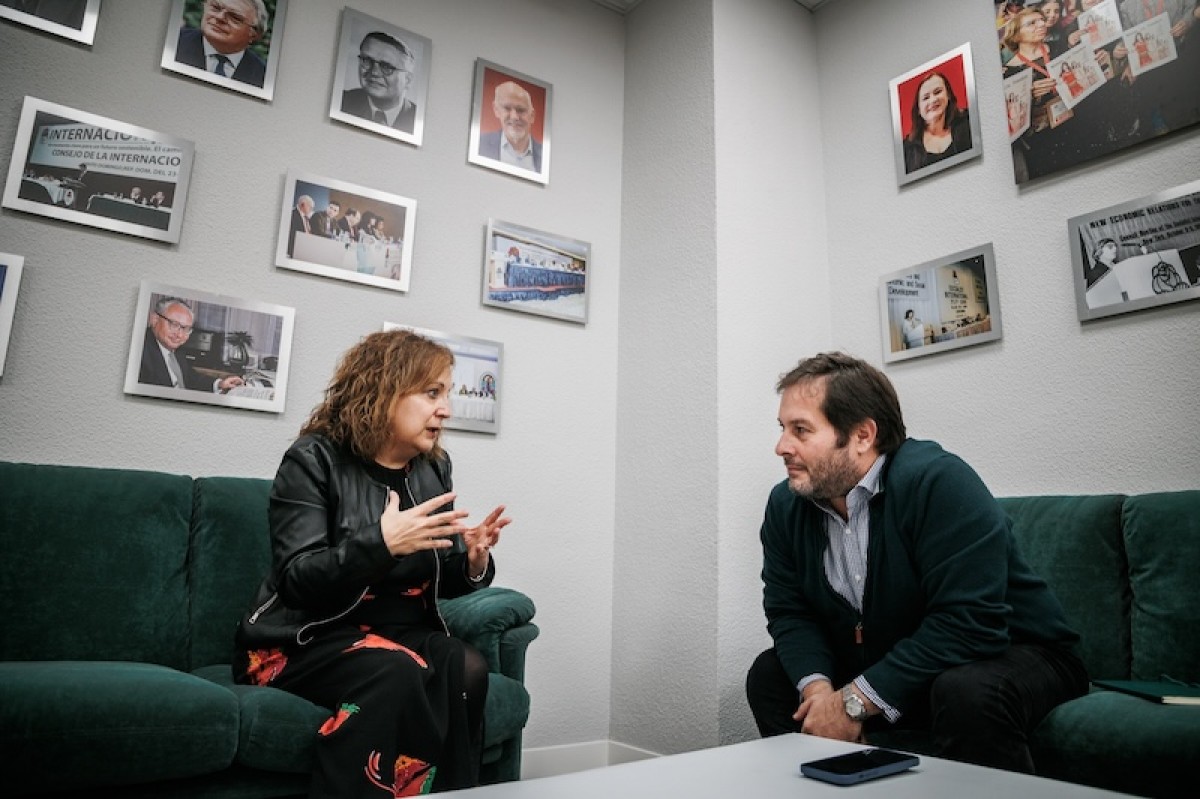
Iratxe García converses with Marc López Plana, director of Public Agenda. Photo: Public Agenda / Tania Sieira
As far as timing is concerned, this is in line with European normality. We have had a Commission since 1 December. On this occasion, there have been issues such as governments not proposing candidates or even changes in the proposal to try to achieve gender balance because, in July, we were talking about a possible College of Commissioners with 22% women. That was then increased to almost 40%.
It is true that this time it has coincided with a moment of instability in the international geopolitical sphere, the elections in the United States, which made the need to guarantee stability in the College of Commissioners more evident. In fact, that has been one of the great arguments that the majority pro-European political forces have used when casting a favourable vote for the new Commission. Europe could not afford at this time a situation of institutional crisis with a rejection of the College of Commissioners.
"Now there are three far-right political groups that, if they united their votes, would be the second political force"But, evidently, the current complexity is also marked by the result of the European elections. There is a consolidation of far-right forces in the European Parliament. But they have not reached what we might have thought at times, in part, due to the division of far-right political groups. Right now, there are three extreme right-wing political groups that, if they were to unite their votes, would have become the second political force.
The reality is very different compared to the last legislature. In this new reality, we are going to have to work with a Council increasingly leaning to the right, with extreme right and populist governments such as the Government of Hungary, which is being joined by others. In this case, I am talking about Italy, although it has more specific or different circumstances, but it does not fall into the category of the governments of the traditional political families.
"Meloni does not fall within what the accounting of pro-European governments can be"The three traditional pro-European political forces (popular, social democrats and liberals) have a very limited majority. For Von der Leyen's own vote for president, there were serious doubts. At last, it was the incorporation of the favourable vote of the Greens that guaranteed that her election was a little more comfortable. Moreover, the European People's Party is playing a double game of majorities that will possibly be the most important element determining the legislature.
Are we going to continue seeing throughout this legislature Manfred Weber's and the European People's Party's, including the Spanish Popular Party, gravitation towards the extreme right?
I am afraid so. It has not been exclusively with the negotiation of the College of Commissioners, where different circumstances have come together. For example, Von der Leyen's decision to propose an executive vice-presidency for a group like ECR, outside the traditional alliance —and the European People's Party's strategy to condition his acceptance— pointed directly against the first vice-presidency, which represents the Spanish government and is a benchmark of social democracy in the EU.
Likewise, in the case of Venezuela, in fact, we call it "the Venezuela majority." But it was also the case with the EU budget resolution. In fact, the latter is further evidence of the difficulties this legislature will face. While political resolutions such as the one on Venezuela have no legislative or legal effect, the case of the EU budget makes this much clearer.
"The European People's Party is playing a double game of majorities that will possibly be the most important element determining the legislature"The European People's Party negotiates with the pro-European majority on the content of the resolutions and, once that negotiation is closed —where we have all conceded— they take advantage of the amendments of the extreme right to reduce ambition or modify the agreements reached. Then, they put forward these amendments with the support of the extreme right, but the resolution does not prosper. This happened, for example, in the budget resolution, where the socialists, liberals, and greens voted against because the negotiated red lines had been violated. The extreme right, which was always going to vote against a resolution on the community budget, joined this rejection. As a result, Parliament was left without a political position to negotiate. This scenario could repeat itself in the coming months and years, as the far right can help the European People's Party to reduce ambitions, but not to pass legislation or policies.
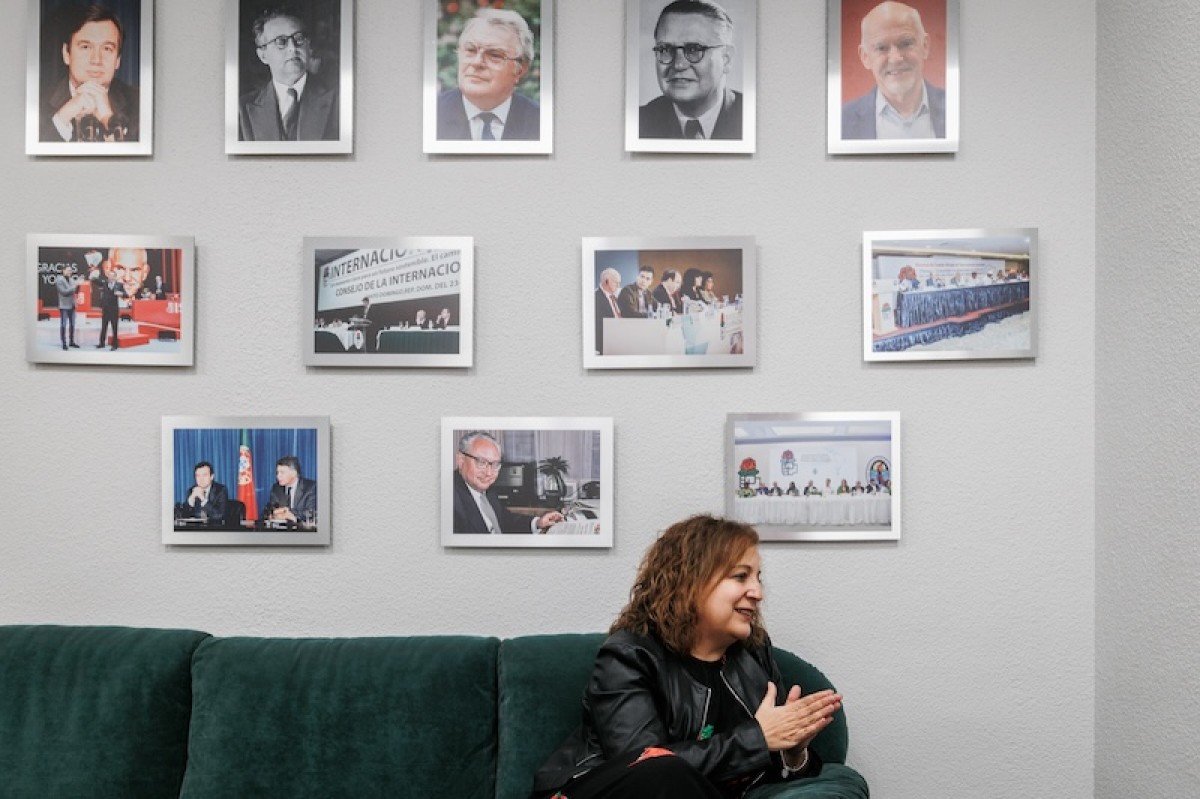
Iratxe García received Agenda Pública at the headquarters of the Socialist International in Madrid. Photo: Public Agenda / Tania Sieira
In what areas do you think this can happen?
The European People's Party is going to do an exercise in reducing ambitions in the entire implementation of the Green Deal. The same thing happens with the Nature Restoration Law, and we will see it in the issues related to the European social pillar. Currently, they are also trying to reopen the issue of the Platform Workers Directive or issues such as due diligence.
"The EPP uses the votes of the far right to reduce ambitions, but pushes through legislation with European forces. In that strategy, they will find our opposition"The EPP uses the votes of the extreme right to reduce ambitions, but pushes through legislation with European forces. In that strategy, they will find our opposition. There is a concern, not only by social democracy, but also by the group of liberals and greens, that this could become a dynamic, and obviously, we are going to have to sit down with the four political forces to determine some rules of the game that prevent this from happen frequently.
How would you describe your relationship with Weber?
Well, it's complex, but there is a relationship and I think it is important. We must all be aware of the need to sit at a table to negotiate and reach agreements. I have said it from the beginning of the legislature. It is true that we have been critical of many of the political positions that the European People's Party has taken in the last two years, especially when it began its flirtation with the extreme right.
"We continue to reach out to Manfred Weber and the EPP, understanding that it is the only way we can guarantee the survival of Europe"But at the same time we also continue to reach out, understanding that it is the only way we can guarantee the survival of Europe. Therefore, no matter how difficult it may be, one can never give up sitting down and negotiating.
How would you explain to an informed European reader the vote against the College of Commissioners by the Spanish Partido Popular (PPE)?
The explanation is that you have to confirm, and you have to approve a College of Commissioners on a reality and a European procedure. But, at the same time, the interpretations of the national contexts may be entirely different. Obviously, there are moments when these interpretations clash.
The European procedure is clear. Firstly, the political groups and the European Parliament cannot change the governments' proposals and therefore the composition is determined by this. A candidate can be changed if it is evidently considered that the person is not qualified and does not comply. But it is the national governments that make the name proposals. With these name proposals, the president of the Commission distributes duties. That is the basis on which we have always worked. On other occasions there have been changes in commissioners, that was not a surprise to us and, therefore, those changes have been made.
But the situation we reached on this occasion had much more to do with how national dynamics were brought into the debate and distorted the European reality. The EPP knew that there was a problem with the acceptance of the Italian Commissioner Fitto as Vice-President of the Commission and they used Teresa Ribera as a scapegoat. Without the argument of the Valencia floods, they would have found another excuse. The question here is, and the question we asked ourselves at the European level is: how far are they willing to go?
We all considered that it was part of the negotiation, but no one saw it possible to bring down a European Commission over a national policy issue like this. What happens is that it is true that until the last minute the risk was increasing and there were moments when it was thought that this could really happen.
The Spanish People's Party considered it and it believed that it would succeed. It was prepared to create an institutional crisis in Europe, for Europe to not have a government in order to overturn the Spanish Government's proposal. How far is the Spanish People's Party prepared to go in order to really achieve its own partisan objectives? In no case did it take into account either the interests of Spain or the interests of Europe.
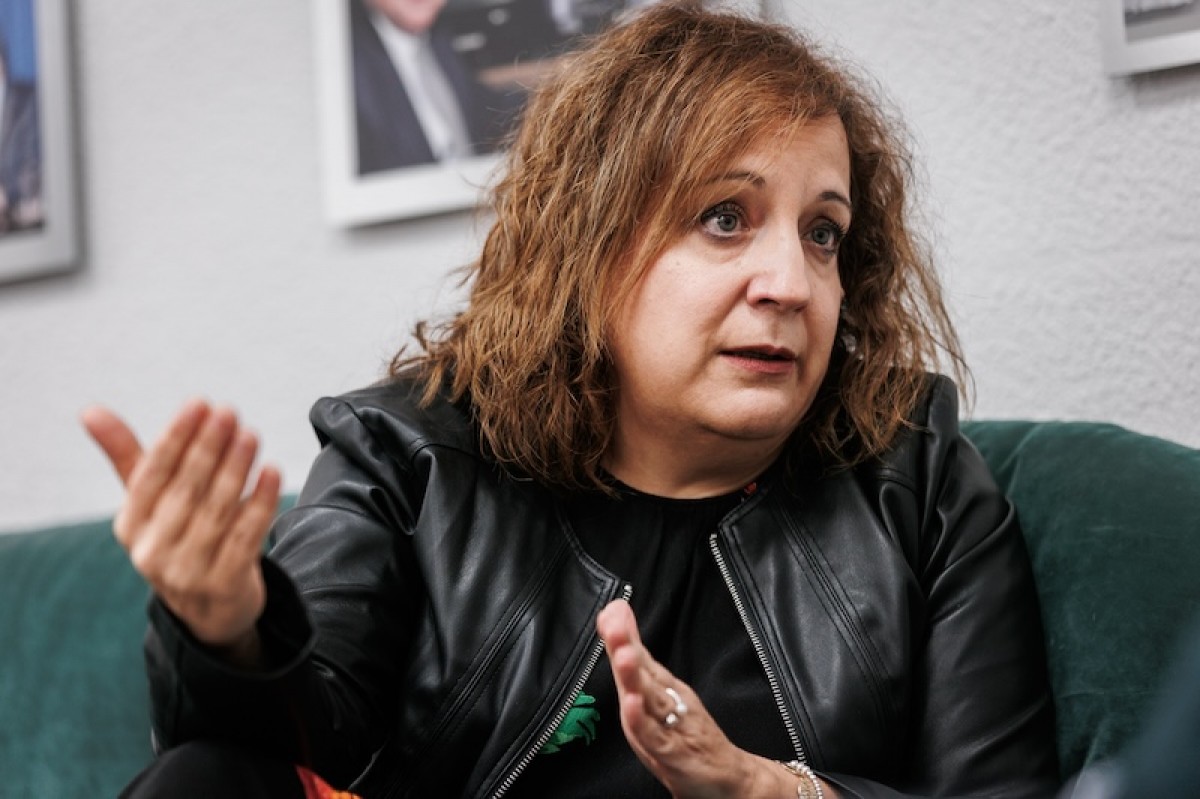
Iratxe García offers thoughts on her recent visit to Ukraine. Photo: Public Agenda / Tania Sieira
Yes, we accepted him, and in fact that was the position of the socialist group. We assume that Italy has a Government, that Hungary has a Government, and that it is up to both Governments to put a name forward. Therefore, our job in the hearings was to evaluate whether these people had the capacity to become commissioners. In fact, we always said that we were not going to evaluate Fitto because on his political group and that, therefore, in the evaluation we would say whether we thought his knowledge and ability to be commissioner of regional policy were adequate. In that sense, we said that we considered that he was capable.
This is not the case with Várhelyi, where we did raise the fact that the portfolio he held caused us to have doubts about his qualifications. He is a person who comes from a government that has questioned the European COVID vaccination strategy or is against sexual and reproductive health rights. Politically, the fact that the health commissioner was from that political group generated concerns for us. We were aware that if we rejected Várhelyi, Orbán is the one who names the new candidate and that we social democrats were not going to name him. So we know the rules of the game we have to play by when it comes to these negotiations.
"I wonder if it is worth it for Von der Leyen to normalize Meloni within the pro-European majority"What we really did not agree on is that President Von der Leyen had decided to appoint a commissioner of ECR at the level of the executive vice presidency —just like the PPE, the social democrats, and the liberals. It was not very understandable because ECR had not participated in the Von der Leyen majority. What's more, they voted against her. Was it worth it for President Von der Leyen to try to normalise the ECR within the pro-European political forces? This manoeuvre has not even brought her the votes of the entire ECR and, moreover, she has lost votes from the pro-European alliance. Therefore, I do not know if the exercise has worked out well for the president of the European Commission in terms of numbers. A different thing is the intention with which she is going to try to work on a day-to-day basis.
But this has more to do with Italy as a country than with the party that governs Italy or ECR.
That is the argument of the president of the European Commission.
Italy is one of the five great European countries, and it cannot be absent.
That is an argument that the European People's Party has used, but which, from my perspective, is not one hundred percent obvious either. The previous Italian commissioner was commissioner for the Economy, he was not vice president. And there were eight vice presidencies. There were three executive vice presidents and five normal vice presidents. Italy was not within that group. So it's not like any precedent was being broken. Another thing is that later, in the logic that the president has considered, she would like to do it that way. That is the argument that she has given as president, and she also stated it publicly in the debate on the College of Commissioners, she said: "The decision to make Fitto executive vice president has been mine."
We will have to see, and time will show us, whether this strategy has a purpose of bringing together those who today are considered extreme right-wingers within the European majority. However, this is an exercise that they will have to demonstrate through their work, their day-to-day activities and their political positions in defence of pro-European principles.
But Meloni is not the same as Orbán.
They are not the same in certain issues. When we talk about Ukraine, for example, there is a clear division. And President Von der Leyen, when she refers to what unites the pro-European political forces, Ukraine is one of the elements. In that sense, there is a difference between the Italian Government and the Hungarian Government. There are other areas where I think they are more similar —they are both extreme right— such as issues like immigration policy or the defence of minorities, the LGTBI community and the European social pillar. In these cases, both countries are much more similar.
Now you have mentioned Ukraine, which you have recently visited. Are we in stoppage time for the European Union to sit at the table before Trump implements his solution?
Yes, Trump's victory has a significant influence. There are many factors at play. Firstly, the prolongation of the conflict has generated a logical and normal wear and tear, especially for the country itself, which is suffering human losses on the front. In addition, it faces a very complex economic situation and requires external support, such as that of Europe, as well as the new situation in the United States and other international actors. We could also analyse the role of the Global South in the Ukraine conflict.
It is evident that the combination of all these factors forces Europe to assume a more responsible and decisive role in the search for a solution to the conflict. The North American administration, with the change of Government and the arrival of Trump, has already publicly declared its position, which encourages us, as Europeans, to be more proactive in any possible negotiation. We have common interests with Ukraine that the United States clearly does not share to the same extent.
We will continue to be neighbours of Russia and Ukraine, a complex reality that underlines the need for greater involvement in conflict resolution and reconstruction. The debate in the Council on the sanctions package and the possible use of frozen Russian assets for reconstruction are issues that must be accelerated. The High Representative has also, at the request of many of us and the European Parliament, committed to presenting a legislative proposal on Russia's frozen assets within the first hundred days of her mandate. A considerable financial effort will be needed for both military support and the reconstruction of Ukraine, and we must define how we will meet this challenge.
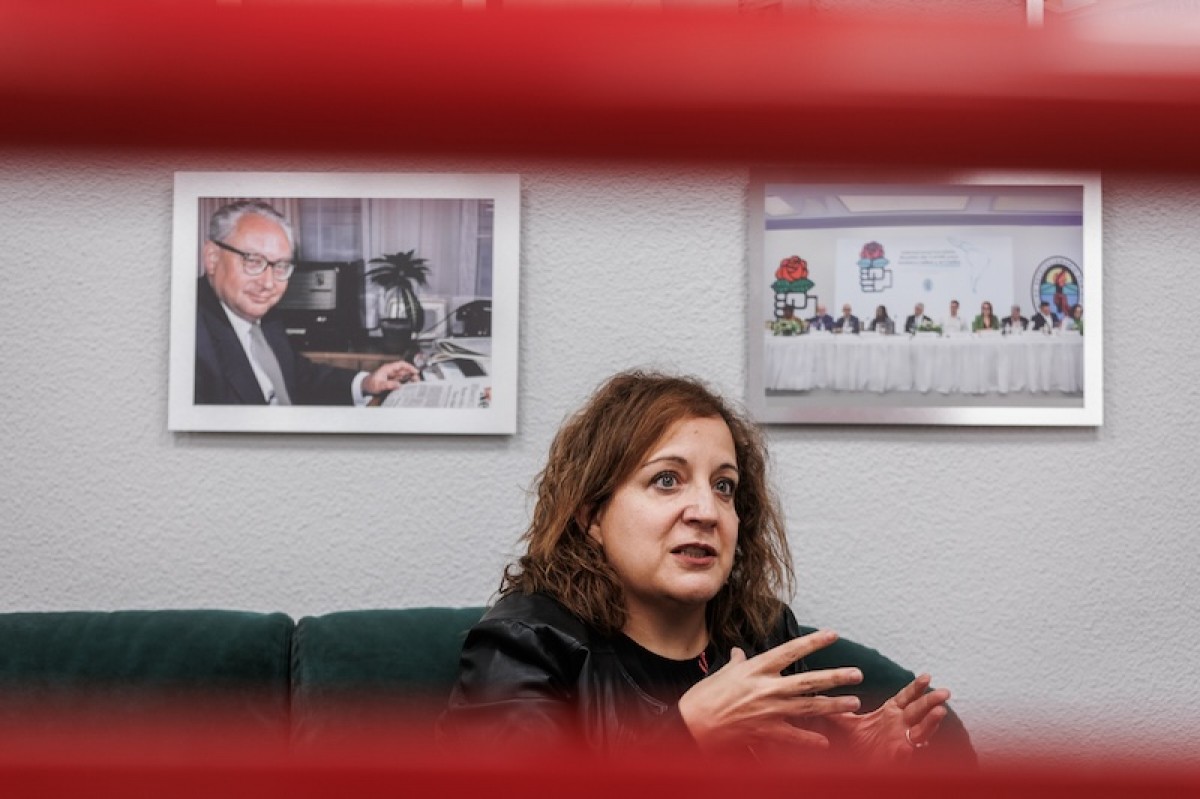
The president of the S&D parliamentary group says that she is willing to work with Manfred Weber, her PPE counterpart. Photo: Agenda Pública / Tania Sieira
The first element in making this work is to try to leave the national element out of our work as much as possible. And we see that in this respect the European People's Party is insisting more and more every day on bringing national political issues to Parliament, but it has been demonstrated how little use it is for each of its countries and how much it serves to damage the very image, not of each political group, but of the institution as such. These exclusively national debates, which are of no interest to anyone in the European Parliament except the Members from each of the Member States and which are very unproductive, not to say they are not productive at all.
I am also referring to the fact that a Spanish social democrat probably does not think exactly the same way about issues as a German social democrat or a Dane, for example.
Well, because the exercise that you do of negotiation, afterwards with the political groups, must be done beforehand within your political group. The social democratic group is not uniform. Of course, there are many issues where the differences in national perspectives are obvious. Usually they used to be, particularly in the area of traditional policies, agricultural policy or cohesion policy. But nowadays, as Europe is becoming increasingly a domestic policy, these differences appear even more. What I try to do within the socialist group is to be able to weave and shape a group position, where we often understand that there may be conflicting positions, but we need to look for a common path. When you have common values and common ideas, it is always easier. It is easier to form a group position than to confirm the position of the Parliament. And it is also true that, in this sense, the negotiations that take place at the end between the political groups, we know, and we are aware that they are not going to correspond 100% with the final result of a vote in the plenary of Parliament, where voting discipline is much more relaxed than in any national parliament.
Of course, because you handle possible votes against within a group.
Yes, we all handle that. We made an evaluation on this issue, and in the last legislature, the social democratic group was the one that had the greatest voting unity. And yet, we always know that there are certain delegations that have a more distinct position. Therefore, what you have to do when negotiating final positions between political groups is to always be aware of those internal realities.
You can never go to negotiate a legislative dossier with a 50% majority because you know that you will always have leaks from the different political groups. That is also why the majority, which has traditionally been PPE, social democrats and liberals, is today more complex. It is true that between the three political groups we make up the majority in Parliament, but just barely. That means that no matter how little leakage you have in the three groups, the issue will not go through. That is also why there is a need to bring the Greens into these negotiations to ensure that there is more of a buffer when it comes to negotiating.
And how is the more pro-European, less pro-European cleavage handled?
You know that often the X-ray in any vote will be: you have a left, The Left, who are not generally part of the negotiations and who are freer to support or not to support, and an extreme right. In other words, there you have extremes in the European Parliament that are not going to take responsibility in negotiations, that do not enter into negotiations.
"Until now, ECR has not demonstrated, due to its trajectory and its work, that it is part of what is a bloc of pro-European forces"Until now, ECR has not demonstrated, due to its trajectory and its work, that it is part of what is a bloc of pro-European forces. It appears that they are trying to tell us that they have suddenly become very pro-European. Well, let's see, they have to prove it from now on. From now on, when the commissioners start working with proposals, and we have to start negotiating, we will see whether that is really the case or not.
What value is there in the fact that a woman like you and a Spanish socialist like you is the president of the European S&D parliamentary group?
Well, it brings the vision of a social democracy that is capable of being in government and of doing parliamentary work without renouncing its values. It is very clear to me that today the Spanish government is the beacon of European social democracy; it is self-evident. It has shown itself to be capable of managing crises in a way that has guaranteed economic growth and job creation. In other words, this mantra that the left manages social issues well, but the economy badly, is not true in this case.
"It is very clear to me that today the Government of Spain is the beacon of European social democracy"The Government of Spain has shown that it can grow economically, that it can redistribute and that it can also defend the values of social democracy in matters like the social pillar, in matters of rights, in matters of gender equality. And, therefore, I believe that right now that is what social democracy also needs throughout the European Union: to convey to citizens that we are capable of having responsible governments without giving up our values.
Do you provide a perspective more from the south than from the east and the north? That is to say, in a Europe where it seems that power is moving towards the east, do you think there is an element, being Spanish, from the south, that can balance this out?
The word is balancing. What it can contribute is balance. Not because I am a socialist from the south and because I put on the table what Iberian socialism from the south can contribute, but because of that capacity to seek balance, to understand the complexity of Europe, but also to exercise a shared leadership in which everyone feels that they are involved. Because I would not be doing my job properly or assuming my responsibility properly if my way of doing politics were to put the priorities of the southern left above others. I have tried over the last five years, and continue to do so, to be able to convey that vision of more balance.
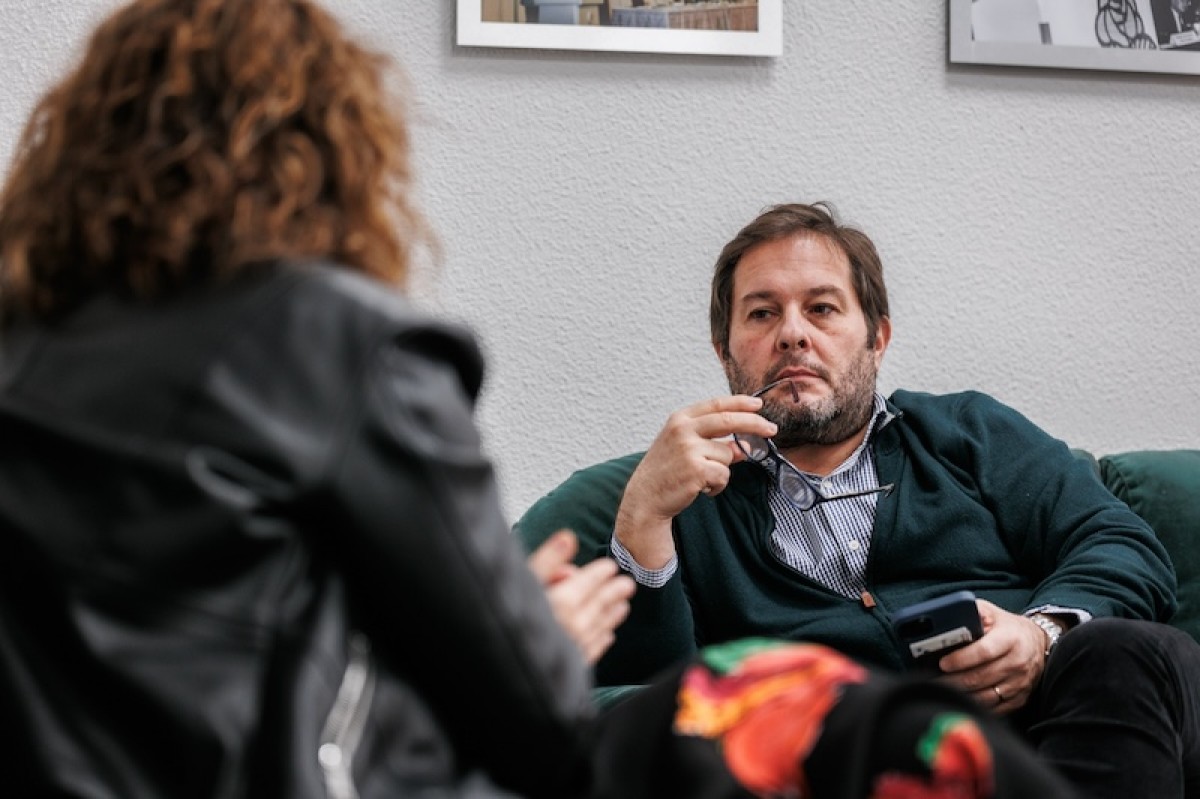
The conversation took place during the last days of December. Photo: Public Agenda / Tania Sieira
Ahora en portada
30 de septiembre de 2026
30 de septiembre de 2026
30 de septiembre de 2026
Noticias relacionadas
Hace 90 semanas
Europe needs a new leading bloc: an E5+1 that includes Spain
Hace 92 semanas
Olaf Scholz's Head of the Federal Chancellery in Agenda Pública: The election is a "choice between Scholz and Merz —and the coalition partners they might bring"
Lo más leído