Sábado, 24 de octubre de 2026




Focus Ukraine: Ukraine is strengthening its defense and trying to make up for the time lost while waiting for comprehensive military assistance

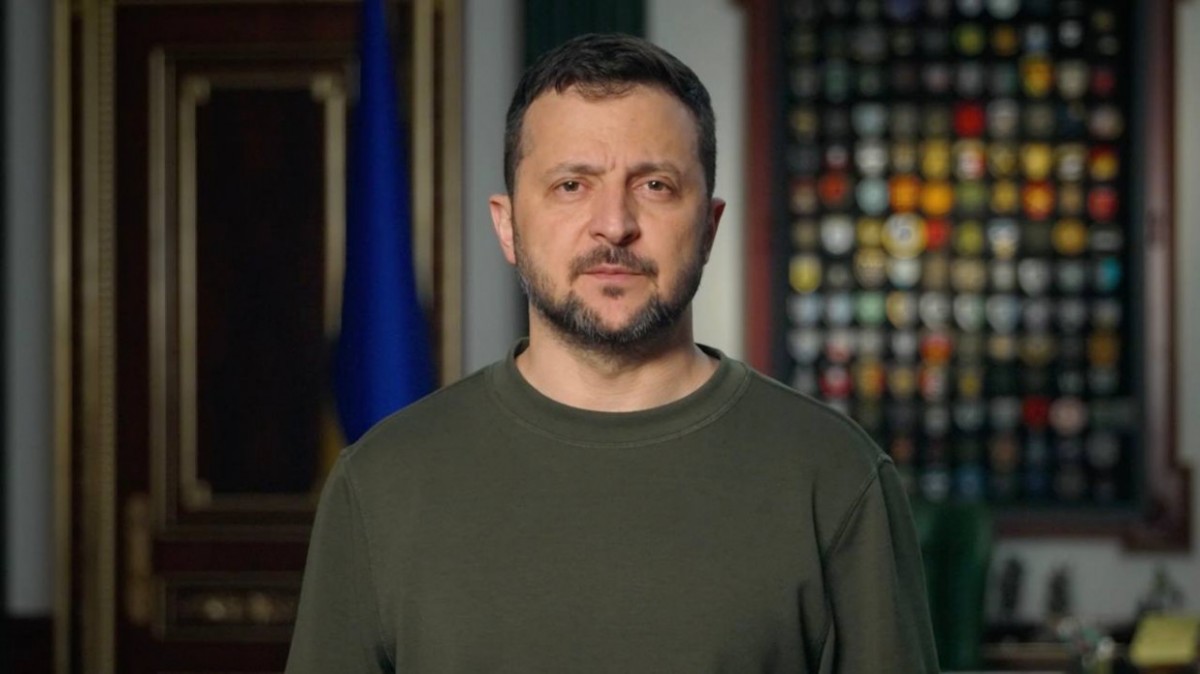
Agenda Pública and United Ukraine Think Tank present Focus Ukraine, a weekly article series analysing how the military conflict in Ukraine and the political and economic situation in the country will evolve. The articles are written by Ihor Petrenko, Dmytro Levus, Petro Oleshchuk and Oleksiy Kushch, experts of the United Ukraine Think Tank.
Ukraine's government is making yet more difficult decisions, and Russia is massively increasing pressure on the contact line in the hope of breaking through the front before massive military aid arrives for Ukrainian defenders
The adoption of the Ukraine Assistance Act in the United States has an important impact on the further course of the Russian-Ukrainian war. On April 20, the bill was voted on in the House of Representatives, on April 23 in the Senate, and then signed by President Biden. The bill is about $60.84 billion. 14 billion dollars goes directly to the purchase of American weapons for transfer to Ukraine. The first package will include, among other things, RIM-7 and AIM-9M missiles for air defense systems, missiles for Stinger man-portable air defense systems, small arms and ammunition, including for fighting drones, and ammunition for HIMARS, 155-mm and 105-mm artillery shells, Bradley infantry fighting vehicles, Javelin and AT-4 anti-tank systems, precision aerial munitions, anti-personnel mines, night vision devices and other equipment. US President Biden and President Zelenskyy has agreed that the new batch of aid will include ATACMS missiles. In general, the President of Ukraine identifies four priorities for this aid: protection of the sky, modern artillery, long-range capability, and that the US support packages arrive as soon as possible.
It was the long period of limited Western military aid to Ukraine, which reduced the combat capabilities of the Ukrainian Defense Forces, that Russia used to advance and launch powerful air strikes against Ukraine's energy infrastructure. It is known that even before the adoption of the US Aid Act, preparations were underway to move the relevant cargo to Ukraine. This could be done quickly, as the logistics and interaction with the Ukrainian military were well developed. It was said that the first receipts would be in Ukraine by the end of the week in which the Act was finalized. At this point, we can assume that these goods are already in Ukraine. Russian propaganda is, as expected, creating hysteria. It is obvious that the army of the aggressor country will attack in an attempt to achieve results while the aid is still not in Ukraine. But the aid will be used for its intended purpose successfully, as the Ukrainian Defense Forces have repeatedly proved on a systematic basis.
At the front, Russia is trying to continue its offensive. In particular, Chasiv Yar in the Donetsk region remains its target, and fighting is also taking place near the village of Ocheretyne in the Pokrovsk sector. These days, it was reported that Moscow has begun withdrawing its troops, the so-called "peacekeepers," from Karabakh, where they were supposed to stay until 2025 with the prospect of extending their stay for another five years. Now their withdrawal is to be completed by May 15. It is noteworthy that the echelons of troops withdrawn from Karabakh end up in the Southern Military District of the Russian Federation and their equipment is immediately transferred to the so-called 15th Separate Motorized Rifle Brigade of the Russian Armed Forces, which was formally created for peacekeeping missions but has been involved in the war with Ukraine since 2014. It is currently fighting in the Pokrovske direction. Also, equipment from Karabakh is used to replenish other units fighting there. So it is obvious that the level of losses of Russian armored vehicles is very high, and the Russian command has huge plans to advance in this area and they are striving to achieve them at any cost. And the Russian Federation has big problems with armored vehicles, if it no longer has enough military forces to maintain its presence in Karabakh, which used to be an important issue.
Russia's activity in conducting air terror against Ukraine also remains high. For example, on Saturday, April 20, there were nine air raids in Kharkiv, a city of one million people, which lasted 11 hours. There were also 9 alerts in Dnipropetrovs'k and Poltava regions, 8 in Sumy and Odesa, and 7 in Kirovohrad, Kherson, and Mykolaiv. The targets of Russian air strikes have always included facilities that provide broadcasting for Ukrainian media, as Russians create conditions for the unimpeded spread of Russian propaganda and Ukrainian media are perceived as hostile. Strikes on Ukrainian TV towers have been carried out since 2022. In particular, the Kyiv and Rivne TV towers, where people died. Therefore, on April 22, Russians launched a missile attack on a TV tower in Kharkiv. The structure of the television infrastructure facility was damaged, and a significant part of the 240-meter-high structure collapsed. Fortunately, there were no casualties. The enemy is cutting off FM broadcasting and digital television. The aggressor is trying to restrict the city's access to information. On the night of April 27, 2024, the Russian invaders launched a combined attack on Ukraine with 34 missiles of various types. The targets were energy infrastructure facilities in the Dnipro, Ivano-Frankivsk, and Lviv regions. Ukrainian air defense forces destroyed 21 missiles: 6 X-101/X-555 cruise missiles; 8 X-59/X-69 guided missiles; 1 Iskander-K cruise missile; 6 Kalibr cruise missiles. The strike damaged equipment and injured energy workers. DTEK reported that its four thermal power plants were attacked. Over the course of the full-scale invasion, the company's thermal power plants have been attacked more than 170 times. In addition, this year, the Russians have already used 9,000 guided aerial bombs against Ukraine. Without a doubt, this shows that strengthening air defense is a vital necessity for our country and should be a priority for the coalition supporting Ukraine. It is necessary to save the lives of hundreds of thousands of people and our cities and villages. Freedom of speech in Kharkiv needs the same protection as residential areas, energy generation facilities, and heating networks. This protection can be provided by air defense systems that Ukraine expects from its allies.
It is logical and proper that ferocious Russian attacks lead to systematic retaliatory strikes against the Russian Federation and its facilities in the temporarily occupied territory, with painful results for the Russians. In the temporarily occupied Crimea, in Sevastopol, Ukrainian missiles hit the rescue ship Kommuna. This is a specialized vessel for submarine rescue and underwater work. It was much talked about two years ago when the Russians tried to organize a rescue operation after the destruction of their Black Sea Fleet flagship, the cruiser Moskva. The piquancy of the situation is that it has been in service for over a hundred years, since 1915. The monument to shipbuilding should have stood on a pole and demonstrated the technology of its ancestors, but the Russians continued to drive this grandfather of the fleet because they had not built better rescue ships during this time. This characterizes the Russian Navy and Russia in general very well. Lack of new technologies and disregard for lives. During the week, there was a powerful drone attack on Russian facilities in 8 regions of the aggressor country: Belgorod, Bryansk, Kursk, Tula, Smolensk, Ryazan, Kaluga, and even Moscow. The target was the energy infrastructure that feeds the Russian military-industrial complex. The attacks caused problems with electricity and water supply in some areas. At least three power stations in Kaluga and Bryansk and a fuel storage base in Smolensk region were hit, where a large-scale fire broke out. Another attack set fire to oil depots in the Smolensk region, in Yartsevo and Rozdorovo, and destroyed a large amount of oil products. A drone strike on the Novolipetsk Metallurgical Plant, one of the largest steel mills in Russia and important for its military-industrial complex, damaged the oxygen shop. Without it, it is impossible to melt metal. A massive drone attack on targets in southern Russia on April 27 also ended successfully. Video from the Kushchevskaya airfield suggests that the successful strike hit a warehouse with universal planning and correction modules (UPCMs), which turn free-fall bombs into guided ones. Su-34 strike aircraft are based at this airfield, there was a fire, and it is obvious that the Russians suffered losses in equipment. In addition, strikes have been launched against oil refineries in the Kuban. For example, we know about another strike on the Ilsk refinery, which processes about seven million tons of oil a year (probably the third strike on this facility in total). In addition, the oil refinery in Sloviansk-on-Kuban was hit. Osint scouts of the Informnapalm movement have already obtained a letter from the company's general director to investors, which states that, according to preliminary data, the damage in the form of destroyed equipment is estimated at 80 million rubles ($868,000). It is noteworthy that in almost all cases, the Russian authorities pretend that there were no damages caused by UAVs; they always list the number of Ukrainian drones shot down and suppressed by air defense and electronic warfare systems in the dozens, although objective control data indicate otherwise.
On April 27, the 21st meeting of the working group in the Ramstein format took place. The first such meeting took place two years ago. "Ramstein has become a mechanism that has united the efforts of many countries in providing military support to Ukraine. Moreover, not only states are helping Ukraine. It is noteworthy that the Slovaks raised two million euros in just three days to buy ammunition for the Ukrainian Defense Forces after the Slovak government refused to support the Czech Republic's initiative to find ammunition for Ukraine. The fundraiser was initiated by Otto Simka, a 99-year-old veteran of the Slovak National Rebellion. Such initiatives clearly show that no cannibalistic plans of Putin and Russia can be realized. People are opposing them. People of many countries without instructions from above. And those who live in the paradigm of the "Russian world" do not understand this.
Politicians are trying to use the sensitive topic of restrictions on consular services for Ukrainian men abroad to their advantage
A key topic in Ukrainian politics and society has been the restriction on the passport issuance to Ukrainian men of military age who are currently residing outside of Ukraine. Recently, the Ministry of Foreign Affairs of Ukraine announced a temporary suspension of acceptance of new applications for consular actions from men aged 18-60 temporarily residing abroad (except for applications for identity cards for returning to Ukraine) starting April 23. This, of course, caused a strong reaction in Ukrainian society both inside and outside the country. While among emigrants it was perceived mainly as an encroachment on their constitutional rights, among Ukrainians who remain in Ukraine, the attitude to this initiative was rather positive.
The main motivation for this decision is the need to regulate the issue of military registration of citizens outside Ukraine. While in the near future most Ukrainians will be forced to update their data at army recruitment centers, Ukrainian citizens who have left the country are actually being forced to do so, as the Ukrainian state has no real ability to impose fines and other penalties on them.
Obviously, the application of restrictions will not be able to return the vast majority of Ukrainians from abroad to military service. At the same time, there is a significant crisis of sense of justice among Ukrainian citizens. The fact that a significant number of Ukrainians have actually avoided mobilization by fleeing Ukraine is causing outrage among those Ukrainians who have been sharing the hardships of war with the state for more than two years. In general, the restrictions for Ukrainians abroad are primarily an attempt to demonstrate the equality of citizens before the law.
The adoption of restrictions on consular services for Ukrainian men abroad has also drawn considerable criticism. Most critics argue that this will sever the state's ties with Ukrainians abroad and lead to the "loss" of some citizens. At the same time, the question now is about the survival of the Ukrainian state as such, which means that difficult and unpopular steps must be taken, including new rules for mobilization, lowering the age of conscription to 25, and measures to restrict those Ukrainians who left the country at that time.
The whole situation arose primarily because the situation for the state remains difficult, and the survival of this state is still not guaranteed. Therefore, we can predict that difficult and unpopular decisions will continue to be made.
Ukraine needs to move from exporting large physical volumes to exporting large volumes of added value
Kamyshyn, the Minister for Strategic Industries of Ukraine, recently stated that the Ukrainian defense industry can produce much more than the state can finance (about one-third of the planned output).
In terms of numbers, Ukraine can find about $6 billion for defense industry programs, and the potential for defense production is $20 billion.
We need to allow the export of defense industry products. By the way, a number of volunteers and military experts also speak about the need to unblock exports. The export of weapons during the war, when there is a domestic shortage of almost all types of goods, can be ambiguously assessed both in Ukraine and by Western partners.
This statement is very symptomatic. It indicates that the government is not ready to launch defense procurement programs with the help of central bank issuance.
The problem is exacerbated by the fact that during the decades of difficult reforms, starting in 2015, a number of laws aimed at strengthening the independence of the National Bank of Ukraine were adopted at the request of the IMF.
And now the government cannot simply "order" the central bank to "print money." The Financial Stability Council, an interagency body that is supposed to coordinate the interaction between the government and the NBU, could have played a role. But this body has hardly been involved in recent years.
At the same time, the increase in taxes during the war cannot cover the necessary costs of arms production. External financing is also limited. Business participation is possible and desirable, but business resources are not enough to launch all the necessary production programs. Business can join those programs that will be relevant after the war, such as the production of armored vehicles.
However, the production of ammunition in the volumes required during the war is no longer as attractive for businesses - after the war, demand for such products will decline, and capital investments in launching production will pay off only in the long run. In addition, war is also a factor of uncertainty. It can last for several years or end suddenly in a few months. And businesses need a clear planning horizon and guarantees of government orders. And no one will give such guarantees now: if there is a war, they will buy shells, if it ends, they will not (or in smaller volumes).
That is why the development of the military-industrial complex during the war is impossible without a special state loan and grant program and central bank issuance for it. Large-scale emission can be avoided by using the resources of the national fund created by accumulating export commodity revenues. But no one has created such a fund in Ukraine since independence, so all of the country's commodity revenues have been accumulated in the foreign accounts of several dozen FIGs.
Therefore, Ukraine needs its own program of quantitative expansion (targeted issuance) - QE. The NBU's issuance potential is between UAH 200 and 400 billion. In the first case, inflation could increase to 10%, and in the second case, to 15-20%.
In addition, the NBU has more than $40 billion in foreign exchange reserves. Theoretically, they should perform a different function than financing the military-industrial complex: supporting the balance of payments and the national currency.
But in times of war, the theory is being rewritten.
Part of the NBU's reserves can and should be used to develop the military-industrial complex and stabilize the economy. For this purpose, it is necessary to resolve the issue of writing off 50% of the national debt. With proper planning, Ukraine could easily find the same $20 billion to fully utilize the Ukrainian military-industrial complex and direct military products to the needs of the army rather than export.
On the other hand, arms exports and the development of the defense industry may become one of the drivers of economic development in Ukraine after the war and a tool for leveling the trade deficit.
In 2023, the volume of Ukrainian exports fell by 18.7% to $35.9 billion, while imports, on the other hand, increased by 12.5% to $62.2 billion. The trade deficit in goods thus amounted to $26.3 billion.
At the same time, there is one paradoxical result: the physical volume of exports of goods amounted to almost 100 million tons, which is 112 thousand tons more than in 2022. This means that the whole country, including the railways and ports, worked overtime: they transported more, but received 18.7% less in money.
Commodity exports are very sensitive to fluctuations in global commodity prices, but these exports require a huge logistics and transportation system to be maintained. During the war, logistics and transportation were the first to be affected, which is why commodity exports suffered significantly.
That is why Ukraine needs to move from exporting large physical volumes to exporting large volumes of added value. It is necessary to split the physical volume of raw materials through processing, constantly deepening it (by at least one production redistribution within five years). For example, corn processing into bioethanol produces by-products, such as meal, which can be used both as biofuel and animal feed. As a result, the net physical volume of biofuels will be much smaller than the physical volume of corn. In addition, part of the biofuel can be consumed domestically, improving the national energy balance.
Unfortunately, the government is still focused on finding new logistics routes for exporting raw materials rather than creating programs for processing raw materials.
Thus, officials of the relevant ministries are not becoming a developer of a new economic "Ukrainian project" but rather a service department for raw material flows, in particular for grain traders.
Unfortunately, the measures taken are not enough to overcome the commodity disease of the Ukrainian economy. According to the Government: "the most massive export commodity, corn, while growing by 5% in physical terms, brought in 16.8% less in money than a year earlier. Last year, Ukraine exported 26.2 million tons of this grain crop."
What does the government plan to do? So far, it is only looking for new ways to export raw materials from Ukraine: an alternative corridor in the Black Sea is being launched, river transportation on the Danube is being developed, and negotiations with the Polish side to unblock the border are ongoing.
On the one hand, the export of agricultural raw materials is extremely important for supporting the economy, but on the other hand, the Government's "sectoral fixation" on raw material exports makes it impossible to launch large-scale, systemic programs to develop processing industries.
So far, the Government has taken the problem with exports as a given in the context of the war: "Last year, export revenues reached one of the lowest levels in the last decade. This is an expected and objective result, which was the result of problems in logistics." The conclusion is logical, but it should be followed by systematic and comprehensive actions to overcome the raw material dependence of the Ukrainian economy.
Ukraine's government is making yet more difficult decisions, and Russia is massively increasing pressure on the contact line in the hope of breaking through the front before massive military aid arrives for Ukrainian defenders
The adoption of the Ukraine Assistance Act in the United States has an important impact on the further course of the Russian-Ukrainian war. On April 20, the bill was voted on in the House of Representatives, on April 23 in the Senate, and then signed by President Biden. The bill is about $60.84 billion. 14 billion dollars goes directly to the purchase of American weapons for transfer to Ukraine. The first package will include, among other things, RIM-7 and AIM-9M missiles for air defense systems, missiles for Stinger man-portable air defense systems, small arms and ammunition, including for fighting drones, and ammunition for HIMARS, 155-mm and 105-mm artillery shells, Bradley infantry fighting vehicles, Javelin and AT-4 anti-tank systems, precision aerial munitions, anti-personnel mines, night vision devices and other equipment. US President Biden and President Zelenskyy has agreed that the new batch of aid will include ATACMS missiles. In general, the President of Ukraine identifies four priorities for this aid: protection of the sky, modern artillery, long-range capability, and that the US support packages arrive as soon as possible.
It was the long period of limited Western military aid to Ukraine, which reduced the combat capabilities of the Ukrainian Defense Forces, that Russia used to advance and launch powerful air strikes against Ukraine's energy infrastructure. It is known that even before the adoption of the US Aid Act, preparations were underway to move the relevant cargo to Ukraine. This could be done quickly, as the logistics and interaction with the Ukrainian military were well developed. It was said that the first receipts would be in Ukraine by the end of the week in which the Act was finalized. At this point, we can assume that these goods are already in Ukraine. Russian propaganda is, as expected, creating hysteria. It is obvious that the army of the aggressor country will attack in an attempt to achieve results while the aid is still not in Ukraine. But the aid will be used for its intended purpose successfully, as the Ukrainian Defense Forces have repeatedly proved on a systematic basis.
At the front, Russia is trying to continue its offensive. In particular, Chasiv Yar in the Donetsk region remains its target, and fighting is also taking place near the village of Ocheretyne in the Pokrovsk sector. These days, it was reported that Moscow has begun withdrawing its troops, the so-called "peacekeepers," from Karabakh, where they were supposed to stay until 2025 with the prospect of extending their stay for another five years. Now their withdrawal is to be completed by May 15. It is noteworthy that the echelons of troops withdrawn from Karabakh end up in the Southern Military District of the Russian Federation and their equipment is immediately transferred to the so-called 15th Separate Motorized Rifle Brigade of the Russian Armed Forces, which was formally created for peacekeeping missions but has been involved in the war with Ukraine since 2014. It is currently fighting in the Pokrovske direction. Also, equipment from Karabakh is used to replenish other units fighting there. So it is obvious that the level of losses of Russian armored vehicles is very high, and the Russian command has huge plans to advance in this area and they are striving to achieve them at any cost. And the Russian Federation has big problems with armored vehicles, if it no longer has enough military forces to maintain its presence in Karabakh, which used to be an important issue.
Russia's activity in conducting air terror against Ukraine also remains high. For example, on Saturday, April 20, there were nine air raids in Kharkiv, a city of one million people, which lasted 11 hours. There were also 9 alerts in Dnipropetrovs'k and Poltava regions, 8 in Sumy and Odesa, and 7 in Kirovohrad, Kherson, and Mykolaiv. The targets of Russian air strikes have always included facilities that provide broadcasting for Ukrainian media, as Russians create conditions for the unimpeded spread of Russian propaganda and Ukrainian media are perceived as hostile. Strikes on Ukrainian TV towers have been carried out since 2022. In particular, the Kyiv and Rivne TV towers, where people died. Therefore, on April 22, Russians launched a missile attack on a TV tower in Kharkiv. The structure of the television infrastructure facility was damaged, and a significant part of the 240-meter-high structure collapsed. Fortunately, there were no casualties. The enemy is cutting off FM broadcasting and digital television. The aggressor is trying to restrict the city's access to information. On the night of April 27, 2024, the Russian invaders launched a combined attack on Ukraine with 34 missiles of various types. The targets were energy infrastructure facilities in the Dnipro, Ivano-Frankivsk, and Lviv regions. Ukrainian air defense forces destroyed 21 missiles: 6 X-101/X-555 cruise missiles; 8 X-59/X-69 guided missiles; 1 Iskander-K cruise missile; 6 Kalibr cruise missiles. The strike damaged equipment and injured energy workers. DTEK reported that its four thermal power plants were attacked. Over the course of the full-scale invasion, the company's thermal power plants have been attacked more than 170 times. In addition, this year, the Russians have already used 9,000 guided aerial bombs against Ukraine. Without a doubt, this shows that strengthening air defense is a vital necessity for our country and should be a priority for the coalition supporting Ukraine. It is necessary to save the lives of hundreds of thousands of people and our cities and villages. Freedom of speech in Kharkiv needs the same protection as residential areas, energy generation facilities, and heating networks. This protection can be provided by air defense systems that Ukraine expects from its allies.
It is logical and proper that ferocious Russian attacks lead to systematic retaliatory strikes against the Russian Federation and its facilities in the temporarily occupied territory, with painful results for the Russians. In the temporarily occupied Crimea, in Sevastopol, Ukrainian missiles hit the rescue ship Kommuna. This is a specialized vessel for submarine rescue and underwater work. It was much talked about two years ago when the Russians tried to organize a rescue operation after the destruction of their Black Sea Fleet flagship, the cruiser Moskva. The piquancy of the situation is that it has been in service for over a hundred years, since 1915. The monument to shipbuilding should have stood on a pole and demonstrated the technology of its ancestors, but the Russians continued to drive this grandfather of the fleet because they had not built better rescue ships during this time. This characterizes the Russian Navy and Russia in general very well. Lack of new technologies and disregard for lives. During the week, there was a powerful drone attack on Russian facilities in 8 regions of the aggressor country: Belgorod, Bryansk, Kursk, Tula, Smolensk, Ryazan, Kaluga, and even Moscow. The target was the energy infrastructure that feeds the Russian military-industrial complex. The attacks caused problems with electricity and water supply in some areas. At least three power stations in Kaluga and Bryansk and a fuel storage base in Smolensk region were hit, where a large-scale fire broke out. Another attack set fire to oil depots in the Smolensk region, in Yartsevo and Rozdorovo, and destroyed a large amount of oil products. A drone strike on the Novolipetsk Metallurgical Plant, one of the largest steel mills in Russia and important for its military-industrial complex, damaged the oxygen shop. Without it, it is impossible to melt metal. A massive drone attack on targets in southern Russia on April 27 also ended successfully. Video from the Kushchevskaya airfield suggests that the successful strike hit a warehouse with universal planning and correction modules (UPCMs), which turn free-fall bombs into guided ones. Su-34 strike aircraft are based at this airfield, there was a fire, and it is obvious that the Russians suffered losses in equipment. In addition, strikes have been launched against oil refineries in the Kuban. For example, we know about another strike on the Ilsk refinery, which processes about seven million tons of oil a year (probably the third strike on this facility in total). In addition, the oil refinery in Sloviansk-on-Kuban was hit. Osint scouts of the Informnapalm movement have already obtained a letter from the company's general director to investors, which states that, according to preliminary data, the damage in the form of destroyed equipment is estimated at 80 million rubles ($868,000). It is noteworthy that in almost all cases, the Russian authorities pretend that there were no damages caused by UAVs; they always list the number of Ukrainian drones shot down and suppressed by air defense and electronic warfare systems in the dozens, although objective control data indicate otherwise.
On April 27, the 21st meeting of the working group in the Ramstein format took place. The first such meeting took place two years ago. "Ramstein has become a mechanism that has united the efforts of many countries in providing military support to Ukraine. Moreover, not only states are helping Ukraine. It is noteworthy that the Slovaks raised two million euros in just three days to buy ammunition for the Ukrainian Defense Forces after the Slovak government refused to support the Czech Republic's initiative to find ammunition for Ukraine. The fundraiser was initiated by Otto Simka, a 99-year-old veteran of the Slovak National Rebellion. Such initiatives clearly show that no cannibalistic plans of Putin and Russia can be realized. People are opposing them. People of many countries without instructions from above. And those who live in the paradigm of the "Russian world" do not understand this.
Politicians are trying to use the sensitive topic of restrictions on consular services for Ukrainian men abroad to their advantage
A key topic in Ukrainian politics and society has been the restriction on the passport issuance to Ukrainian men of military age who are currently residing outside of Ukraine. Recently, the Ministry of Foreign Affairs of Ukraine announced a temporary suspension of acceptance of new applications for consular actions from men aged 18-60 temporarily residing abroad (except for applications for identity cards for returning to Ukraine) starting April 23. This, of course, caused a strong reaction in Ukrainian society both inside and outside the country. While among emigrants it was perceived mainly as an encroachment on their constitutional rights, among Ukrainians who remain in Ukraine, the attitude to this initiative was rather positive.
The main motivation for this decision is the need to regulate the issue of military registration of citizens outside Ukraine. While in the near future most Ukrainians will be forced to update their data at army recruitment centers, Ukrainian citizens who have left the country are actually being forced to do so, as the Ukrainian state has no real ability to impose fines and other penalties on them.
Obviously, the application of restrictions will not be able to return the vast majority of Ukrainians from abroad to military service. At the same time, there is a significant crisis of sense of justice among Ukrainian citizens. The fact that a significant number of Ukrainians have actually avoided mobilization by fleeing Ukraine is causing outrage among those Ukrainians who have been sharing the hardships of war with the state for more than two years. In general, the restrictions for Ukrainians abroad are primarily an attempt to demonstrate the equality of citizens before the law.
The adoption of restrictions on consular services for Ukrainian men abroad has also drawn considerable criticism. Most critics argue that this will sever the state's ties with Ukrainians abroad and lead to the "loss" of some citizens. At the same time, the question now is about the survival of the Ukrainian state as such, which means that difficult and unpopular steps must be taken, including new rules for mobilization, lowering the age of conscription to 25, and measures to restrict those Ukrainians who left the country at that time.
The whole situation arose primarily because the situation for the state remains difficult, and the survival of this state is still not guaranteed. Therefore, we can predict that difficult and unpopular decisions will continue to be made.
Ukraine needs to move from exporting large physical volumes to exporting large volumes of added value
Kamyshyn, the Minister for Strategic Industries of Ukraine, recently stated that the Ukrainian defense industry can produce much more than the state can finance (about one-third of the planned output).
In terms of numbers, Ukraine can find about $6 billion for defense industry programs, and the potential for defense production is $20 billion.
We need to allow the export of defense industry products. By the way, a number of volunteers and military experts also speak about the need to unblock exports. The export of weapons during the war, when there is a domestic shortage of almost all types of goods, can be ambiguously assessed both in Ukraine and by Western partners.
This statement is very symptomatic. It indicates that the government is not ready to launch defense procurement programs with the help of central bank issuance.
The problem is exacerbated by the fact that during the decades of difficult reforms, starting in 2015, a number of laws aimed at strengthening the independence of the National Bank of Ukraine were adopted at the request of the IMF.
And now the government cannot simply "order" the central bank to "print money." The Financial Stability Council, an interagency body that is supposed to coordinate the interaction between the government and the NBU, could have played a role. But this body has hardly been involved in recent years.
At the same time, the increase in taxes during the war cannot cover the necessary costs of arms production. External financing is also limited. Business participation is possible and desirable, but business resources are not enough to launch all the necessary production programs. Business can join those programs that will be relevant after the war, such as the production of armored vehicles.
However, the production of ammunition in the volumes required during the war is no longer as attractive for businesses - after the war, demand for such products will decline, and capital investments in launching production will pay off only in the long run. In addition, war is also a factor of uncertainty. It can last for several years or end suddenly in a few months. And businesses need a clear planning horizon and guarantees of government orders. And no one will give such guarantees now: if there is a war, they will buy shells, if it ends, they will not (or in smaller volumes).
That is why the development of the military-industrial complex during the war is impossible without a special state loan and grant program and central bank issuance for it. Large-scale emission can be avoided by using the resources of the national fund created by accumulating export commodity revenues. But no one has created such a fund in Ukraine since independence, so all of the country's commodity revenues have been accumulated in the foreign accounts of several dozen FIGs.
Therefore, Ukraine needs its own program of quantitative expansion (targeted issuance) - QE. The NBU's issuance potential is between UAH 200 and 400 billion. In the first case, inflation could increase to 10%, and in the second case, to 15-20%.
In addition, the NBU has more than $40 billion in foreign exchange reserves. Theoretically, they should perform a different function than financing the military-industrial complex: supporting the balance of payments and the national currency.
But in times of war, the theory is being rewritten.
Part of the NBU's reserves can and should be used to develop the military-industrial complex and stabilize the economy. For this purpose, it is necessary to resolve the issue of writing off 50% of the national debt. With proper planning, Ukraine could easily find the same $20 billion to fully utilize the Ukrainian military-industrial complex and direct military products to the needs of the army rather than export.
On the other hand, arms exports and the development of the defense industry may become one of the drivers of economic development in Ukraine after the war and a tool for leveling the trade deficit.
In 2023, the volume of Ukrainian exports fell by 18.7% to $35.9 billion, while imports, on the other hand, increased by 12.5% to $62.2 billion. The trade deficit in goods thus amounted to $26.3 billion.
At the same time, there is one paradoxical result: the physical volume of exports of goods amounted to almost 100 million tons, which is 112 thousand tons more than in 2022. This means that the whole country, including the railways and ports, worked overtime: they transported more, but received 18.7% less in money.
Commodity exports are very sensitive to fluctuations in global commodity prices, but these exports require a huge logistics and transportation system to be maintained. During the war, logistics and transportation were the first to be affected, which is why commodity exports suffered significantly.
That is why Ukraine needs to move from exporting large physical volumes to exporting large volumes of added value. It is necessary to split the physical volume of raw materials through processing, constantly deepening it (by at least one production redistribution within five years). For example, corn processing into bioethanol produces by-products, such as meal, which can be used both as biofuel and animal feed. As a result, the net physical volume of biofuels will be much smaller than the physical volume of corn. In addition, part of the biofuel can be consumed domestically, improving the national energy balance.
Unfortunately, the government is still focused on finding new logistics routes for exporting raw materials rather than creating programs for processing raw materials.
Thus, officials of the relevant ministries are not becoming a developer of a new economic "Ukrainian project" but rather a service department for raw material flows, in particular for grain traders.
Unfortunately, the measures taken are not enough to overcome the commodity disease of the Ukrainian economy. According to the Government: "the most massive export commodity, corn, while growing by 5% in physical terms, brought in 16.8% less in money than a year earlier. Last year, Ukraine exported 26.2 million tons of this grain crop."
What does the government plan to do? So far, it is only looking for new ways to export raw materials from Ukraine: an alternative corridor in the Black Sea is being launched, river transportation on the Danube is being developed, and negotiations with the Polish side to unblock the border are ongoing.
On the one hand, the export of agricultural raw materials is extremely important for supporting the economy, but on the other hand, the Government's "sectoral fixation" on raw material exports makes it impossible to launch large-scale, systemic programs to develop processing industries.
So far, the Government has taken the problem with exports as a given in the context of the war: "Last year, export revenues reached one of the lowest levels in the last decade. This is an expected and objective result, which was the result of problems in logistics." The conclusion is logical, but it should be followed by systematic and comprehensive actions to overcome the raw material dependence of the Ukrainian economy.

Ihor Petrenko
Director del think tank United Ukraine
Doctor of Political Sciences, Associate Professor, Taras Shevchenko National University of Kyiv, Associate Professor of Political Science Department of the Faculty of Philosophy, city of Kyiv, Ukraine.

Petro Oleshchuk
Doctor en Ciencia Política y Profesor. Experto en el think tank United Ukraine

Oleksiy Kushch
Investigador en el think- tank United Ukraine
Es economista. Anteriormente dirigió el Departamento de Valores y el Centro Hipotecario en bancos comerciales y trabajó como director de gestión de valores en la Asociación de Bancos Ucranianos, así como director de una empresa de inversión.
Ahora en portada
23 de octubre de 2026