Viernes, 16 de octubre de 2026




Europe's necessary return to France
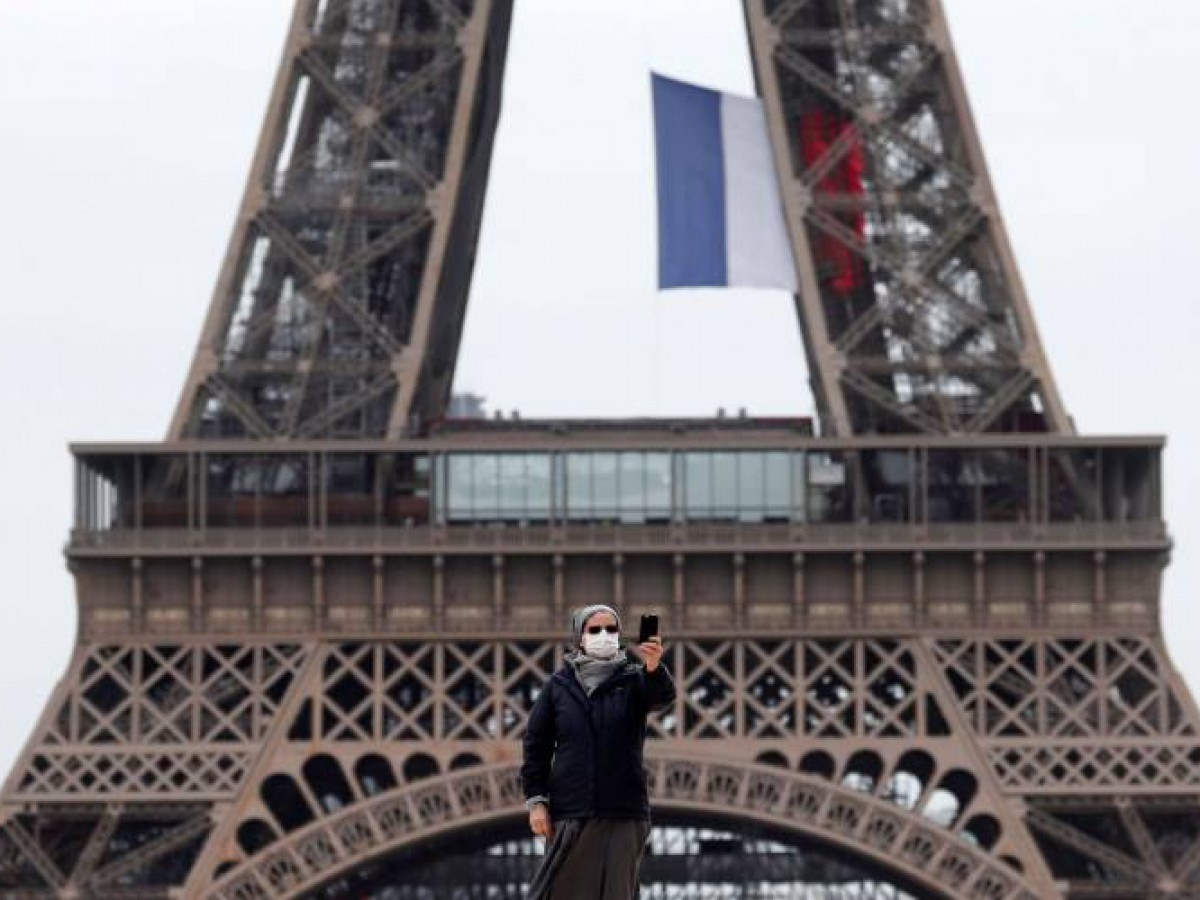
This 9th of May we were celebrating, in a very peculiar context, the 70th anniversary of the 'Schuman Declaration', the founding act of European integration launched by France. Although the Covid-19 crisis has eclipsed this anniversary, it nevertheless raises a pertinent issue of the complex and paradoxical relationship that the French seem to have with Europe.
Acting alternatively as the 'engine' and 'brake' European construction, France is both at the origin of its greatest advances and its most notable 'stops', including, 15 years ago, the rejection in France of the 'European Constitution'. Since then, and after 10 years of crises, French distrust in the EU seems to have grown even more, despite the willingness of the French authorities, notably President Macron, to carry an ambitious strategic vision of the future of the EU.Today, France appears to be one of the EU member states whose population is the most critical of many dimensions of the European Union construction. The French are those who consider themselves to be the most ill-informed on European issues, but also that the EU is undemocratic or who express strong mistrust of it. On all these dimensions, it is in France, among the 27 post-Brexit EU countries, that we find the highest negative judgements. Confidence in the European Union, which had tentatively improved in the spring of 2017 when the election of Emmanuel Macron was supposed to mark "France's return to Europe", has since dropped to 32% confidence in the autumn of 2019: 11 points below the EU28 average and 17 points below Germany.
[Recibe los análisis de más actualidad en tu correo electrónico o en tu teléfono a través de nuestro canal de Telegram]
However, it would be overly simplistic and improper to describe France as a 'Eurosceptic' country based on these observations. A majority of French people (58% versus 30%) do not question their countrys membership of the EU. France is not one of the 10 countries in which more than a third of the population considers that their country would better face the future outside the EU. A report published by the Jacques Delors Institute, Cevipof (Sciences Po) and Kantar sheds light on this French ambivalence. It lies in the distinction between diffuse support, built on the key principles and values on which the EU was built, and specific support, related to concrete achievements. In France, support for the EU is highest at the most diffuse level, while 57% of French people are believing that the EU is distant and 65% that it is not effective.This remoteness, this incomprehension and the ambivalence that results from it can be explained by cultural and historical French characteristics. First, a unitary political culture out of step with the European culture of compromise. Secondly, a socio-economic culture marked by a certain mistrust or even hostility to liberalism, reluctant to accept that economic choices still under debate in France appear to be definitively settled by the treaties. Thirdly, a logic of national projection disappointed by not finding in the Union this larger version of France initially dreamed of, not by the founding fathers, but by numerous French leaders.
Consequently, the Coronavirus crisis that is hitting Europe can only be a crucial and decisive moment for the future of the European project and its appropriation by the French. Seductive in its principles and disappointing in its achievements, the EU must at this occasion demonstrate its ability to act. The global outbreak of the coronavirus pandemic and the destructive impact on incomes and jobs in Europe call, in peoples expectations, for a united and coordinated European response. Such a response was already expected during the sovereign debt crisis and during the migrant crisis. In both cases the EU disappointed. In most European citizens eyes, its reputation has recovered, but not everywhere and especially not in France. Can the EU afford to disappoint a third time? Probably not.
Furthermore, if this health crisis is seen as a kind of pre-test, in terms of challenging our prevention, reaction, adaptation and cooperation capacities, of the climate crisis on which Europe is so eagerly awaited. The poor level of information on European issues among French citizens often deprives the EU of the means to publicise its action. Since we are currently facing a health crisis that is focusing attention at an unprecedented level, this ordeal perhaps offers an opportunity. Presumably, this time, what the European Union can deliver will be revealed. Faced with this hypothesis, one thing is certain: what it fails to deliver will be even more revealing. The year 2020 must be the year of Europe's return to France, but a return that is built with the citizens.
Contra la pandemia, información y análisis de calidad
Colabora con una aportación económica
Colabora con una aportación económica

Bruno Cautres
Investigador del Centre National de la Recherche Scientifique (CNRS) e integrante del Centre de recherches politiques de Sciences Po (Cevipof)
Su investigación se centra en el análisis del comportamiento y las actitudes políticas. En los últimos años, ha participado en varios proyectos de investigación franceses y europeos sobre participación política, votación y elecciones (Panel Electoral francés 2002 y 2007, Barómetro Político francés). Ha desarrollado otras líneas de investigación, destacando las divisiones sociales y políticas relacionadas con Europa y la integración europea en los electorados y la opinión pública.
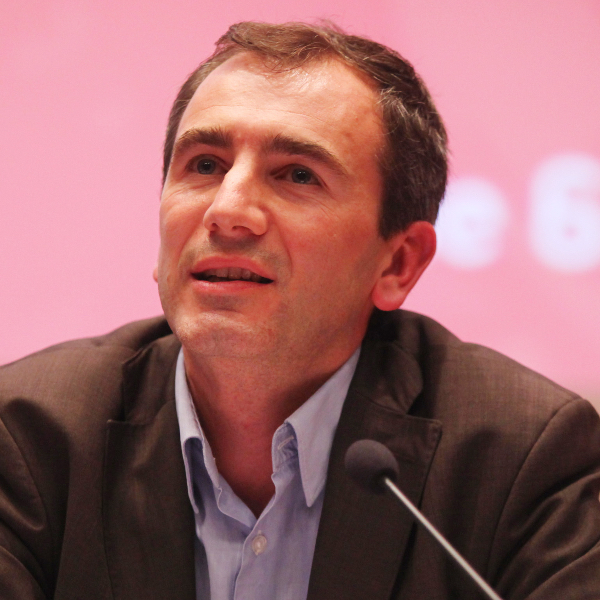
Thierry Chopin
Es Asesor Especial del Instituto Jacques Delors y profesor visitante en el Colegio de Europa de Brujas
Doctor en Ciencias Políticas por la Ecole des Hautes Etudes en Sciences Sociales (Ehess), obtuvo su habilitación para dirigir investigaciones (HDR) en el Institut d'Etudes Politiques de Paris (Sciences Po).
Profesor invitado en el Colegio de Europa en Brujas (Bélgica), también enseña en Mines ParisTech. Ha enseñado en la Facultad de Derecho Jean-Monnet (Universidad de París XI), en el Collège interarmées de défense (Ecole militaire, París), en el Conservatorio Nacional de Artes y Oficios (CNAN) y en Sciences Po.
Fue director de Estudios de la Fundación Robert Schuman, asesor científico del Centre d'analyse stratégique (actualmente France Stratégie, organización que depende directamente del primer ministro) y consultor del Centre d'Analyse, de Prévision et de Stratégie (CAPS) del Ministerio de Asuntos Exteriores de Francia. Fue experto asociado en Sciences Po (CERI) y profesor visitante en la Escuela de Economía y Ciencias Políticas de Londres (LSE).
Sus principales temas de investigación son la legitimidad de la UE, la politización de las instituciones europeas, la gobernanza de la UEM y la diferenciación de la Unión.

Emmanuel Rivière
CEO de la División Pública de Kantar en Francia
Graduado en Sciences-Po Paris, comenzó su carrera en el CSA en 1992. Después de un período en Louis Harris, se convirtió en 1999 en jefe del Departamento de Investigación y Encuestas del Servicio de Información del Gobierno. Se unió a TNS Sofres en 2005 como director de Clientes, a cargo de la división política.
Es co-autor, junto con Nicolás Hubé, de 'Faut il croire les sondages?' (2008) y ha contribuido a diversas obras colectivas: 'Etudier l'opinion' (2007), 'La démocratie à l'épreuve' (2000), 'La France Blessée', y ha publicado varios artículos en la 'Revue Politique et Parlementaire' sobre el seguimiento de las campañas electorales mediante encuestas (2001, 2002, 2005, 2008). Desde 2006, ha contribuido a 'l'Etat de l'Opinion', la publicación anual de TNS-Sofres.
Ahora en portada
16 de octubre de 2026
16 de octubre de 2026
16 de octubre de 2026
Lo más leído