Sábado, 10 de octubre de 2026




FIRMAS TOP
Breaking down the Ceuta mass migration event: what happened and why?
From the International Crisis Group to Eurasia Group, Washington, D.C.-based analyst J. P. Carroll brings together the assessments of five experts to unpack what happened during the mass crossing into Ceuta and what role Morocco may have played. While their interpretations differ over whether Rabat deliberately facilitated the crisis or was simply overwhelmed, they agree on the central role migration plays in the bilateral relationship and on the part misinformation played in fueling the conspiracy theories that emerged in its aftermath.
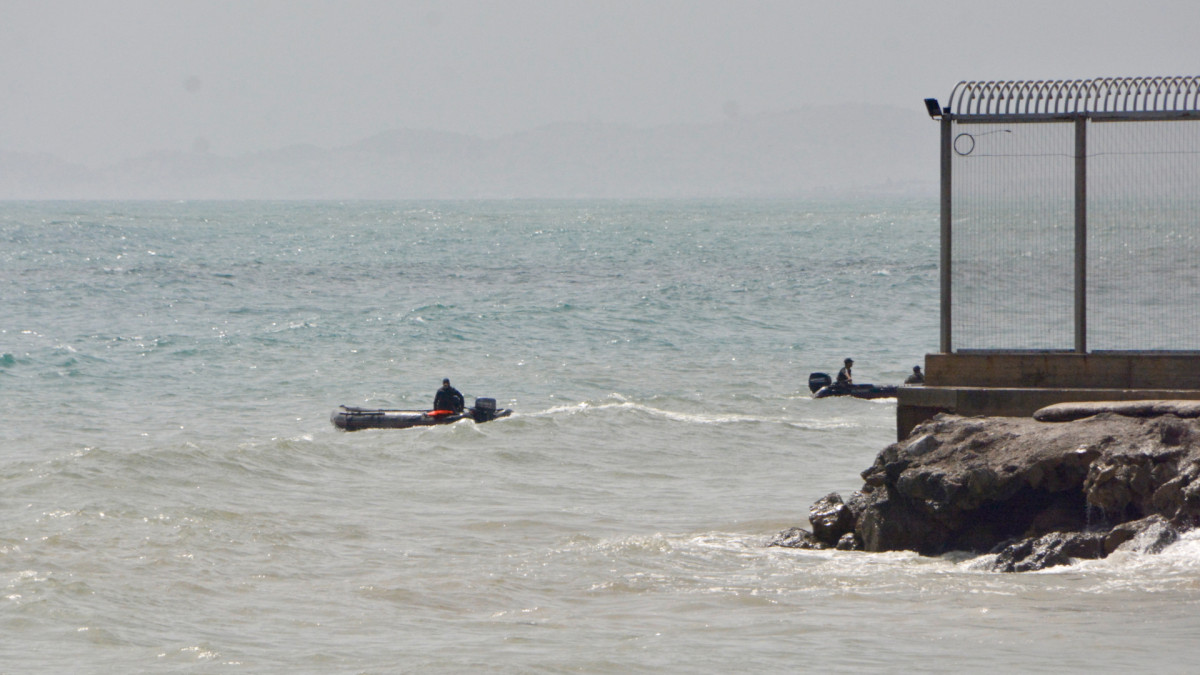
A maritime patrol at the Tarajal border in Ceuta.Antonio Sempere / Europa Press
In the aftermath of the Ceuta mass migration event, there are many questions that still remain. Agenda Pública turned to leading analysts to share their views on how and why this took place, what it means for Spain’s relationship with Morocco, and why so many conspiracy theories took root online in its aftermath. This is a story about migration, geopolitics, and misinformation. Here is what analysts shared with us.
 Riccardo Fabiani, Project Director, North Africa at International Crisis Group:
At this stage, there is enough evidence to assert that Morocco was implicated in the crisis in Ceuta, but it's hard to exactly state what happened. We know that the influx was organised online through online groups and appears to have been largely spontaneous. At the same time, the Moroccan security forces almost certainly knew this was coming (they monitor online discussions). We also have testimonies by migrants who said they were "encouraged" by security forces to head into Ceuta and we have videos of passive policemen looking on while migrants were unloaded off trucks or lining up to go to Ceuta. Finally, there is the 2021 precedent, when a similar crisis was almost certainly directed by Morocco.
While, of course, it's unjustified to believe that the US and Israel were implicated in the crisis, it is reasonable to assume that Morocco might have wanted to do a "favor" to its allies, given the numerous messages of instigation sent by US and Israeli right-wing figures. Regardless of what happened, the simple fact that we are discussing this possibility shows well how unpredictable this US administration is and the global perception of its possible range of actions, i.e. what it is ready to do.
 Intissar Fakir, Senior Fellow at Middle East Institute:
We can’t yet point to a single explanation. The drivers seem to be a combination of difficult economic conditions, misinformation circulating on social networks, and possibly smuggling networks in facilitating movements. What is still not resolved is whether the Morocco border authorities were genuinely overwhelmed by an unprecedented mass movement of people over an extremely compressed period, or whether they deliberately stepped back and allowed the movement. These two possibilities point to different conclusions. If this is an unprecedented operation failure, we need to talk about Morocco’s resilience and whether the country is reaching the limits of its border management system. If this was deliberate, we need to talk about the incentives of using migration as political leverage in foreign policy.
It once again shows how central migration is in the bilateral relationship. The focus has been on reducing irregular migration trends, and how Morocco’s leverage grows as its border policing role grows. So, whether it was intentional or a failure it forces Spain and Europe to contend with the implications of externalizing border management.
 Sabina Henneberg, Senior Fellow at The Washington Institute for Near East Policy:
Conspiracy theories are of course hard to explain, but in this case several factors may have converged. The Spanish Supreme Court ruling regarding migrants who cross over by sea and the tensions between the United States and Spain could be one possible coincidence that has helped fuel accusations of American and Israeli involvement in the migration surge. However, the other trends highlighted by observers on social media, such as the pieces published by Rubin and the Appropriations Bill report by Diaz-Balart, probably reflect the longer-term developments between Morocco and the United States (tied, of course, to Morocco's relationship with Israel) rather than any direct manipulation of a migrant crisis. Finally, this situation appears to have been fueled by misinformation regarding migration to Ceuta spreading on social media, so it's not necessarily surprising that conspiracy theories about involvement of the United States and Israel are also spreading via social media.
 David May, Research Manager and Senior Research Analyst at Foundation for Defense of Democracies:
Israelis and their supporters relished the opportunity — presented by the Ceuta crisis — to highlight Spain’s hypocrisy in criticizing Israel while Madrid maintains colonial possessions. This followed years of Pedro Sanchez and other Spanish ministers waging diplomatic warfare against Israel and vilifying the Jewish state for alleged human rights abuses. Because Israel benefited from and seemingly rejoiced over the volatility, conspiracy theorists — and even a Spanish minister — suggested that Jerusalem had a hand in it. This fantastical thinking relies on classic antisemitic tropes of Jewish malice and furtive influence, holding that Israel can and would manipulate tens of thousands of young Moroccans into overrunning a Spanish possession. The crackpots grasp at straws to scapegoat Israel rather than reckon with the Spanish policies and geopolitical realities that actually led to the Ceuta crisis.
 Federico Santi, Senior Analyst, Europe at Eurasia Group:
A lack of resources and attention on the Spanish side probably played a role, it is difficult to see an influx on this scale taking place without the acquiescence if not the active participation of Moroccan authorities, which intervened only very belatedly. Early anecdotal evidence appears to support it. As such, the latest in a string of such episodes shows the extent to which Spain is exposed to and beholden to such tried-and-tested pressure tactics, as well as Spain’s isolation within the EU itself. Spain is not alone in this: we have witnessed a similar dynamic at play in Tunisia (Italy) and in Turkey (Greece). More generally, internal divisions within the EU and short-term electoral interest continue to prevent the union from taking a more strategic approach to migration, and from more effectively bringing its economic and diplomatic weight to bear on neighboring countries to more effectively police illegal immigration, with the human costs that this entails.
Riccardo Fabiani
At this stage, there is enough evidence to assert that Morocco was implicated in the crisis in Ceuta, but it's hard to exactly state what happened. We know that the influx was organised online through online groups and appears to have been largely spontaneous. At the same time, the Moroccan security forces almost certainly knew this was coming (they monitor online discussions). We also have testimonies by migrants who said they were "encouraged" by security forces to head into Ceuta and we have videos of passive policemen looking on while migrants were unloaded off trucks or lining up to go to Ceuta. Finally, there is the 2021 precedent, when a similar crisis was almost certainly directed by Morocco.
"We can only make suppositions, but I believe the crisis was facilitated by Morocco, not manufactured by Rabat, and exploited to send a message to Spain"We can only make suppositions, but I believe the crisis was facilitated by Morocco, not manufactured by Rabat, and exploited to send a message to Spain. The message could have been about Ceuta's unsettled status, as a reminder from Morocco that it considers it occupied territory, and as a way to respond to incitement by many US and Israeli right-wing officials and intellectuals who called on Morocco to take action on Ceuta to "punish" Madrid for its support for the Palestinians and its position during the Iran war. But, again, this is a hypothesis and we have no way to demonstrate that.
While, of course, it's unjustified to believe that the US and Israel were implicated in the crisis, it is reasonable to assume that Morocco might have wanted to do a "favor" to its allies, given the numerous messages of instigation sent by US and Israeli right-wing figures. Regardless of what happened, the simple fact that we are discussing this possibility shows well how unpredictable this US administration is and the global perception of its possible range of actions, i.e. what it is ready to do.
Intissar Fakir
We can’t yet point to a single explanation. The drivers seem to be a combination of difficult economic conditions, misinformation circulating on social networks, and possibly smuggling networks in facilitating movements. What is still not resolved is whether the Morocco border authorities were genuinely overwhelmed by an unprecedented mass movement of people over an extremely compressed period, or whether they deliberately stepped back and allowed the movement. These two possibilities point to different conclusions. If this is an unprecedented operation failure, we need to talk about Morocco’s resilience and whether the country is reaching the limits of its border management system. If this was deliberate, we need to talk about the incentives of using migration as political leverage in foreign policy.
It once again shows how central migration is in the bilateral relationship. The focus has been on reducing irregular migration trends, and how Morocco’s leverage grows as its border policing role grows. So, whether it was intentional or a failure it forces Spain and Europe to contend with the implications of externalizing border management.
Sabina Henneberg
Conspiracy theories are of course hard to explain, but in this case several factors may have converged. The Spanish Supreme Court ruling regarding migrants who cross over by sea and the tensions between the United States and Spain could be one possible coincidence that has helped fuel accusations of American and Israeli involvement in the migration surge. However, the other trends highlighted by observers on social media, such as the pieces published by Rubin and the Appropriations Bill report by Diaz-Balart, probably reflect the longer-term developments between Morocco and the United States (tied, of course, to Morocco's relationship with Israel) rather than any direct manipulation of a migrant crisis. Finally, this situation appears to have been fueled by misinformation regarding migration to Ceuta spreading on social media, so it's not necessarily surprising that conspiracy theories about involvement of the United States and Israel are also spreading via social media.
David May
Israelis and their supporters relished the opportunity — presented by the Ceuta crisis — to highlight Spain’s hypocrisy in criticizing Israel while Madrid maintains colonial possessions. This followed years of Pedro Sanchez and other Spanish ministers waging diplomatic warfare against Israel and vilifying the Jewish state for alleged human rights abuses. Because Israel benefited from and seemingly rejoiced over the volatility, conspiracy theorists — and even a Spanish minister — suggested that Jerusalem had a hand in it. This fantastical thinking relies on classic antisemitic tropes of Jewish malice and furtive influence, holding that Israel can and would manipulate tens of thousands of young Moroccans into overrunning a Spanish possession. The crackpots grasp at straws to scapegoat Israel rather than reckon with the Spanish policies and geopolitical realities that actually led to the Ceuta crisis.
Federico Santi
A lack of resources and attention on the Spanish side probably played a role, it is difficult to see an influx on this scale taking place without the acquiescence if not the active participation of Moroccan authorities, which intervened only very belatedly. Early anecdotal evidence appears to support it. As such, the latest in a string of such episodes shows the extent to which Spain is exposed to and beholden to such tried-and-tested pressure tactics, as well as Spain’s isolation within the EU itself. Spain is not alone in this: we have witnessed a similar dynamic at play in Tunisia (Italy) and in Turkey (Greece). More generally, internal divisions within the EU and short-term electoral interest continue to prevent the union from taking a more strategic approach to migration, and from more effectively bringing its economic and diplomatic weight to bear on neighboring countries to more effectively police illegal immigration, with the human costs that this entails.

J. P. Carroll
Analista en Washington D. C. y columinsta de 'Agenda Pública'
MBA Internacional de IE Business School. Máster en Estudios Profesionales (MPS) en Relaciones Públicas y Comunicaciones Corporativas de la Universidad de Georgetown. Es el exdirector adjunto de Medios Hispanos del Comité Nacional Republicano (RNC). J.P. vive en el área de Washington, D. C.
Ahora en portada
10 de octubre de 2026
10 de octubre de 2026
9 de octubre de 2026
Noticias relacionadas
Hace 8 semanas
Desgranando el episodio de migración masiva en Ceuta desde Washington D. C.: ¿qué ocurrió y por qué?
Hace 8 semanas