Viernes, 23 de octubre de 2026




FIRMAS TOP
Is Trump serious about his threat to Spain? U.S. and Spanish analysts respond
'Agenda Pública' "Firmas Top" Columnist J.P. Carroll recently gathered the reactions of American and Spanish policy analysts and experts on President Trump’s recent remarks from the Oval Office about Spain, wherein he indicated a willingness to cut off trade ties. Reactions varied, but broadly highlighted the difference between the President’s rhetoric and his follow-up actions.
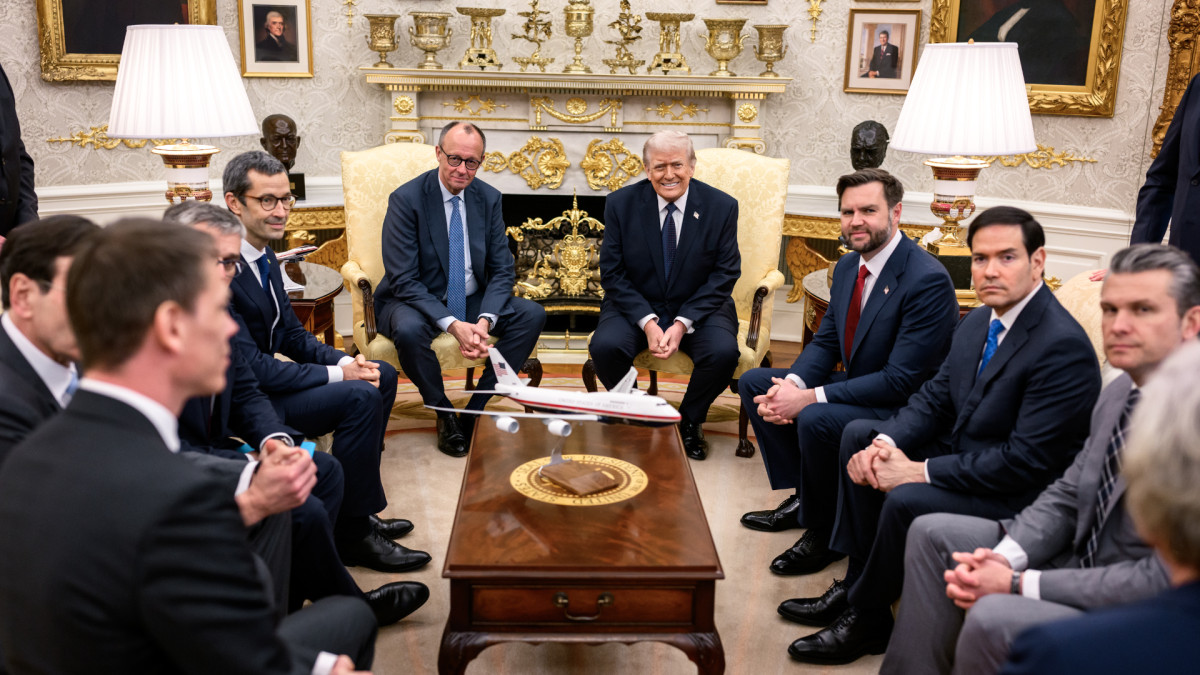
U.S. President Donald Trump had harsh words for Spain during German Chancellor Friedrich Merz's visit.White House / Daniel Torok
In the aftermath of President Trump having stated from the Oval Office on Tuesday, March 3rd that, "We’re going to cut off all trade with Spain," Agenda Pública reached out to several policy analysts, former government officials, and trade policy specialists, for their reaction to his remarks. Here is what they had to say:
.jpg) Ana Amador, international trade and regulatory compliance attorney with Steptoe, who is dually based in New York and Brussels:
Ana Amador, international trade and regulatory compliance attorney with Steptoe, who is dually based in New York and Brussels:
President Trump’s comments strain the diplomatic tone and trust in the bilateral relationship between Spain and the United States. From a broader U.S.-E.U. [European Union] transatlantic relationship context, it also complicates the on-going bilateral U.S.-E.U. negotiations, and creates internal friction among E.U. Member States, as some are presented as U.S. allies, and others face criticism. It [also] complicates cooperation in fields as national security, Ukraine, migration, and strategic supply chains, as trust is undermined in relations with historical allies and partners.
Although remarks by President Donald Trump have suggested the possibility of a commercial blockade, such an outcome appears unlikely in practice. The Supreme Court of the United States has recently limited the use of the International Emergency Economic Powers Act (IEEPA) for imposing broad, open-ended tariffs without a clear national security justification, constraining executive authority. Moreover, the European Union is not currently subject to comprehensive U.S. sanctions, though trade measures under authorities such as Section 122 and potentially Section 301 continue to affect Transatlantic commerce. Additional restrictions against Spain could still emerge through new trade remedy investigations, regulatory measures with equivalent trade-restrictive effects, or outcomes of E.U.–U.S. negotiations that disproportionately impact Spanish exports.
.jpg) Bjorn Beam, former Central Intelligence Agency (CIA) Officer and former member of the Presidential Daily Briefing Staff (during President Trump’s first term in office), who is now Head of Technology Research and Senior Geopolitical Analyst, Arcano Research:
Bjorn Beam, former Central Intelligence Agency (CIA) Officer and former member of the Presidential Daily Briefing Staff (during President Trump’s first term in office), who is now Head of Technology Research and Senior Geopolitical Analyst, Arcano Research:
Trump’s Oval Office threat to "cut off all trade with Spain" is coercion in plain sight, and it also betrays how stretched he already is on Iran. He is turning Spain into a warning for European governments that hold back on U.S. operations and defense spending, even as his Iran campaign drifts from a quick show of force into a messy, open-ended bet on regime change. The signal to Madrid and Brussels is simple enough, say yes on bases and on Iran or live with pressure on trade and on the wider security relationship, yet there is a real chance he loses focus as the costs and complexity of the Iran war mount.
If Trump follows through, the first thing to go quiet will be the intelligence channel. The CIA was already losing confidence in the broader Spanish security environment after the Sánchez government let Huawei handle sensitive law enforcement surveillance data, and a full political rupture over Iran gives Washington a ready-made justification to downgrade Spain from trusted partner to managed risk. At the end of the day, Trump has more to fear from how this war hits U.S. living costs and midterm politics than from his own angry riffs about European leaders.
.jpg) Kristina Kausch, Deputy Managing Director of the South and Wider Europe Program and Senior Fellow with the German Marshall Fund, based out of Madrid:
Kristina Kausch, Deputy Managing Director of the South and Wider Europe Program and Senior Fellow with the German Marshall Fund, based out of Madrid:
This is not the first time [Spanish Prime Minister Pedro] Sanchez comes out openly and manifestly in opposition to what Trump wants and [is also] breaking ranks with the European Union mainstream. It is also worth noting that Trump has not followed through on his rhetoric from the Oval Office. When Sanchez pushed for an exception to the 5% spending requirement for Spain in NATO, there was no follow-through from Trump after he expressed his disagreement. The same lack of follow-through from Trump took place after Spain recognized Palestine.
Spain has yet to see meaningful repercussions. Trump’s comments from the Oval Office [about Spain recently] are [simply] representative of past remarks. Trump cannot cut trade ties with Spain alone because of the EU Single Market and trade competency lying with the EU, [and] not [with] member states. What we have here is a pattern of rhetoric, but with no follow-through. I wouldn’t expect anything to come out of these comments, this is just anger over Sanchez’s rebellious non-compliance.
Juan Luis Manfredi, Ph.D., Professor of Journalism and International Affairs, University of Castilla-La Mancha:
Prime Minister Sánchez is building his own international profile. He occupies a space that is currently scarce among the major economies and seeks to position himself as an alternative to the global conservative wave. The confrontation with President Donald Trump and Elon Musk strengthens his domestic leadership and narrows the room for the opposition. It is difficult to stand out. In addition, it frames Vox as being polarizing.
"The real risk regarding the United States is not on trade policy, but energy-related: dependence on U.S. liquefied natural gas defines Spain’s vulnerability. Europe is accelerating in defense; Spain needs its own strategy to avoid remaining on the periphery.
.jpg) Francis Rooney, former U.S. Congressman (Florida – 19th Congressional District), former Vice-Chair of the U.S. House Foreign Affairs Committee, and former U.S. Ambassador to the Holy See (Rooney was named Commander of the Order of Queen Isabella I in 2022):
Francis Rooney, former U.S. Congressman (Florida – 19th Congressional District), former Vice-Chair of the U.S. House Foreign Affairs Committee, and former U.S. Ambassador to the Holy See (Rooney was named Commander of the Order of Queen Isabella I in 2022):
The United States’ relationship with Spain began before France controlled Louisiana, when Spain controlled the Mississippi River. Spain was with France during our Revolutionary War, as well as the 21st century conflicts in Iraq and Afghanistan. While we differ with the PSOE government of [Prime Minister Pedro] Sánchez, we know all governments are fleeting and the US-Spain relationship will endure.
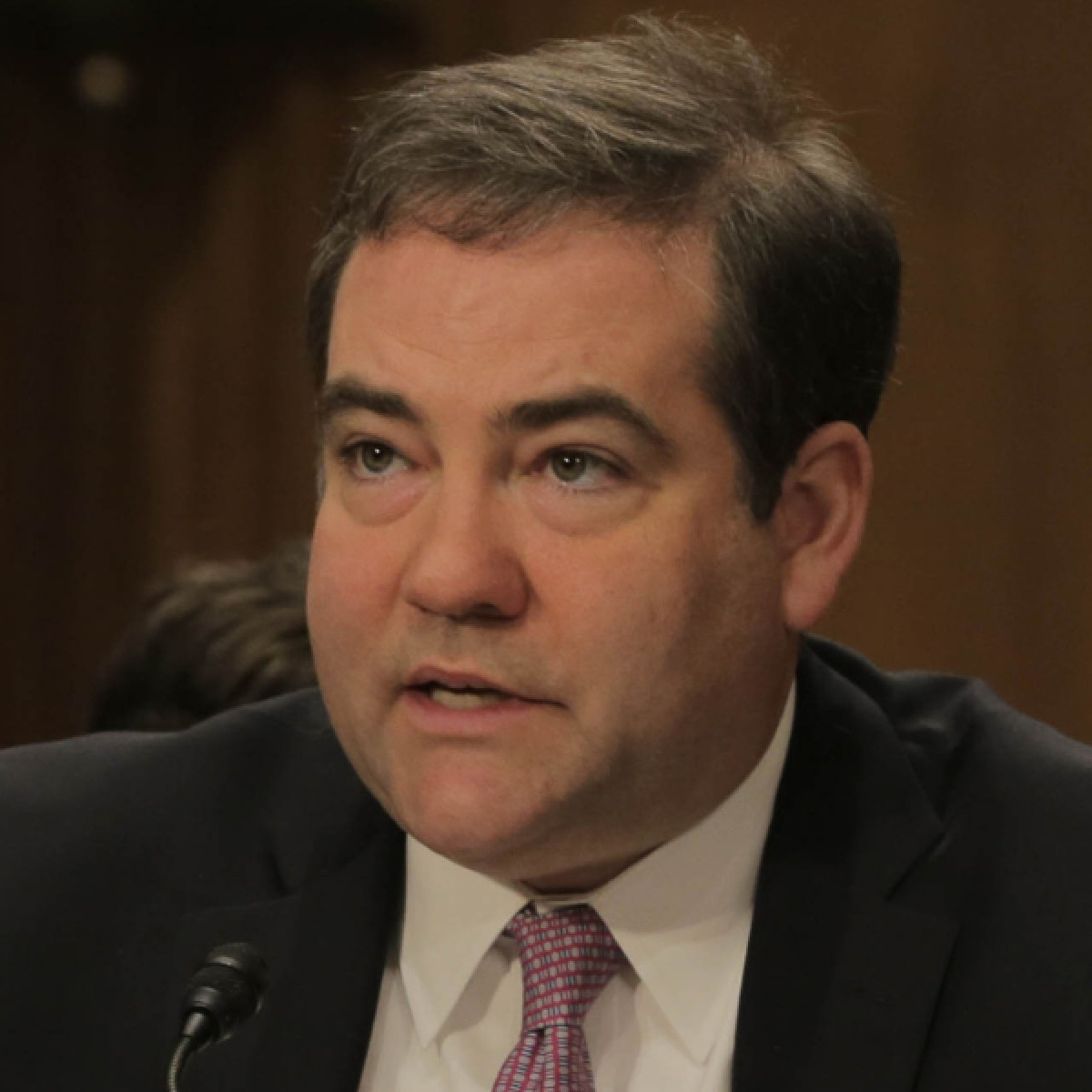 Daniel F. Runde, Senior Adviser, Center for Strategic and International Studies. (Runde was awarded the Officer's Cross in the Order of Isabel la Católica (Orden de Isabel la Católica) in 2017):
Like President Trump, I greatly admire the Spanish people, but unfortunately we have a significant disagreement with this current Spanish government. To be clear, Spain remains a key U.S. ally, as it has been since America’s founding.
However, Prime Minister Sánchez’s actions are deeply disappointing for those of us in the United States who wish to see a strong U.S.-Spain relationship, including strong military cooperation between our two countries. President Trump’s recent Oval Office remarks are in alignment with his stated desire for our European partners to be able to more actively contribute to global challenges that threaten U.S. and European security, as is the case with Iran’s nuclear ambitions.
.jpg) Federico Steinberg, Ph.D., Prince of Asturias Distinguished Visiting Professor at Georgetown University’s School of Foreign Service and Senior Fellow at the Elcano Royal Institute:
Federico Steinberg, Ph.D., Prince of Asturias Distinguished Visiting Professor at Georgetown University’s School of Foreign Service and Senior Fellow at the Elcano Royal Institute:
The United States cannot impose tariffs specifically on Spanish products because the European Union is a single trade bloc. In addition, the Supreme Court has declared tariffs justified under the International Emergency Economic Powers Act (IEEPA) illegal, which would require the Trump Administration to use other types of legal instruments that are not as immediate. There could be other types of actions, such as measures affecting U.S. exports to Spain, investments, or visas, as well as financial matters.
Ana Amador
President Trump’s comments strain the diplomatic tone and trust in the bilateral relationship between Spain and the United States. From a broader U.S.-E.U. [European Union] transatlantic relationship context, it also complicates the on-going bilateral U.S.-E.U. negotiations, and creates internal friction among E.U. Member States, as some are presented as U.S. allies, and others face criticism. It [also] complicates cooperation in fields as national security, Ukraine, migration, and strategic supply chains, as trust is undermined in relations with historical allies and partners.
Although remarks by President Donald Trump have suggested the possibility of a commercial blockade, such an outcome appears unlikely in practice. The Supreme Court of the United States has recently limited the use of the International Emergency Economic Powers Act (IEEPA) for imposing broad, open-ended tariffs without a clear national security justification, constraining executive authority. Moreover, the European Union is not currently subject to comprehensive U.S. sanctions, though trade measures under authorities such as Section 122 and potentially Section 301 continue to affect Transatlantic commerce. Additional restrictions against Spain could still emerge through new trade remedy investigations, regulatory measures with equivalent trade-restrictive effects, or outcomes of E.U.–U.S. negotiations that disproportionately impact Spanish exports.
Bjorn Beam
Trump’s Oval Office threat to "cut off all trade with Spain" is coercion in plain sight, and it also betrays how stretched he already is on Iran. He is turning Spain into a warning for European governments that hold back on U.S. operations and defense spending, even as his Iran campaign drifts from a quick show of force into a messy, open-ended bet on regime change. The signal to Madrid and Brussels is simple enough, say yes on bases and on Iran or live with pressure on trade and on the wider security relationship, yet there is a real chance he loses focus as the costs and complexity of the Iran war mount.
If Trump follows through, the first thing to go quiet will be the intelligence channel. The CIA was already losing confidence in the broader Spanish security environment after the Sánchez government let Huawei handle sensitive law enforcement surveillance data, and a full political rupture over Iran gives Washington a ready-made justification to downgrade Spain from trusted partner to managed risk. At the end of the day, Trump has more to fear from how this war hits U.S. living costs and midterm politics than from his own angry riffs about European leaders.
Kristina Kausch
This is not the first time [Spanish Prime Minister Pedro] Sanchez comes out openly and manifestly in opposition to what Trump wants and [is also] breaking ranks with the European Union mainstream. It is also worth noting that Trump has not followed through on his rhetoric from the Oval Office. When Sanchez pushed for an exception to the 5% spending requirement for Spain in NATO, there was no follow-through from Trump after he expressed his disagreement. The same lack of follow-through from Trump took place after Spain recognized Palestine.
Spain has yet to see meaningful repercussions. Trump’s comments from the Oval Office [about Spain recently] are [simply] representative of past remarks. Trump cannot cut trade ties with Spain alone because of the EU Single Market and trade competency lying with the EU, [and] not [with] member states. What we have here is a pattern of rhetoric, but with no follow-through. I wouldn’t expect anything to come out of these comments, this is just anger over Sanchez’s rebellious non-compliance.
Juan Luis Manfredi, Ph.D., Professor of Journalism and International Affairs, University of Castilla-La Mancha:

Prime Minister Sánchez is building his own international profile. He occupies a space that is currently scarce among the major economies and seeks to position himself as an alternative to the global conservative wave. The confrontation with President Donald Trump and Elon Musk strengthens his domestic leadership and narrows the room for the opposition. It is difficult to stand out. In addition, it frames Vox as being polarizing.
"The real risk regarding the United States is not on trade policy, but energy-related: dependence on U.S. liquefied natural gas defines Spain’s vulnerability. Europe is accelerating in defense; Spain needs its own strategy to avoid remaining on the periphery.
Francis Rooney
The United States’ relationship with Spain began before France controlled Louisiana, when Spain controlled the Mississippi River. Spain was with France during our Revolutionary War, as well as the 21st century conflicts in Iraq and Afghanistan. While we differ with the PSOE government of [Prime Minister Pedro] Sánchez, we know all governments are fleeting and the US-Spain relationship will endure.
Dan Runde
Like President Trump, I greatly admire the Spanish people, but unfortunately we have a significant disagreement with this current Spanish government. To be clear, Spain remains a key U.S. ally, as it has been since America’s founding.
However, Prime Minister Sánchez’s actions are deeply disappointing for those of us in the United States who wish to see a strong U.S.-Spain relationship, including strong military cooperation between our two countries. President Trump’s recent Oval Office remarks are in alignment with his stated desire for our European partners to be able to more actively contribute to global challenges that threaten U.S. and European security, as is the case with Iran’s nuclear ambitions.
Federico Steinberg
The United States cannot impose tariffs specifically on Spanish products because the European Union is a single trade bloc. In addition, the Supreme Court has declared tariffs justified under the International Emergency Economic Powers Act (IEEPA) illegal, which would require the Trump Administration to use other types of legal instruments that are not as immediate. There could be other types of actions, such as measures affecting U.S. exports to Spain, investments, or visas, as well as financial matters.

J. P. Carroll
Analista en Washington D. C. y columinsta de 'Agenda Pública'
MBA Internacional de IE Business School. Máster en Estudios Profesionales (MPS) en Relaciones Públicas y Comunicaciones Corporativas de la Universidad de Georgetown. Es el exdirector adjunto de Medios Hispanos del Comité Nacional Republicano (RNC). J.P. vive en el área de Washington, D. C.
Ahora en portada
23 de octubre de 2026
23 de octubre de 2026
Noticias relacionadas
Hace 32 semanas