Martes, 27 de octubre de 2026



GEOPOLITICS
While NATO falls apart, should Europe go nuclear?
Geostrategist Adam Casals weighs in on the current debate over Europe's need to arm itself with nuclear weapons. He calls for European political leaders and societies alike to rethink "the security prospects of the continent".
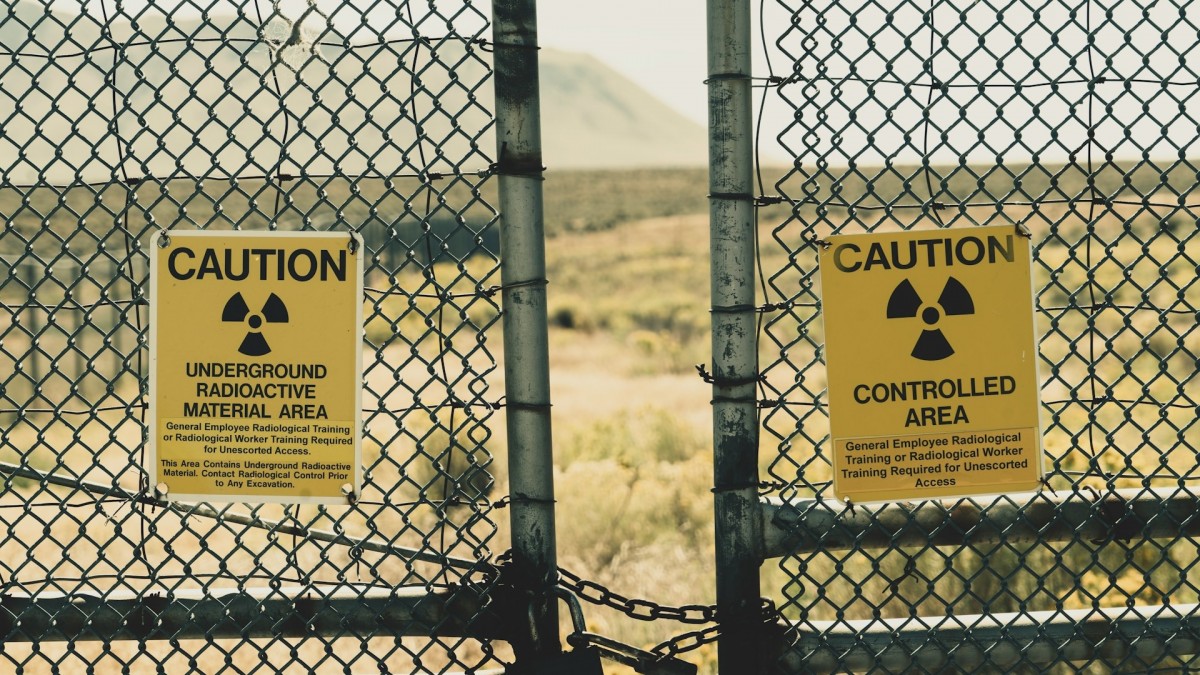
Warning signs outside a high-radioactivity area.Unsplash / Dan Meyers
In the autumn of 2013, Angela Merkel appeared visibly upset with the media. "Spying on friends is completely unacceptable". Without naming then-President Barack Obama, she called him to order. "We are allies, but such an alliance can only be built on trust". That trust was "Merkel's central measure", as it was later commented on by Der Spiegel when reports of alleged American surveillance of her mobile phone emerged. The Guardian added that leaks from Edward Snowden, who had fled to Russia, showed that the NSA had allegedly spied on the communications of thirty-five international political leaders. The British newspaper mentioned up to 200 telephone numbers in a document dated 2006, during President George W. Bush's tenure.
Gradually, Merkel came to subscribe to the theory of Wandel durch Handel ['change through trade'] and particularly in the energy sector, she favoured a greater German —and thus Central European— dependence on Russia. These were the days when the construction of LNG terminals in the German Baltic Sea ports was halted, while massive investments were made in the Nord Stream pipelines. Today, we know that this was not a good idea.
What Happened in the Oval Office Changes Everything
In the winter of 2025, the Munich Security Conference took place in the final stages of a German electoral campaign marked by massive foreign interference through social media. On the afternoon of the speech in which Vice President J.D. Vance questioned the legitimacy of European liberal democracies and statehood, a round of correspondents from the public broadcaster ZDF recalled Merkel's remark that one "could no longer trust" the United States. In those days, The Guardian would mention for the first time the possible "collapse of the transatlantic relationship".
The European Reaction
The next morning, a transformed FAZ published an interview with the future German Chancellor Friedrich Merz, who appeared pessimistic about the relationship with the US: "We could be heading towards a very negative scenario for us". Even during the campaign, Merz had told Politico, owned by the German Axel Springer group, that "the United States is no longer the America we once knew".
Later that afternoon, the conservative FAZ bolstered its digital front page with statements from a group of economists led by the renowned expert Monika Schnitzer: "Hesitation now would be fatal. [...] We must considerably increase the special fund for the Bundeswehr [the federal armed forces] or create a new one specifically for defence". The group demanded that the new government send "an unequivocal signal" regarding defence. From Munich, the liberal Süddeutsche Zeitung (SZ) echoed the diagnosis: "the scandal in the Oval Office changes everything. Europe can no longer count on NATO's support. Merz must swiftly demonstrate everything he knows".
In Austria, Kurier relayed the remarks of Italian Prime Minister Georgia Meloni, who proposed an "imminent summit between Europe and the USA. Any division in the West only makes us all weaker and benefits those who desire the collapse of our civilisation". Meanwhile on that Saturday evening, Elon Musk supported a call for the US to withdraw from NATO and the United Nations, sending shockwaves across the international media.
In the meantime, on Klara Syrewicz's show in the Polish television, Lithuanian Foreign Minister Kęstutis Budrys stated that "the worst problem is that we cannot make decisions while simultaneously facing political obstacles within the EU. The time has come for us to draw a clear line between national interests and sabotage, between European interests and blackmail". The show even openly considered a hypothetical expulsion of Hungary from the European Union.
To make this possible, discussions in Berlin even considered forcing a vote before the formation of the new Bundestag —the German federal parliament—, resulting from the elections on 23 February. The new arithmetic and its majorities would allow the far right and far left parties, AfD and Die Linke, to form a blocking minority that could prevent constitutional reforms such as the elimination of the debt ceiling, introduced during Merkel's years, as well as extraordinary budget allocations not affected by that ceiling —for example, an annual extraordinary defence fund—. According to TAZ, there is a precedent from 1998, during the Kosovo war.
The Nuclear Option
In 2024, a book presentation took place at the Carnegie Endowment for International Peace in Washington. Edited by Ulrick Kühn, the work "Germany's Choice: Disarmament or Proliferation" was introduced by a panel of experts talking about "Germany and Nuclear Weapons in the 21st Century". Following the conversation, "debates on nuclear weapons" were already taking place in Berlin, unfolding "in the context of a 'Zeitenwende' —a fundamental turning point in German foreign and security policies—". One of the panellists, Liana Fix, is the author of a book on the new "German power."
From the small and hard-to-defend Baltic republics, the day after Zelenskyy's failed meeting in Washington, Estonian EU Vice President Kaja Kallas wrote on Bluesky that these days, "it became clear that the free world needs a new leadership. It's up to us, Europeans, to take this challenge".
Likewise, Newsweek echoed the remarks of French President Emmanuel Macron on Portuguese public broadcast RTP, asserting that if Europe wished to have a "greater autonomy" in defence, its leaders should initiate an open strategic discussion on nuclear deterrence. According to Le Monde, Macron was prepared to follow the initiative proposed by Friedrich Merz. The United States reportedly had around 100 nuclear missiles stationed at its bases in Germany, but this security guarantee could change in the future.
Newsweek suggested that the French announcement might put some pressure on Keir Starmer, the British Prime Minister, to have his country join the initiative. Notably, the UK government had just announced "the largest sustained increase in defence since the end of the Cold War", aiming to reach 2.7% of GDP by 2027. To date, France and the United Kingdom are the only two nuclear powers in Western Europe.
The Risks of Nuclear Proliferation
At a recent event held at the Spanish Cervantes Culture Institute in Vienna, the Director General of the International Atomic Energy Agency (IAEA), Rafael Mariano Grossi, spoke about the United Nations' commitment to maintaining peace. The Argentine dignitary recalled that the first resolution adopted in UN history, back in 1946, was intended to "address the issues posed by the discovery of atomic energy", including the question of nuclear armament.
Since the onset of the conflict in Ukraine, the IAEA has maintained nuclear inspectors —including Spaniards— at power plants on the front line, such as in Zaporizhzhia. This permanent presence has been crucial in reinforcing nuclear safety and preventing attacks and/or accidents that could result in nuclear disasters. Dr Grossi himself has visited Ukraine on numerous occasions. In 2005, the IAEA was awarded the Nobel Peace Prize.
In the current context, where foregoing security guarantees have ceased to exist, it is possible that certain countries might consider unorthodox, out-of-the-box solutions to bolster their national security. If European nations like Poland or Germany think about developing their own nuclear arsenals, this would undoubtedly encourage other countries, in other regions of the world, to follow suit —hypothetically, from Turkey or Saudi Arabia to South Korea or Japan—.
Anyone who knows Australia well will recognise its Executive Secretary of the CTBTO, Robert Floyd. Based in Vienna, the CTBTO —or Preparatory Commission for the Comprehensive Nuclear-Test-Ban Treaty Organisation— has the mission of ensuring that nuclear tests become a thing of the past. Since 1945, an astounding 2,121 tests have taken place around the globe, involving 2,476 nuclear weapons. The CTBTO has developed a sophisticated, intricate global sensor network that can monitor any attempt to conduct such kind of tests.
In these new times, marked by growing geopolitical instability, it is to be expected that any new nuclear power would eventually need to conduct such tests, even if its proponents are convinced that this would serve to guarantee peace.
And Now What?
In words of FAZ, "no one can say today whether the United States can still be relied upon by the Alliance in times of urgent need". If not, "Europe must be able to defend itself". Tchakarova would add that suddenly "Europeans are loudly talking of a new muscular antithesis [...] independent of the United States. Promises!" This, she argued, "would require pruning back the social welfare state", a return to fracking, the extended use of nuclear energy, as well as setting aside certain 'obsessions' environmental, and above all, investing "between 3 and 5% of its GDP in defence". Currently, the Kingdom of Spain is below 2%.
"Merkel came to subscribe to the theory of 'Wandel durch Handel' ['change through trade'] and particularly in the energy sector, she favoured a greater German —and thus Central European— dependence on Russia"Despite the personal chemistry between Merkel and Obama, by the summer of 2014 the then-Chancellor still regarded the relationship with the Americans as "overshadowed in the long term". In March 2017, the German leader was received at the White House. President Donald Trump had harshly criticised her during his campaign. Der Tagesspiegel remarked on the coldness of the meeting, warning that "neither America nor Europe have an alternative to good cooperation". Two months later, the two leaders met again at a G7 summit, and the media spoke of a "turning point" in transatlantic relations when Merkel stated that the days "when we could completely trust one another" were over. In that distant 2017, and with full awareness of what was at stake, a significant part of Germany's industrial, economic and financial sectors demanded a greater understanding between the two countries. In a hard-hitting article titled "Not Without America", Klaus-Dieter Frankenberger consolidated in the Frankfurter Allgemeine Zeitung (FAZ) the opposing views to Merkel's bold stance.
Gradually, Merkel came to subscribe to the theory of Wandel durch Handel ['change through trade'] and particularly in the energy sector, she favoured a greater German —and thus Central European— dependence on Russia. These were the days when the construction of LNG terminals in the German Baltic Sea ports was halted, while massive investments were made in the Nord Stream pipelines. Today, we know that this was not a good idea.
What Happened in the Oval Office Changes Everything
In the winter of 2025, the Munich Security Conference took place in the final stages of a German electoral campaign marked by massive foreign interference through social media. On the afternoon of the speech in which Vice President J.D. Vance questioned the legitimacy of European liberal democracies and statehood, a round of correspondents from the public broadcaster ZDF recalled Merkel's remark that one "could no longer trust" the United States. In those days, The Guardian would mention for the first time the possible "collapse of the transatlantic relationship".
"That evening, many of Europe's leaders sent messages of support, to which Zelenskyy answered on social media"On 28 February, in the Oval Office, Vance accused President Volodymyr Zelenskyy of being disrespectful towards his hosts. The tense and lengthy meeting, broadcasted for forty minutes, will be studied and recalled in diplomatic academies worldwide. Without presenting evidence, The Atlantic headlined it "an ambush". Essentially, what we witnessed live was that everything that could go wrong did go wrong for the Ukrainian leader. The worried expression of veteran ambassador Oksana Markarova, stationed in Washington since before the war began, said it all. The Economist reported on a catastrophic meeting for Zelenskyy, who, in words of analyst Velina Tchakarova, "should have come better prepared". Le Grand Continent translated the exchange into French, stating that it "should be read and carefully pondered by all Europeans". The BBC described it as "a signal of an imminent crisis" between Europe and the USA. That evening, many of Europe's leaders sent messages of support, to which Zelenskyy answered on social media.
The European Reaction
The next morning, a transformed FAZ published an interview with the future German Chancellor Friedrich Merz, who appeared pessimistic about the relationship with the US: "We could be heading towards a very negative scenario for us". Even during the campaign, Merz had told Politico, owned by the German Axel Springer group, that "the United States is no longer the America we once knew".
Later that afternoon, the conservative FAZ bolstered its digital front page with statements from a group of economists led by the renowned expert Monika Schnitzer: "Hesitation now would be fatal. [...] We must considerably increase the special fund for the Bundeswehr [the federal armed forces] or create a new one specifically for defence". The group demanded that the new government send "an unequivocal signal" regarding defence. From Munich, the liberal Süddeutsche Zeitung (SZ) echoed the diagnosis: "the scandal in the Oval Office changes everything. Europe can no longer count on NATO's support. Merz must swiftly demonstrate everything he knows".
In Austria, Kurier relayed the remarks of Italian Prime Minister Georgia Meloni, who proposed an "imminent summit between Europe and the USA. Any division in the West only makes us all weaker and benefits those who desire the collapse of our civilisation". Meanwhile on that Saturday evening, Elon Musk supported a call for the US to withdraw from NATO and the United Nations, sending shockwaves across the international media.
In the meantime, on Klara Syrewicz's show in the Polish television, Lithuanian Foreign Minister Kęstutis Budrys stated that "the worst problem is that we cannot make decisions while simultaneously facing political obstacles within the EU. The time has come for us to draw a clear line between national interests and sabotage, between European interests and blackmail". The show even openly considered a hypothetical expulsion of Hungary from the European Union.
In Germany a 'blocking minority' formed by AfD and Die Linke could prevent constitutional reforms such as the elimination of the debt ceiling needed for an annual extraordinary defence fundBack in Germany, a few days earlier the financial newspaper Handelsblatt had published a manifesto consisting of twelve points —an "agenda of reforms" for the new federal government— the first of which was to "strengthen Europe's combat forces": "President Donald Trump seems to be willing to allow Russia to control Ukraine and possibly other parts of Eastern Europe", from the logic of "spheres of influence" previously advocated by Russia and China. [...] "The United States' security guarantees have dramatically lost credibility". Therefore, "the new German Government must do everything possible to support joint initiatives aimed at reinforcing the armed forces of NATO's European partners. They must be so strong that, in times of doubt, they are sufficient to deter Russia from a conventional attack on NATO territory, even without the United States".
To make this possible, discussions in Berlin even considered forcing a vote before the formation of the new Bundestag —the German federal parliament—, resulting from the elections on 23 February. The new arithmetic and its majorities would allow the far right and far left parties, AfD and Die Linke, to form a blocking minority that could prevent constitutional reforms such as the elimination of the debt ceiling, introduced during Merkel's years, as well as extraordinary budget allocations not affected by that ceiling —for example, an annual extraordinary defence fund—. According to TAZ, there is a precedent from 1998, during the Kosovo war.
The Nuclear Option
In 2024, a book presentation took place at the Carnegie Endowment for International Peace in Washington. Edited by Ulrick Kühn, the work "Germany's Choice: Disarmament or Proliferation" was introduced by a panel of experts talking about "Germany and Nuclear Weapons in the 21st Century". Following the conversation, "debates on nuclear weapons" were already taking place in Berlin, unfolding "in the context of a 'Zeitenwende' —a fundamental turning point in German foreign and security policies—". One of the panellists, Liana Fix, is the author of a book on the new "German power."
From the small and hard-to-defend Baltic republics, the day after Zelenskyy's failed meeting in Washington, Estonian EU Vice President Kaja Kallas wrote on Bluesky that these days, "it became clear that the free world needs a new leadership. It's up to us, Europeans, to take this challenge".
"Anders Fogh Rasmussen suggested that France should offer its nuclear arsenal to Europe, underscoring the need for a joint European defence strategy"From Warsaw, public broadcaster TVP World interviewed Anders Fogh Rasmussen, who suggested that France should offer its nuclear arsenal to Europe, underscoring the need for a joint European defence strategy. The former NATO Secretary-General argued that this would strengthen Europe's security, reducing reliance on the United States for nuclear protection. In previous days, Polish media had even been joking about the possibility of developing their own nuclear weapons.
Likewise, Newsweek echoed the remarks of French President Emmanuel Macron on Portuguese public broadcast RTP, asserting that if Europe wished to have a "greater autonomy" in defence, its leaders should initiate an open strategic discussion on nuclear deterrence. According to Le Monde, Macron was prepared to follow the initiative proposed by Friedrich Merz. The United States reportedly had around 100 nuclear missiles stationed at its bases in Germany, but this security guarantee could change in the future.
Newsweek suggested that the French announcement might put some pressure on Keir Starmer, the British Prime Minister, to have his country join the initiative. Notably, the UK government had just announced "the largest sustained increase in defence since the end of the Cold War", aiming to reach 2.7% of GDP by 2027. To date, France and the United Kingdom are the only two nuclear powers in Western Europe.
The Risks of Nuclear Proliferation
At a recent event held at the Spanish Cervantes Culture Institute in Vienna, the Director General of the International Atomic Energy Agency (IAEA), Rafael Mariano Grossi, spoke about the United Nations' commitment to maintaining peace. The Argentine dignitary recalled that the first resolution adopted in UN history, back in 1946, was intended to "address the issues posed by the discovery of atomic energy", including the question of nuclear armament.
Since the onset of the conflict in Ukraine, the IAEA has maintained nuclear inspectors —including Spaniards— at power plants on the front line, such as in Zaporizhzhia. This permanent presence has been crucial in reinforcing nuclear safety and preventing attacks and/or accidents that could result in nuclear disasters. Dr Grossi himself has visited Ukraine on numerous occasions. In 2005, the IAEA was awarded the Nobel Peace Prize.
In the current context, where foregoing security guarantees have ceased to exist, it is possible that certain countries might consider unorthodox, out-of-the-box solutions to bolster their national security. If European nations like Poland or Germany think about developing their own nuclear arsenals, this would undoubtedly encourage other countries, in other regions of the world, to follow suit —hypothetically, from Turkey or Saudi Arabia to South Korea or Japan—.
"If European nations like Poland or Germany think about developing their own nuclear arsenals, this would undoubtedly encourage other countries, in other regions of the world, to follow suit —hypothetically, from Turkey or Saudi Arabia to South Korea or Japan—"Not to mention, The Economist headlined "Australia the lonely", stating that the southern continent "has long relied on America for its security, and on China for its prosperity". Now, "both pillars are wobbling". In December, the Australian Strategic Policy Institute (ASPI) stated that its country "should begin planning the acquisition of at least 12 French Suffren-class submarines. Plans to acquire eight AUKUS nuclear-powered attack submarines (SSN) have always had their flaws, and now their risks are accumulating", with delays that could exceed three years according to The Guardian, not to mention the geopolitical uncertainties surrounding the alliance formed between the United States, Australia and the United Kingdom during President Joe Biden's mandate. An alliance which, incidentally, emerged following the cancellation of a previous order to France.
Anyone who knows Australia well will recognise its Executive Secretary of the CTBTO, Robert Floyd. Based in Vienna, the CTBTO —or Preparatory Commission for the Comprehensive Nuclear-Test-Ban Treaty Organisation— has the mission of ensuring that nuclear tests become a thing of the past. Since 1945, an astounding 2,121 tests have taken place around the globe, involving 2,476 nuclear weapons. The CTBTO has developed a sophisticated, intricate global sensor network that can monitor any attempt to conduct such kind of tests.
In these new times, marked by growing geopolitical instability, it is to be expected that any new nuclear power would eventually need to conduct such tests, even if its proponents are convinced that this would serve to guarantee peace.
And Now What?
In words of FAZ, "no one can say today whether the United States can still be relied upon by the Alliance in times of urgent need". If not, "Europe must be able to defend itself". Tchakarova would add that suddenly "Europeans are loudly talking of a new muscular antithesis [...] independent of the United States. Promises!" This, she argued, "would require pruning back the social welfare state", a return to fracking, the extended use of nuclear energy, as well as setting aside certain 'obsessions' environmental, and above all, investing "between 3 and 5% of its GDP in defence". Currently, the Kingdom of Spain is below 2%.
"Following President Macron's call, European leaders must initiate a deep, sincere and open strategic discussion about the continent's security prospects, which are paramount to achieve welfare"Otherwise, Europe's borders could be potentially threatened sooner than we thought —from the Baltics to Greenland, from Poland to Ceuta and Melilla in Northern Africa—. To survive uncertainty, Europe must offer security and stability to its citizens, corporations and economies. Swift action and considerable efforts will be mandatory —and these will inevitably require some sacrifices—. Following President Macron's call, European leaders must initiate a deep, sincere and open strategic discussion about the continent's security prospects, which are paramount to achieve welfare. Equally urgent is the need for European democratic societies, and their public opinion, to do the same.

Adam Casals
Experto en geoestrategia y asesor en relaciones internacionales
CEO de Casals' Company. Fue delegado de la Generalitat de Catalunya en Austria y Europa Central. Ha publicado recientemente en 'Vozpopuli', 'El Confidencial', 'La Vanguardia', 'ABC', 'Crónica Global/El Español', 'Medium', 'Ara', 'Blockchain Economía', 'Círculo de Economía y El Món de Demà' y 'Política & Prosa' en España, con 'The European' en Alemania, 'Die Presse' en Austria, 'Delo' en Eslovenia y 'Limes, Rivista Italiana di Geopolitica'. Colabora con la 'Cadena SER'.
Etiquetas
Agenda Pública in English, armas, Armas nucleares, Otan, Estados Unidos, Europa, Unión Europea, UE, España, Alemania, Francia, geopolítica Ahora en portada
27 de octubre de 2026
27 de octubre de 2026
26 de octubre de 2026