Domingo, 25 de octubre de 2026




Evolving perceptions on Women and Leadership
A recent survey administered to 10,000 girls in 19 countries found that 76% aspired to be a leader in their country, community, or professional life. However, after some years have passed, that inclination wanes. This phenomenon seems to be becoming more and more prominent. Why?
I teach and work in academia, and thus, it goes without saying: the future and the opportunities it holds for students is fundamental. Many of those students are young women with dreams of becoming leaders who can make an impact on their world. For example, 65% of our most recent intake in International Relations is female. Yet of the 500 biggest global companies, only 5% have a woman as CEO; only an average of 24% of the seats in national parliaments are held by women; and only and average of 20% of full professors in European universities are women.What is preventing women from taking up leadership roles, when so many are ready and willing to do so? It comes down to a matter of how female leadership is perceived by both men and women in various sectors and dimensions. There are three avenues through which we can change this perception: culture, organizational practices, and the individual behaviors.
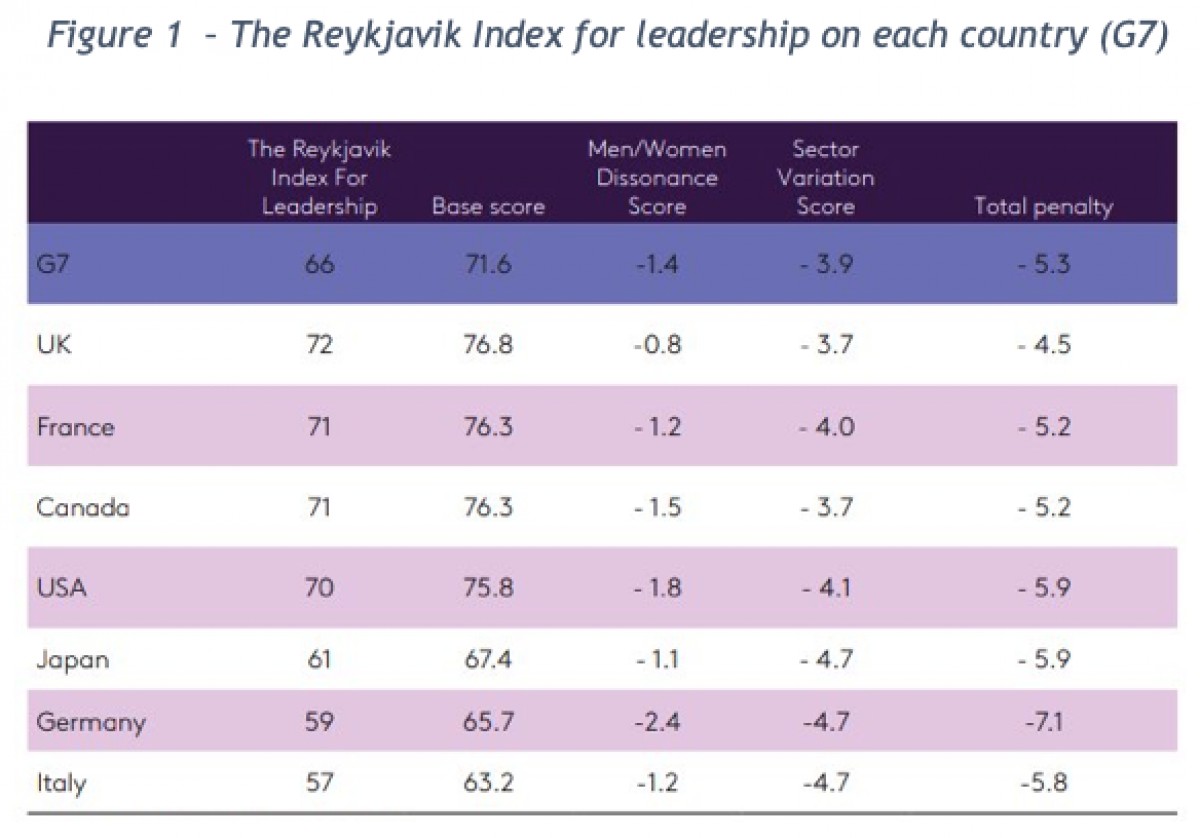
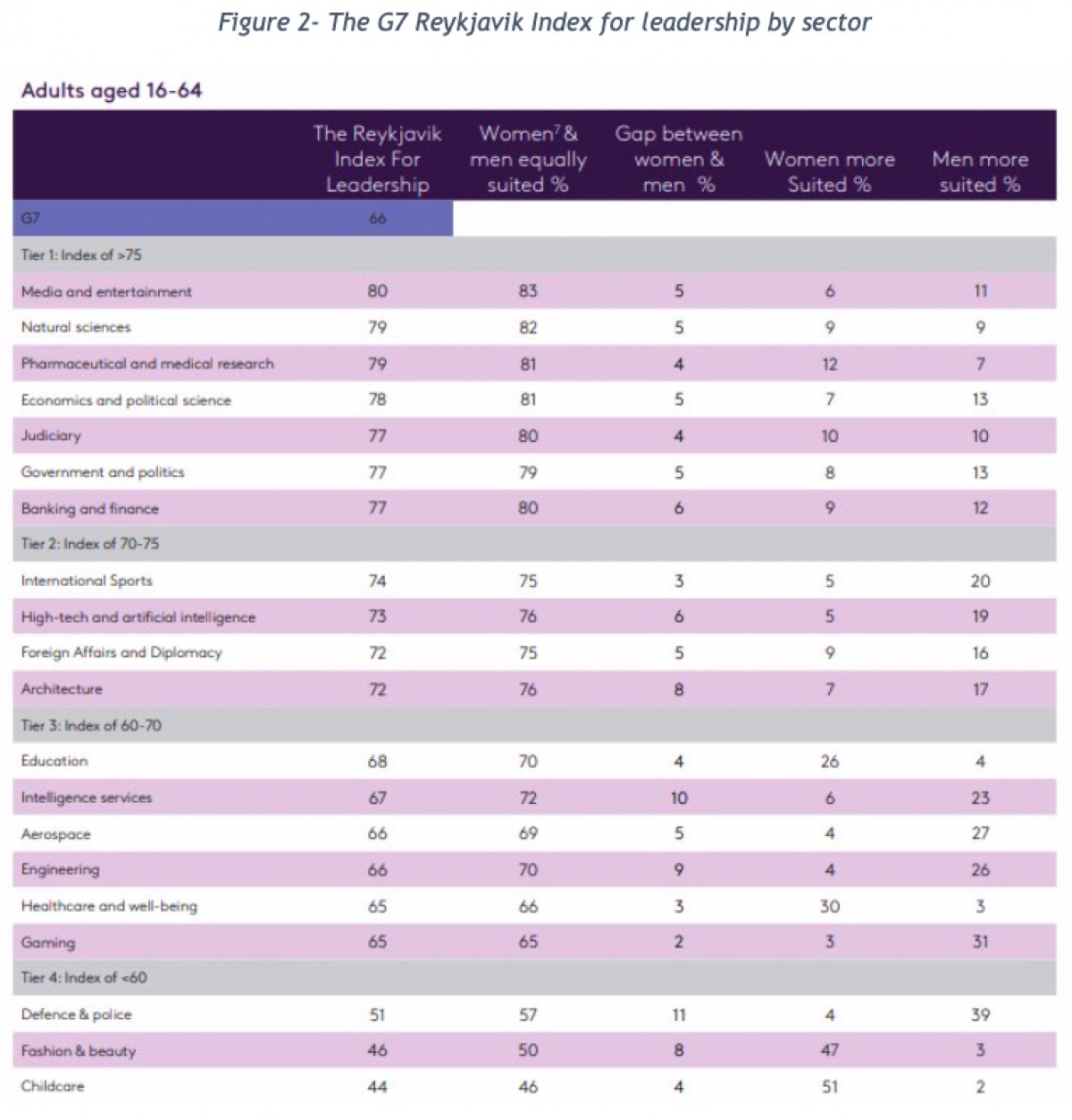
Considering culture, we can analyze perceptions at a country level. The Reykjavik Index for leadership, prepared by Kantar Public, measures gender equality by country in relation to perceptions of suitability for positions of power. The Index, which evaluates the G7 groups of nations, surveying the attitudes of more than 10,000 people, runs from 0 to 100; a score of 100 signifying complete agreement across society that men and women are equally suited to leadership in all sectors.
[Recibe los análisis de más actualidad en tu correo electrónico o en tu teléfono a través de nuestro canal de Telegram]
Unfortunately, more than half (54%) of people in the G-7 nations are not 'very comfortable' with a woman as CEO of a major company in their country, and 57% do not feel 'very comfortable' with a woman as head of government in their country. A closer look at the data shows 60%-63% of the men compared to 48%-52% of the women not feeling comfortable with these statistics. It is troubling indeed that a high percentage of both men and women do not consider female leadership a viable option.The results of the study do vary by countries, clustering in two groups, with France, the UK, Canada and the US exhibiting a higher percentage of people perceiving men and women as equally suitable for leadership, and with Germany, Italy and Japan on the opposite end of the spectrum. It is interesting to note that while the UK and Germany have both counted women as heads of government, the UKs Reykjavik Index for Leadership score stands at 71, and Germanys at 59. Thus, it is not simply a matter of having women in visible leadership positions, rather how that plays out in the culture of a given country.
Looking at organizational practices, we can consider the perceptions within private companies. The Lee Hecht Harrison (LHH) report, 'Elevating women in Leadership', surveyed human resource executives in the United States and found that 82% believed female leadership to be a critical business issue, and only 28% were satisfied with their organizations ability to elevate women into leadership roles. Again, we have a disconnect.
It is now common knowledge that diversity helps the bottom line. McKinsey found in their 'Diversity Matters' report that companies in the top quartile for diversity were 35% more likely to have financial returns above their respective national industry medians.
So if gender balance in leadership positions can add to diversity, which increases revenues and most senior executives believe in the importance of women in leadership, why cant or dont organizations deliver women into top positions?
The LHH report answers this question in a positive way detailing four key practices that organizations use to promote women in the top diverse companies:
- Gender bias-free people practices.
- Develop people leader skills to manage diverse talent.
- Address pay equity.
- Provide flexible work.
These results make clear that there is still much work to be done to obtain equal opportunities for men and women in terms of leading governments, private companies, and communities.
(El autor es presidente de la Asociación de antiguos alumnos y amigos de la Harvard Kennedy School en España)

(*) This article is the result of the discussions and data highlighted during the annual Gender and Growth Forum 'Shaping the future we want', organized and held by the Chatham House. A committed group of action-oriented policymakers, business leaders, entrepreneurs, activists and academics were gathered to generate key policy ideas and to find solutions in order to provide recommendations for the next G-20 summit.
Borja Santos Porras
Director Ejecutivo en la 'School of Global and Public Affairs' de la Universidad del IE (España), y consultor y profesor adjunto de Políticas Públicas y Desarrollo Internacional, Emprendimiento Social, Gestión y Evaluación de Programas y Ayuda Humanitaria.
Ha trabajado más de 13 años en el diseño, implementación y evaluación de políticas públicas y programas internacionales en países de África, Europa, América y Asia con Naciones Unidas y el Banco Mundial, o como asesor para diferentes gobiernos.
Realizó un Master en Administración Pública en Desarrollo Internacional (MPA/ID) por la Harvard Kennedy School, siendo galardonado con la beca internacional de la Fundación "la Caixa". También llevó a cabo un Máster en Relaciones Internacionales y un BEng+MEng en Ingeniería de Telecomunicación.
Adicionalmente, preside la asociación HKS Spain Alumni network; lidera la expansión internacional de IMFAHE, una fundación que genera impacto social a través del mentoring y la generación de talento; y es coach de YesEuropeLab, una organización que capacita a la nueva generación de líderes europeos.
Durante los últimos 10 años, ha trabajado en el diseño e implementación de políticas públicas y programas de desarrollo internacional y ayuda humanitaria. Ha trabajado, así, con el Gobierno de Sri Lanka y el Harvard Center for International Development, diseñando estrategias para el crecimiento económico y la innovación; ha realizado evaluaciones de impacto de políticas públicas con el Banco Mundial en Perú; ha dirigido programas de desarrollo con Naciones Unidas y los gobiernos de Ecuador y Etiopía para mejorar la respuesta institucional ante las crisis humanitarias y los desastres naturales; ha coordinando diferentes proyectos de cooperación para la Agencia Española de Cooperación (Aecid), del Ministerio de Asuntos Exteriores y Cooperación. Ha trabajado, asimismo, en España con ciudades como San Sebastián en el ánalisis de los ecosistemas de innovación urbanos. Escribe artículos y publicaciones en diferentes medios e imparte docencia y conferencias en programas de máster y grado.
Actualmente trabaja en España como consultor para organismos internacionales (Naciones Unidas, Banco Mundial, etc), instituciones y gobiernos locales, y organizaciones de desarrollo. En paralelo es profesor adjunto en la escuela de Relaciones Internacionales de IE university y dirige la expansión internacionales de la fundación IMFAHE. Además le encanta colaborar y participar en proyectos conjuntos innovadores que busquen un impacto social.
Ahora en portada
25 de octubre de 2026
23 de octubre de 2026